by Dr. Loni Rodriguez | May 19, 2020 | Exercise advice
A lot of people out there are missing their gyms and can’t wait to get back to their normal workout routine. Over the past few months, we’ve all had to adjust our exercise habits and try to find a new way to stay healthy and motivated. At first it was novel to change up our program and find new ways to exercises. It was even a bit of fun trying to think of creative ways to workout, but we all really just want to make sure what we’re doing is actually making us stronger, more fit, and healthier! The last thing anyone wants is to hurt themselves working out at home or waste their time not getting in better shape. Here are my 5 tips for working out at home to make sure what your doing is safe, smart, and effective.
1. Your workout program should be consistent. When you think about your exercise routine it should be consistent. The frequency of how often you’re exercising, and the intensity of the workouts should be relatively steady. Of course it’s fine to add one extra day in a week or to have a bit of a more challenging session, but overall things should be pretty consistent. What I would NOT recommend is a schedule where you take a whole week off and then workout 6 days the next week. Or where week 1 the workouts are super easy and then the next week are the hardest workouts of your life. Keep things consistent and slowly make things more challenging to see progress.
2. It should get more challenging over time. If you want to see yourself get stronger or healthier, you need to increase the challenge of your program over time. This means slowly making things harder as your body adapts to the workouts you’ve been doing. Here is an example- day 1 you do 3 sets of 10 bodyweight squats and they were tough to do. On day 15 you do 3 sets of 10 bodyweight squats and they were easy! This means your body has adapted and gotten stronger, which means you have to change something to make it harder now. You could add a few more reps, weights, or even an extra set. Choose one of these to change, but don’t choose all of them.
3. Choose one progression at a time. When you realize you’re ready to make an exercise harder, pick one small thing to change at a time. If squats are getting easy to do, try to add more reps, weights, or even an extra set. Here is an example of what I would NOT recommend doing- 3 sets of 10 bodyweight squats is easy for me to do now. To make it harder I’m going to hold a 20-pound kettlebell, increase each set to 20 reps, and do a 4th set as well. Don’t change too many factors at once, making any one of those modifications would be awesome, just don’t try to change them all at the same time.
4. Keep a goal in mind. Think about what you’re trying to get out of your home program. Is it to get stronger? Do you want to improve your cardio? Or maybe you just want to get a good sweat in a few times a week. Any of those goals are great! Keep that goal in mind when you’re exercising and make sure that’s what the program is doing for you. Your workouts should help you reach that goal by being specific and targeting the right parts of your body. Balance is good, so having a mix of these different goals is great, but focusing on one at a time will make your workouts more effective.
5. Enjoy your workout. At the end of the day you doing a workout is something you do for yourself. It’s something that you should enjoy and have fun with. I always say the best form of exercise is the one that you like doing. If you’re not a runner know that you don’t have to be. If you’re not a weightlifter you also don’t have to be one. Find the kind of exercise that gets you excited and then stick with it! Every type of exercise has its purpose and can be really helpful in specific ways, but at the end of the day you need to enjoy the time you spend exercising.
Let us know what you’ve been working on at home. If you have any questions, comments, or need help making sure your home workouts are following these 5 tips let us know!
by Dr. Loni Rodriguez | Feb 20, 2020 | Exercise advice
Have you ever twisted or sprained your ankle? Sometimes it
happens while you’re playing sports, working out, hiking, or even just walking around
the house. Either way, this can be quite painful, and I’ll get asked a lot of
times if it’s worth coming in for physical therapy.
The answer is yes!
When you sprain your ankle the ligaments that help support the ankle joint are
overstretched. It can take a while for these ligaments to heal and be back to
full strength, but we don’t always think about the other parts of our ankles
that are hurt. Our muscles have a harder time doing their job for walking and
turning because of the stiffness and pain. We also have receptors in our ankles
that help keep us balanced. Basically, the receptors tell our body when we are
off balance and how to correct it. When you sprain your ankle, these receptors
and your muscles are not able to do their job very well, which can lead to poor
balance and difficulty with normal activities like walking. Without some specific
exercises it can take a lot longer to get back to feeling your best. Especially
if you’re trying to get back to exercising it is really important to make sure
your body is prepared for the specific movements you want to do.
Right after spraining your ankle there are a few things you
should make sure to do and understand. This is the first step to helping your
ankle heal and get you back to 100%
1- Protect your ankle to prevent any further twisting or
injury to the area. This means restricting the activity on your ankle for about
1-3 days. Just enough to let the area start to heal, but not too long
either.
2- Elevate your ankle above your heart to help with the
swelling. Try about 20 minutes at a time.
3- Compression can also be helpful with swelling. Try this
with an ACE bandage or compression sleeve. It is important to know that this
isn’t the most important part of rehab for your ankle, but it definitely won’t
hurt either.
4- Active recovery is the most important part of
rehabbing your ankle. This means the bulk of getting your ankle better is going
to involve exercise and gradually challenging your ankle. This includes walking,
strengthening, balance, and plenty of other exercises.
In general, let pain be your guide with this process.
If something really hurts a lot, you’re probably not ready to do it. If
something hurts a little bit. It’s okay to keep doing.
After those first few days there are a few next steps in
this rehab to help you make a quick recovery.
1- The first thing you want to do is gradually load the ankle. This
means putting weight on it, walking, and performing light exercises. By gradually
challenging your ankle with weight bearing, and light exercises you will improve
your ankles ability to become strong, pain free, and balanced.
2- You also want to remain positive and optimistic throughout this process. Suffering
any kind of injury can be really difficult, especially when it keeps you from
doing the things you love. When you sprain your ankle, you might miss part of
your sports season or be unable to exercise with friends. This can be really
hard to deal with, especially if you’ve had other ankle sprains in the past. It
is important to remember to stay positive because it will get better, it just
takes time and hard work.
3- It is also really hard to keep doing cardio when you’ve sprained your ankle.
If you’re a runner or soccer player, it isn’t easy to do your normal workout. It’s
important to find a way to do some cardio. This could be riding a bike, using an
elliptical, or working out on a rower. Any of these will work great, just make
sure to keep some kind of aerobic exercise in your routine.
4- Finally, the most important part of rehabbing your ankle is to perform
specific exercises and gradually progress them. This means challenging your balance, range of motion, and strength. It will be important to work
within your limits, but also to push yourself so you can make steady progress. As
you get stronger the exercises should progress, so they are even more challenging
and specific to your goals. The specific exercises are going to be the most
important part of healing your ankle and will help you to have long term
success.
Remember, if you sprain your ankle PT can be really helpful!
It can help you recover faster and more fully so that the chances of having
another ankle sprain aren’t as high. Take time to recover fully so you can
get back to the things you love to do sooner and safer.

by Dr. Loni Rodriguez | Feb 6, 2020 | Client Achievements
Today we are going to highlight Joe, who has been doing great things since having his hip replaced at the end of October. When Joe first came to us, he had only had his right hip replaced two weeks earlier. As expected, he was having some pain and difficulty getting around. This wasn’t Joe’s first hip replacement, which meant he was well prepared for all the physical therapy and the time it would take to get back to 100%.
Here is Joe’s story:
“I was recovering from hip replacement surgery. This was my second hip replacement and I also struggled with overall mobility issues. Prior to the surgery my daily activities and workout programs were limited. I am very active and like a lot of activities that keep me moving and on my feet. Everything from remodeling my home, climbing ladders, cross-fit training were all painful and were becoming less and less enjoyable for me. Although my first hip replacement was successful, I wanted to take a more focused approach to recovery this time. It’s been 4 years since the first surgery and I still feel weakness in that hip. I was determined this time to find a program that could improve strength in both hips, improve my mobility and balance.”
“I found myself immediately doing movements that I didn’t expect do for months. The focus on a variety of single leg movements has helped strengthen my legs and hips as well as improve balance and core strength. At this point I’m able to do movements that I haven’t been able to do in years. I’m pain free and able to do all activities that I enjoy.”
“I really appreciate that on my first day Colin asked me what I wanted to get out of the program. We set goals which have been achieved and Colin continues to check in on what else I feel I need to work on. My sessions are challenging and fun. It’s nice to be able to work hard, but have a good conversation and a laugh while pushing some new boundaries. I really like that when I leave the session Colin sends a workout program to me to focus on in between appointments. I would highly recommend this program to anyone.”
I have had a ton of fun working with Joe, he is constantly upbeat and motivated to take on new challenges. Joe is always consistent with his program at home and is seeing the payoff from his efforts. This combination of great effort during our sessions and commitment to working hard at the gym are why he has made so much progress so quickly with his hip. I’m excited to keep working with Joe and help him reach all his goals. Thanks for being so committed to this program, we are all very proud!

by Dr. Loni Rodriguez | Jan 20, 2020 | Injury Prevention
How many young kids are there that dream of becoming a professional athlete? Growing up I know I did and so did a lot of my friends. Soon enough you realize that’s probably not possible, but maybe you could still earn a scholarship to college or be a standout athlete in high school. These goals are much more attainable and when a young kid shows they have talent for sports we try to guide them to maximize their talent. That is the natural way to help out these young people. What tends to happen next however, isn’t as helpful. These kids are told, “if you want to be the best basketball player possible, you need to strictly focus on basketball”. Substitute any sport you want, but consistently what happens is we encourage these kids to pick one sport and specialize.
First, let’s consider some of the pros of specializing. This definitely helps kids to develop specific skills like shooting a basketball or pitching a baseball. They also will have more time to practice and compete in these kinds of sports. If you only have to worry about baseball, there is a lot more time to spend working on those skills. However, we don’t always think about the potential downsides of spending more time on one sport.
If you focus on only one sport you are at higher risk for overuse injuries from repeating the same motions over and over again. One example of this would be pitching a baseball. Most of us have heard of Tommy John surgery and some may have heard about how this is becoming more and more common in young athletes. One study found that this injury is increasing by 9% each year in 15-19-year-olds. The repeated stress of movements like this can lead to injuries and thus hurt young athletes’ chances of becoming a great high school or college athlete.
Another area that tends to get overlooked is the psychological burnout of playing just one sport. When you spend so much time doing just one activity you can grow tired of it. Spending multiple days of the week at soccer practice and then on the weekend playing for your travel team can take up almost all of your free time. You might miss hanging out with friends, birthday parties, or even just having time to sleep in and relax. Kids need to want to play their sport and they should be the one making the choice to go to these practices and games. One of the keys to success is truly loving the sport you play and enjoying time at games and practices.
Now let’s talk a bit about why playing multiple sports is so good for young kids. Each sport is unique. It requires you to move in different ways and accomplish different tasks. The rules, teammates, coaches, and fields are all different as well. This variety helps athletes to learn how to work in different settings and how to be successful in all kinds of ways. Soccer focuses a lot on cutting and shuffling side to side. These kinds of movements are extremely similar and beneficial to other sports like basketball or tennis. A baseball player may need to focus on throwing the ball, but they also would benefit from sports focusing on speed, shuffling side to side, or developing hip strength. The truth is our bodies need to be able to move in all kinds of ways to be most successful in sports and one of the best way to develop these different movements is to expose yourself to them by playing.
Now some kids just don’t want to play anything besides their favorite sport and that’s okay too. We can’t force kids to do something they don’t want to and should encourage them to find other kinds of training to help them. In this case I will recommend that these athletes get involved in a strength and conditioning program. This will allow them to focus on muscle groups that aren’t being addressed in their regular sports. They will be able to work on their weaknesses and even further develop their strengths. Starting a regular training program is really something every young athlete should be doing.
Another area we should address is free play. Kids need to have time to just running around without any specific rules or structure. Growing up we used to play games like capture the flag, manhunt, freeze tag, and a bunch of other games. Doing things like this is really important to developing as an athlete. This gives young kids the chance to be creative, move in a variety of ways, and learn to think outside the box without rules or boundaries. This is one reason why we always encourage kids to spend time playing with friends and having fun making up their own games.
If you find yourself wondering if you child is playing too much of one sport there is a great simple rule that can help you figure this out. It’s called the rule of age. Basically, you shouldn’t play more hours of one sport per week than you are years old. For example, a 12-year-old shouldn’t be playing hockey more than 12 hours a week. As you get older and mature more your body is better able to tolerate the repetition of a given sport. However, this rule does cap at 16 years old so no matter if you’re 16 or 18- the max number of hours you should play a sport each week is 16 hours.
Sports are a great way for kids to learn teamwork, leadership, and develop physical fitness. If your child is good at a sport and enjoys playing it that is also great! However, this doesn’t mean they should drop all other sports to focus on just one. As we have talked about, this can be detrimental to their risk for injury and overall motivation to keep playing. One NCAA survey found that 88% of division 1 athletes played more than one sport in high school. The best way to help young athletes to be successful is keep them healthy and motivated to be the best than can be. Encourage kids to spend time just having fun without structure and to play all different sports they enjoy.
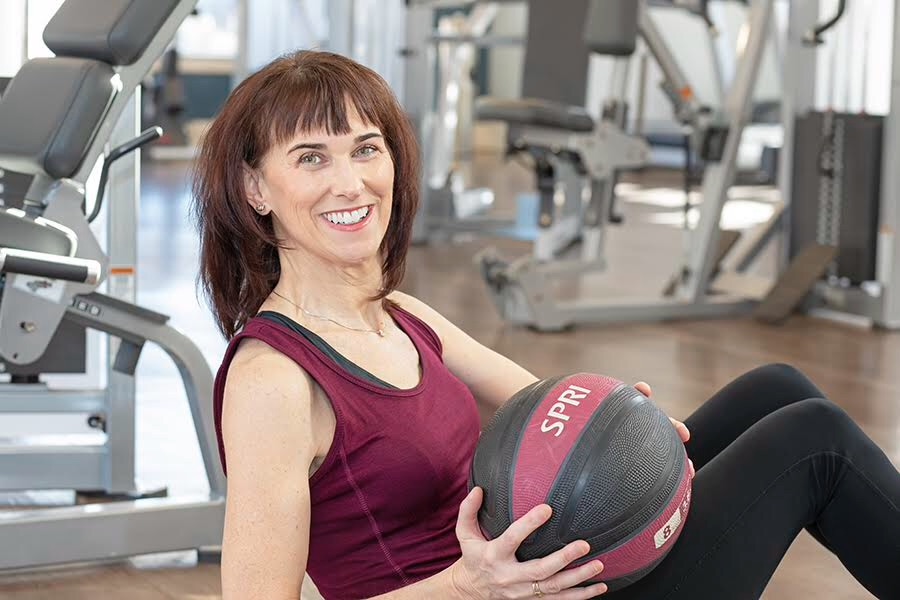
by Dr. Loni Rodriguez | Oct 28, 2019 | Exercise advice
Kerry Moynihan
Personal Trainer
Two-time Breast Cancer Survivor
October always gives me pause. With its proliferation of pink it’s a reminder that this month marks breast cancer fundraising and awareness season.
I was caught in the breast cancer cross hairs in 2003 and again in 2013, so I’m a major supporter of all efforts to eradicate this dreaded disease. Until that day, patients and survivors, alike, must take their own health into their own hands and do what they can to live healthy, full lives.
During treatment simply moving from the bed to the couch may feel overwhelming. But studies show physical activity and maintaining muscle mass, encourages patients to take better care of themselves, allows them to engage in enjoyable activities during treatment, and helps with quicker treatment recovery time.
The American Cancer Society recommends all patients, in treatment or post, follow the U.S. Surgeon General’s physical activity guidelines stating that adults should get AT LEAST 150 minutes of cardio each week and strength train twice for ALL muscle groups for AT LEAST 20 minutes per sweat sesh.
As with all exercise, consistency is key so choosing an enjoyable exercise outlet is important in keeping you in the game. And depending on physical limitations, finding the right workout is vital. It’s always a good idea to check-in with your physician and consult with a certified personal trainer to tailor-make an effective and enjoyable individualized program based on treatment and post-op needs.
Aside from its physical benefits, exercise is a mental outlet for stress and anxiety and a cancer diagnosis is without a doubt stressful. While we workout, endorphins (chemicals produced by the body) naturally relieve our stress, boost our mood, and increase our overall well being.
When thriving through a cancer diagnosis, I have found it’s important to use ALL of the tools in the tool chest: exercise being a vital one. It soothes body and soul reminding us that we are strong, capable and alive.
