Here we go again with another rendition of our resiliency series! If you have been following along, thank you! We have been enjoying the feedback from our wonderful followers on our presented topics.
If this is your first time reading, thanks for joining!
This series is a set of topics that are supposed to help YOU build up resilience to the many aches, pains, and physical issues people face. I dove into things like shoulder pain, low back pain, foot pain but now we take a slightly different approach.
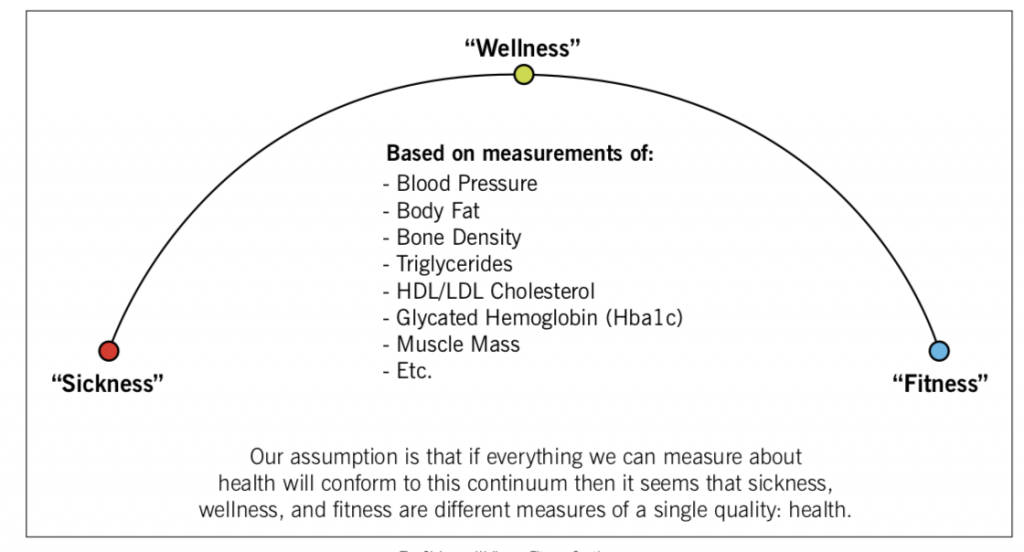
I want to introduce you to the SICKNESS, WELLNESS, FITNESS continuum.
I will reference CrossFit HQ (headquarters) for this concept. As many of you know, I hold Crossfit near and dear to my heart despite many accusations that it is a leading cause of injury and overtraining in the general population. That being said, they have done a great deal of work over the past few years to direct the goal of their brand to target the health of the general population. One concept that they are shining light on is this SICKNESS, WELLNESS, FITNESS continuum.
Photo Credit: Crossfit Journal, August 2016
In brief, they suggest to set a goal to strive for the “fitness” level of this continuum. At the fitness level we are much more resistant to things like injury and disease.
We can be categorized as sick for a variety of reasons such as physical injuries or health conditions. For the purposes of today, we are going to refer to being “sick” as suffering from a physical injury, “well” as being back to baseline, and “fit” as being more resistant to injury and disease.
Example 1
Two people get into a car accident and suffer the exact same injures. In this example, let’s say they are both of the same age, gender and do not possess any underlying health conditions.
Person one exercises at a high level and can squat and deadlift more than their bodyweight. They train 4-5 days per week.
Person two exercises at an average level of fitness and primarily exercises with light weights. They train 3-4 days per week.
Who do you think will have a shorter recovery?
BOTH of these people were likely on the “fitness” side of the continuum pre-accident, but the one with more strength is likely more fit thus more likely to have a shorter recovery time. They both slid onto the sickness side but the more fit person did not slide as far, as their baseline was higher. Hence they have less distance to travel to get back to where they were.
Example 2
Person comes to PT with shoulder pain. They have been suffering from it for a while and can be considered on the sickness side of the continuum.
They are rehabbed, their pain goes away and their PT got them to baseline. They can do everything they are doing before they got hurt.
Where do they stand? I would consider them being in the wellness category at this point. They could easily slip back down to sickness if they put their shoulder under the conditions it faced just before they got hurt before. Unless, they prepare it to handle more…
Why are we stopping at wellness or the low end of fitness?
These examples explain the idea that we MUST slowly and gradually put our bodies under exercise stress in order to see the changes we need. There is a TON of research out there that backs the idea that the more fit someone is, the less likely they are to get sick or injured. This “fit” idea is in both areas of cardio and weight lifting.
The better your cardiovascular fitness you have, the less likely you are to develop chronic disease.
The stronger your muscles, tendons, and ligaments are, the less likely you are to develop injuries to them.
They key is to train you body at a level that actually creates a change. Slowly push the boundaries of challenge with weight lifting and your cardio of choice and you WILL see the benefits long term.
If you have never lifted heavy weights, I HIGHLY suggest consulting a health and fitness pro to provide you with the proper programming to keep you safe.
Let’s strive for getting as fit as possible and your body will thank you.
One question I get all the time is, “How do I know when I’m ready to make an exercise harder?”. Usually that’s followed up with another question, “How do I safely make an exercise harder?”. These questions are really important! When you’re working out consistently, it’s important to continue to challenge yourself so you stay on track to make steady progress. Today I’m going to list 6 tips to help you answer these questions and make sure you keep making progress.
1. Have a goal
This is really important because a goal helps determine what we are prioritizing in your exercise program. For example, if you goal is to lift heavier weights the program should be built around improving strength. If your goal is to run a certain distance, your program will look completely different! So, first thing you have to do is figure out what your goal is. It could be focused on strength, endurance, or even just burning calories to stay fit. Keep that goal in mind as we go through the next few tips.
2. Understand the different parts of an exercise
Every exercise can be broken down into a few specific things. We have the movement itself, the how much weight you’re using (intensity), how many times you’re doing this (sets and reps), the speed of the exercise (fast or slow), and how many days/week you do this (frequency). So for example if you’re doing squats as part of your program, think about those different components. Are you doing bodyweight squats or are you adding weights? How many reps and sets do you regularly do? Are you moving fast through each squat or are you intentionally moving slow? Also, how many days per week are you squatting? Each of these different factors can be changed to make an exercise harder or easier. The fun is you can pick and choose which one you want to use!
3. Which of these do I pick?
Think about your goal for your exercises. If you’re trying to build strength, I would probably recommend increasing the weight of the exercise. If you’re more focused on endurance, it might make more sense to add more reps or sets. If you exercise to burn calories and stay fit, you might try to increase the speed or even add an extra day of the week you’re exercising. Having balance is important here so make sure you only pick one of these factors at a time!
4. Things to track during a workout
Tracking a few small things during a workout can be really helpful in deciding when you’re ready to progress your exercises. First off, keep a workout log and write down what you do each day and how you felt doing it. For example, you would write down that you did squats on Monday, 3 sets of 10 with a 25# kettlebell and at a smooth controlled speed. You also would write down how that felt, “They were definitely challenging, but I felt in control and by the end of each set I felt as if I could do probably 4 or 5 more reps”. The key things here are writing down exactly what you did and then how you felt in that moment. A great way to do this is writing down how many more reps you could have done at the end of a set. Another thing to record is how tired you were at the end of the exercise. I recommend using a RPE scale that measures how hard you’re working from 1-10. Here is the chart, so you can see where you fall on the scale after each workout.
So make sure to keep track of these few things and they will help you know when you can make an exercise harder.
5. How do I use this info to know I’m ready to make the exercise harder?
So you wrote down the workouts you have been doing, how many more reps you feel like you could do at the end of your sets, and you scored 1-10 for how tired you were at the end of your exercises. If you feel like you can 5 or 6 more reps at the end of each set, you’re probably ready to make the exercise harder. If you’re scoring less than a 7 on the 1-10 scale, you’re probably ready to make your exercises harder. The key is NOT to score a 10/10 or to feel like you can’t do any more reps at the end of each set. The idea is to work hard, but feel like you’re not draining yourself.
6. Keep up with your program and tracking your workouts
Consistency is the most important part of every exercise program. If you get used to tracking your exercises and making them more challenging, you will get a lot better at it! You will also get great results towards your goals.
This can be a lot of information to process but using it can really help you with your exercise programs. These tools will give you the ability to safely make progress towards your goals. If you want to talk this over with us so we can get specific about you and your goals, let us know!
We also did a webinar on this topic in a little more detail last week, so if you want to check that out you can see the information presented online too.
Have you ever twisted or sprained your ankle? Sometimes it
happens while you’re playing sports, working out, hiking, or even just walking around
the house. Either way, this can be quite painful, and I’ll get asked a lot of
times if it’s worth coming in for physical therapy.
The answer is yes!
When you sprain your ankle the ligaments that help support the ankle joint are
overstretched. It can take a while for these ligaments to heal and be back to
full strength, but we don’t always think about the other parts of our ankles
that are hurt. Our muscles have a harder time doing their job for walking and
turning because of the stiffness and pain. We also have receptors in our ankles
that help keep us balanced. Basically, the receptors tell our body when we are
off balance and how to correct it. When you sprain your ankle, these receptors
and your muscles are not able to do their job very well, which can lead to poor
balance and difficulty with normal activities like walking. Without some specific
exercises it can take a lot longer to get back to feeling your best. Especially
if you’re trying to get back to exercising it is really important to make sure
your body is prepared for the specific movements you want to do.
Right after spraining your ankle there are a few things you
should make sure to do and understand. This is the first step to helping your
ankle heal and get you back to 100%
1- Protect your ankle to prevent any further twisting or
injury to the area. This means restricting the activity on your ankle for about
1-3 days. Just enough to let the area start to heal, but not too long
either.
2- Elevate your ankle above your heart to help with the
swelling. Try about 20 minutes at a time.
3- Compression can also be helpful with swelling. Try this
with an ACE bandage or compression sleeve. It is important to know that this
isn’t the most important part of rehab for your ankle, but it definitely won’t
hurt either.
4- Active recovery is the most important part of
rehabbing your ankle. This means the bulk of getting your ankle better is going
to involve exercise and gradually challenging your ankle. This includes walking,
strengthening, balance, and plenty of other exercises.
In general, let pain be your guide with this process.
If something really hurts a lot, you’re probably not ready to do it. If
something hurts a little bit. It’s okay to keep doing.
After those first few days there are a few next steps in
this rehab to help you make a quick recovery.
1- The first thing you want to do is gradually load the ankle. This
means putting weight on it, walking, and performing light exercises. By gradually
challenging your ankle with weight bearing, and light exercises you will improve
your ankles ability to become strong, pain free, and balanced.
2- You also want to remain positive and optimistic throughout this process. Suffering
any kind of injury can be really difficult, especially when it keeps you from
doing the things you love. When you sprain your ankle, you might miss part of
your sports season or be unable to exercise with friends. This can be really
hard to deal with, especially if you’ve had other ankle sprains in the past. It
is important to remember to stay positive because it will get better, it just
takes time and hard work.
3- It is also really hard to keep doing cardio when you’ve sprained your ankle.
If you’re a runner or soccer player, it isn’t easy to do your normal workout. It’s
important to find a way to do some cardio. This could be riding a bike, using an
elliptical, or working out on a rower. Any of these will work great, just make
sure to keep some kind of aerobic exercise in your routine.
4- Finally, the most important part of rehabbing your ankle is to perform
specific exercises and gradually progress them. This means challenging your balance, range of motion, and strength. It will be important to work
within your limits, but also to push yourself so you can make steady progress. As
you get stronger the exercises should progress, so they are even more challenging
and specific to your goals. The specific exercises are going to be the most
important part of healing your ankle and will help you to have long term
success.
Remember, if you sprain your ankle PT can be really helpful!
It can help you recover faster and more fully so that the chances of having
another ankle sprain aren’t as high. Take time to recover fully so you can
get back to the things you love to do sooner and safer.
It’s that holiday gift giving time of year. Be a super Santa in your fitness fan’s life by placing something special under the tree. Here are some at home equipment ideas for your Christmas shopping list:
TRX HOME2 SYSTEM: $169.95
Suspension trainers allow you to use your own body weight to build muscle and strength. The TRX system (Total Resistance eXercise) is at the top of the market. Your at-home system can be suspended in the door frame for a convenient and mobile workout.
AB DOLLY: $79.99
The Ab Dolly roller system builds core galore. Exercises range from upper body rollouts to lower body knee pulls – allowing you to target all major muscle groups. It isn’t nicknamed “Satan’s Skateboard” for no reason. Ab Dolly exercises are challenging and effective.
RESISTANCE BANDS: $10.00
These loopy latex bands are effective, stretchy, portable and perfect for stocking stuffing. They can be used for a range of exercises from glute & hip activation to shoulder, arm and back work. If your fitness fan is a traveler, these are the pick – easily packable.
FOAM ROLLER: $14.99
Foam rollers aid with muscle stiffness and loosen muscular knots. Perfect gift for those plagued by post-exercise soreness. Rolling improves range of motion and helps with muscle fatigue. This is sure to be a fan favorite.
EXERCISE BALL/YOGA BALL: $19.88
This uber durable elastic ball comes with a pump to blow it up to approximately 30 inches. It’s major benefit is that due to its instability, it recruits more muscle, allowing for super efficient, effective and challenging exercises like: push-ups, wall squats, crunches, roll-outs, to name just a few. Plus, the color options make this a festive and fun gift.
BOMBAS PERFORMANCE SOCKS: $15.00 +
Like working out on a cloud! Bombas use the softest of yarns to create comfortable, cozy, anti-microbial and moisture-wicking socks. Added to that, the Bombas company believes in a “one purchased – one donated” philosophy. So far over 25 million clothing items have been donated to homeless shelters and organizations thanks to Bombas customers and the Company’s sense of community. That’s a seasonal win/win.
Wishing you a wonderful season of family, friends, fun and fitness! 🎁
Infinite Potential Personal Trainer/Strength coach
NASM CPT
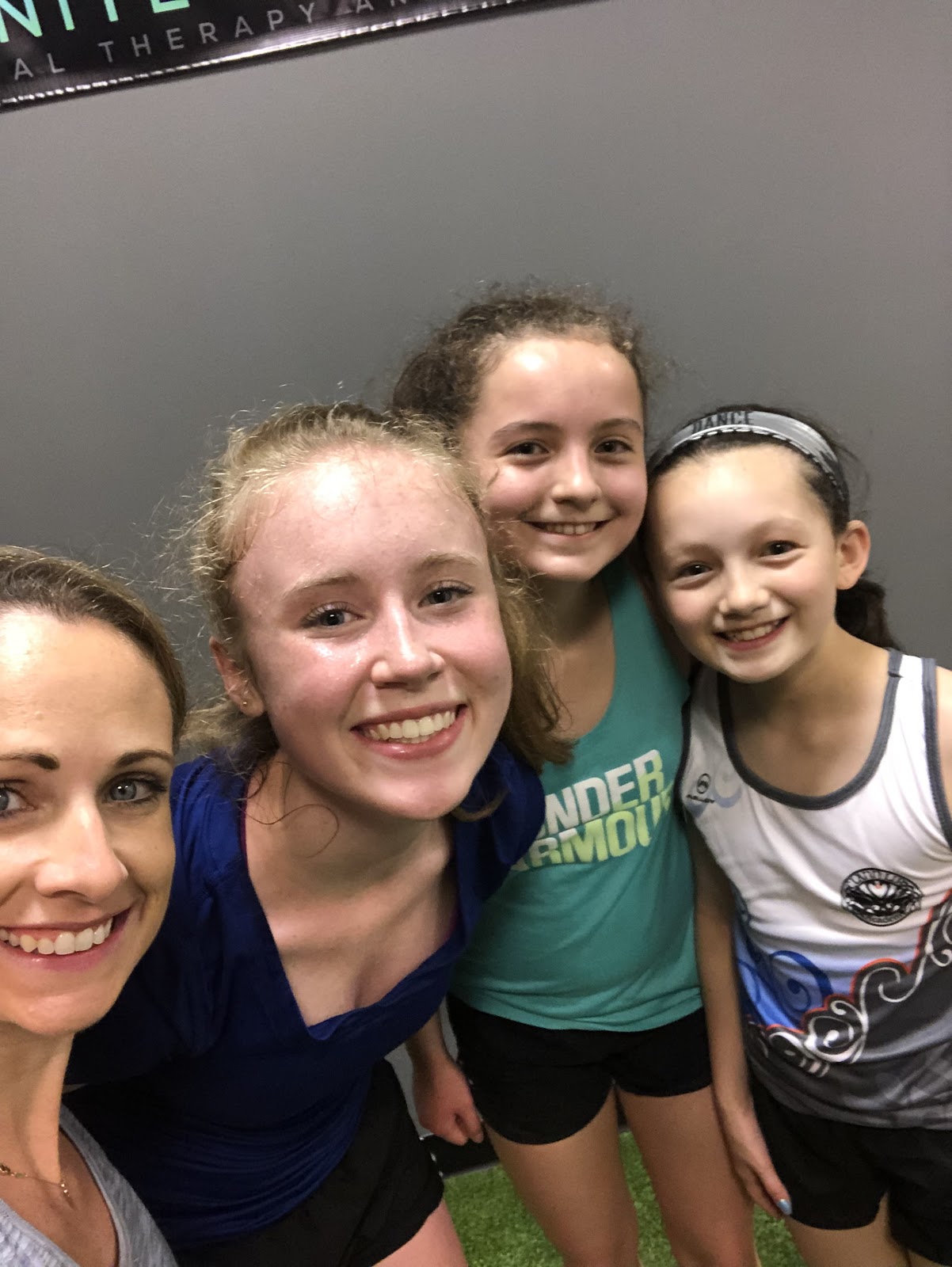
Starting in May 2019, Niamh, Isabel, Grace and Georgia have been working with me twice a week for personal training sessions.
They are all competitive Irish dancers and their teacher wanted them to improve overall strength and power to perform jumps and upper body control to help them in their dancing performances.
From day 1 they showed amazing discipline and hard work. Even though they are young (11-14) they definitely know what they need to do and are motivated to be able to achieve their goals, trying anything I ask of them (without complaining !) and putting their full effort into it.
They even made it to their sessions twice a week during summer vacation!
We work mainly on building strength using dumbbells, kettlebells, barbells, resistance bands and body weight in a circuit style or CrossFit style workout.
I love working with different kids involved in different sports. It’s so fun watching them improve and to see results! It can be challenging at times to keep the workouts fun and varied but I look forward to my sessions with them.
Niamh and Isabel’s mom, Claire said ‘The girls love working with Pippa, they tell me that they have a lot of fun even though it’s hard work! Their power and strength have definitely improved. They have a lot more body awareness and control. I can actually see the physical changes in their legs! ‘
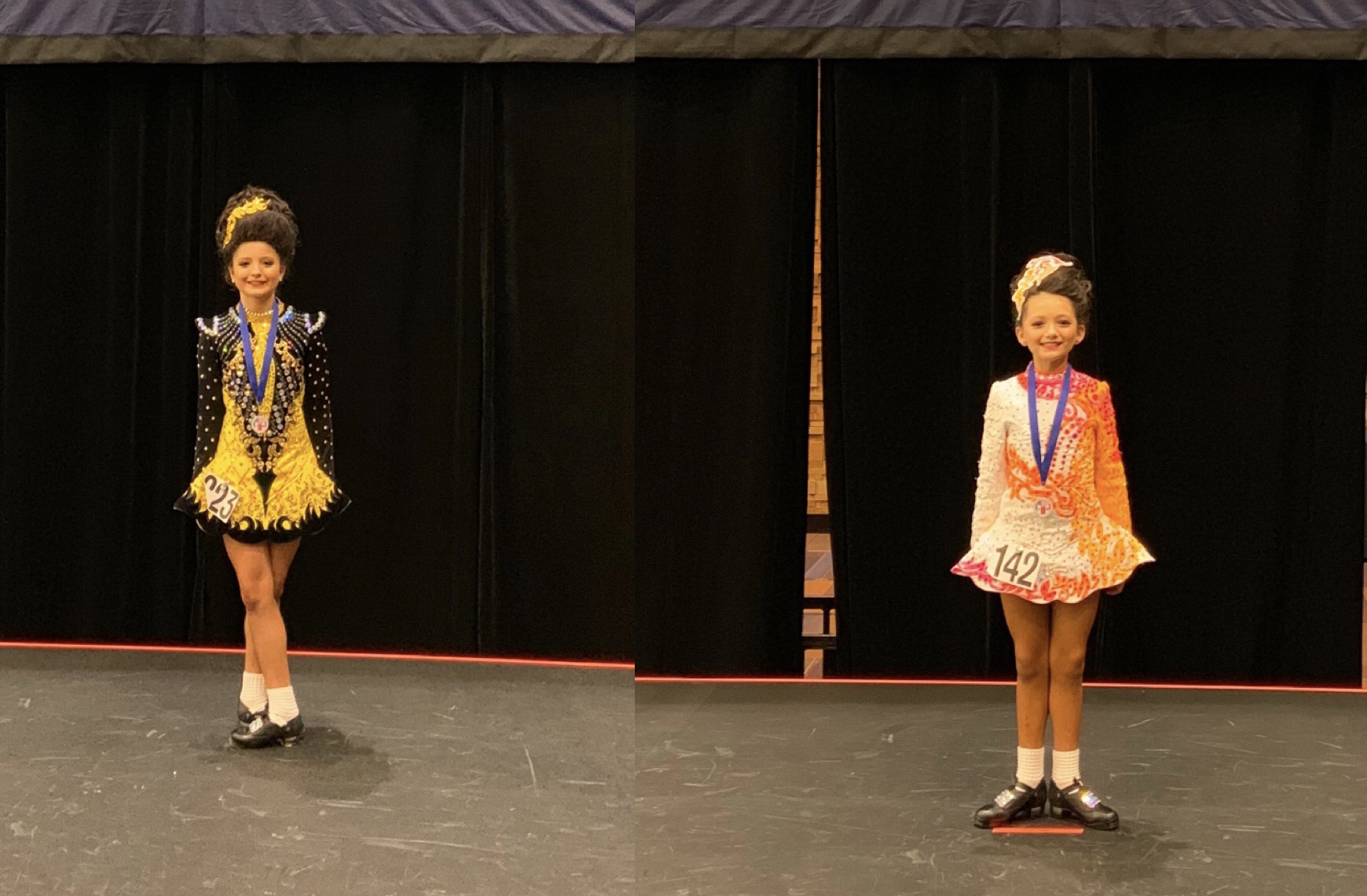
They all recently competed in the North American Irish Dance Championships and all four got recalls! Grace also qualified and is heading to Dublin to compete in the World Championships this April!
I am very proud of these girls and can’t wait to see what else they can achieve!