Welcome back for the resiliency series, KNEE EDITION!
Over the last year, we have been covering the most common areas of the body where people have their aches and pains. Each week will cover a specific area that we suggest people work on in order to resist injury.
This will NOT serve as a way to treat an injury or direct medical advice, but it will be a resource that will house the most up-to-date information on how to make yourself stronger and and more… RESILIENT! We ALWAYS suggest you seek medical attention if you feel you need more help.
Let’s talk about our knees. Chances are, most of you reading this post have had some type of knee pain at some point if you are active. We use our knees all of the time, including walking, climbing stairs, running, squatting, lunging, etc. Knee pain can have multiple causes, but I’m here to talk about nontraumatic knee pain. It’s often referred to under one umbrella as “patellofemoral pain.” This can refer to a few different things, but all of them refer to a sensitivity of the structure surrounding your knee cap. In my experience, these types of overuse injuries are 100% treatable.
I am going to take you through some of our favorite exercises and ways to prescribe exercises to help strengthen and protect against injuries in this area.
One thing to remember, and this is a common theme in these types of posts, injuries can NOT be 100% prevented by any program, we can only reduce our risk. The best way to reduce our risk is to get stronger!
The key to improving the durability of our tendons is to work on heavy, slow resistance training. This means exercise that uses weight, is performed slowly and is challenging enough to make changes in the actual structures within. What we know from research, which is consistently proven time and time again, that exercises have to be challenging enough to make changes within. We don’t have to pose a great challenge with every single exercise we do, but for the ones that we are hoping to make measurable gains with, we must challenge ourselves regularly.
Now, onto the good stuff. Here are a few of our fave exercises to perform to help improve knee durability. It is suggested that you begin at a level that you think will be challenging enough, but not so hard that you are sore for days, but sometimes it takes a few sessions to figure out the difficulty level.
We suggest that each of these exercises be performed 3-4 weekly to make measurable changes. We also suggest repetition ranges of 8-10 for 3, challenging sets.
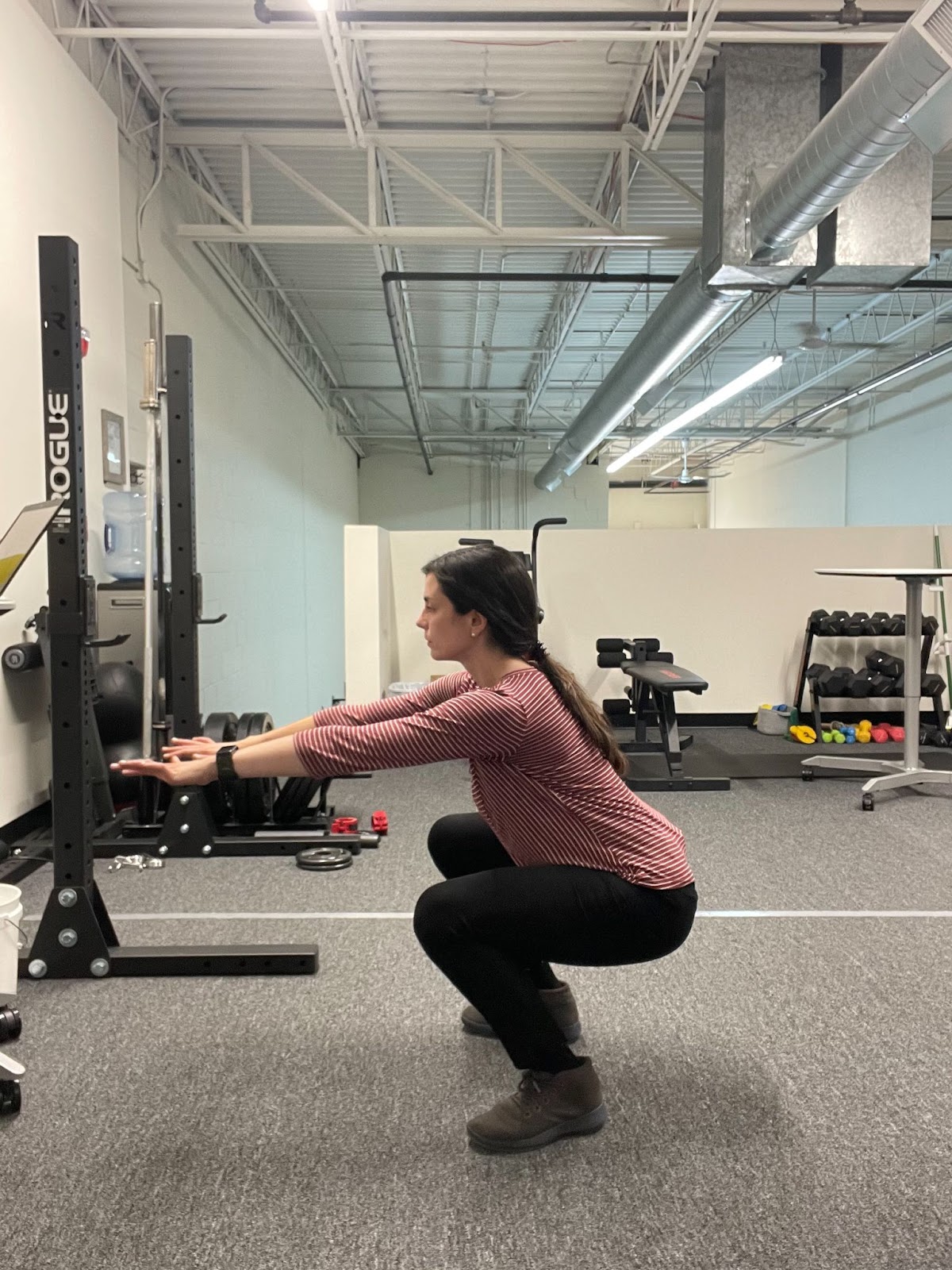
Basic air squat
One medical myth is that you should not let your knees go past your toes when you squat. PLEASElet your knees go over your toes during a squat. You are missing out on the added benefits of performing a full depth squat- increased muscle tone in your quadriceps, in addition to your inner thigh and gluteal muscles! When you are injured, a squat can seem like an impossible task, so we may work with modifying this movement based on your sensitivity.
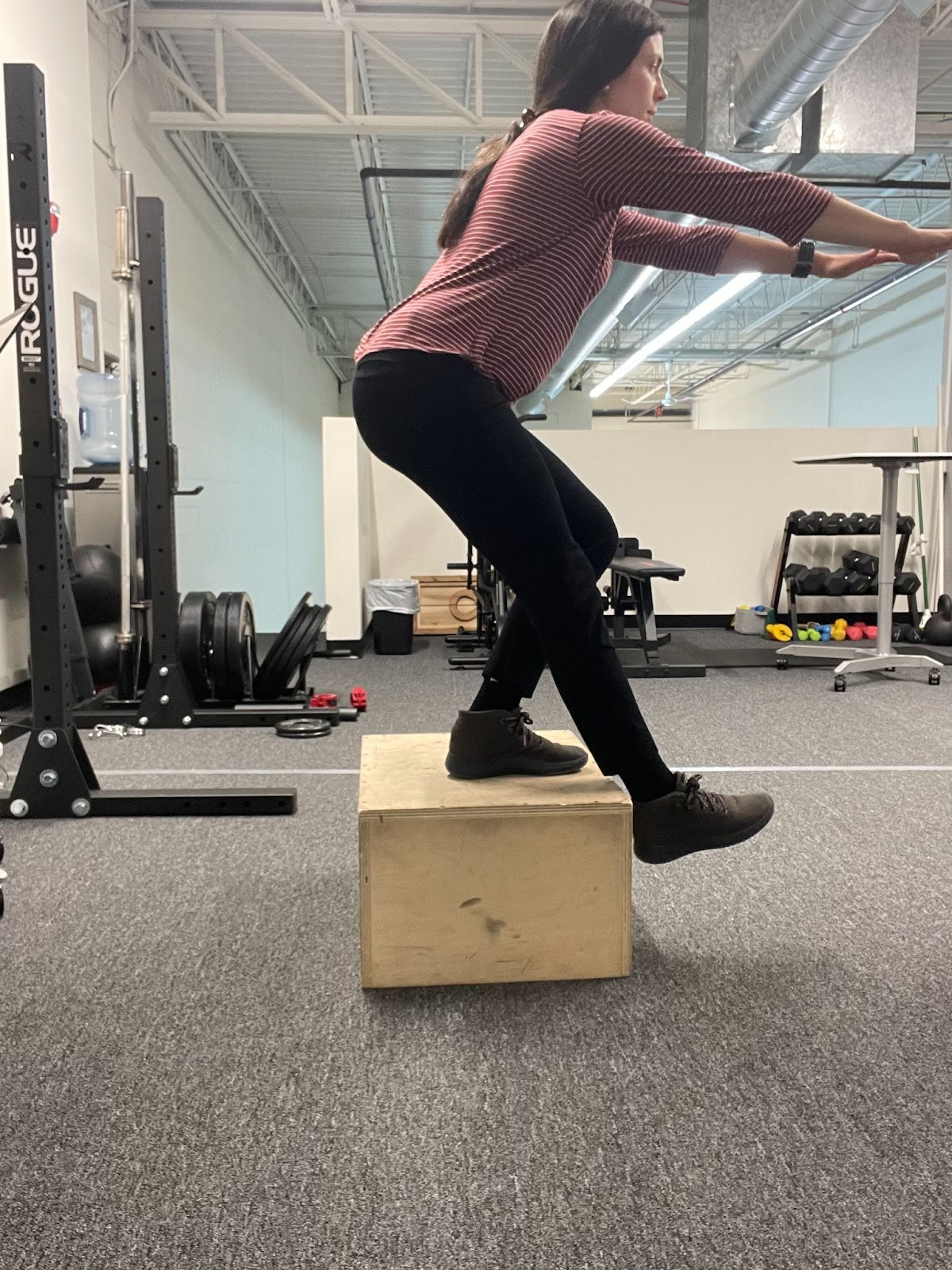
Step down
Seems easy, right? You likely do this every day if you have to walk up and down stairs to get where you are going. You can make this exercise harder by increasing the time over tension (think holding for 20 sec, or slowing down the movement to a snail’s pace) or adding weight!
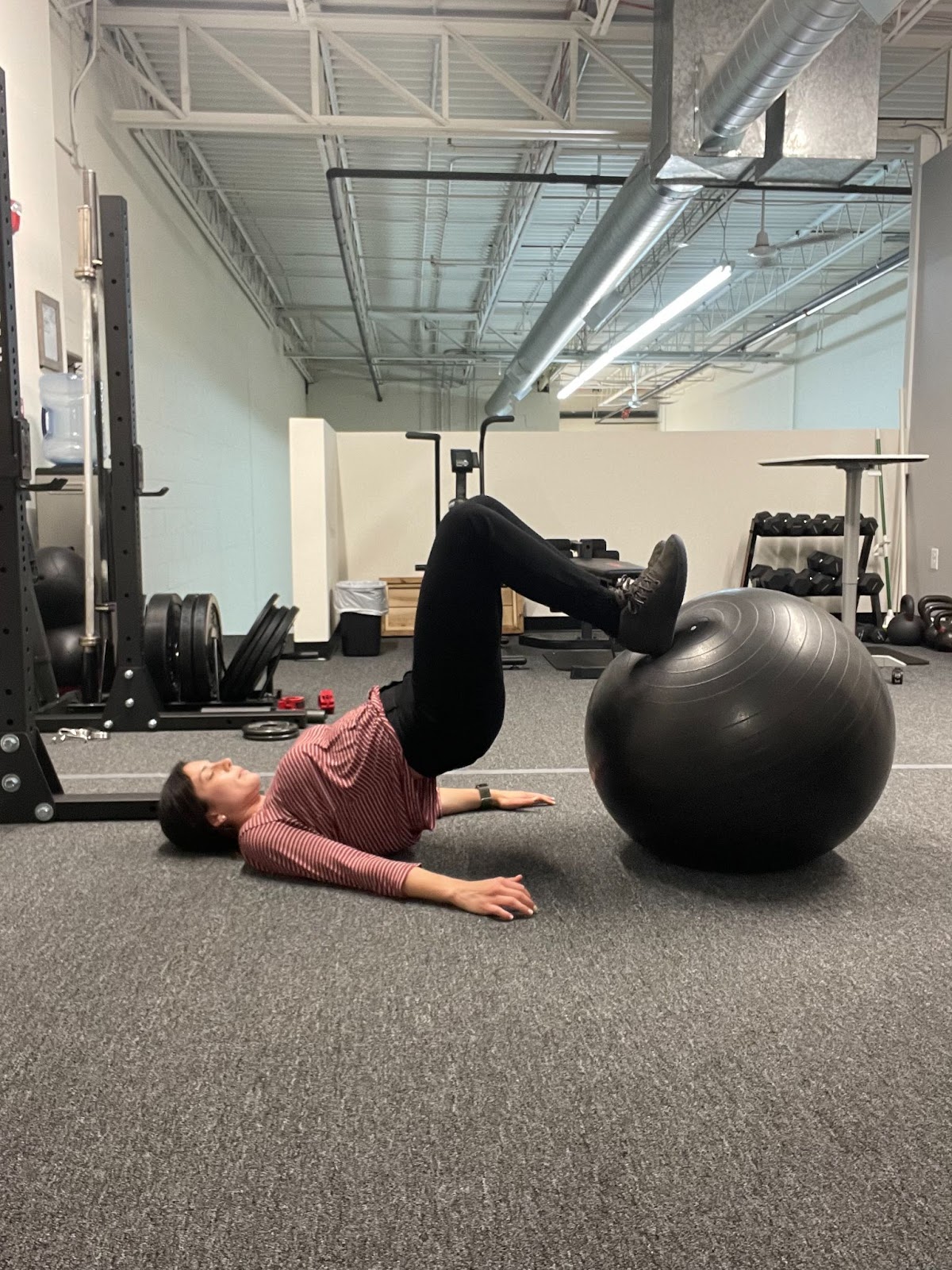
Hamstring curls
I’ve mostly listed quad-dominant exercises here, as your quad is the muscle that directly passes through your knee cap. However, it is important to maintain balance with strength training, so I had to include a great posterior chain exercise as well. Maintaining strong hamstrings is also an important part of injury prevention to maintain a good quad:hamstring strength ratio.
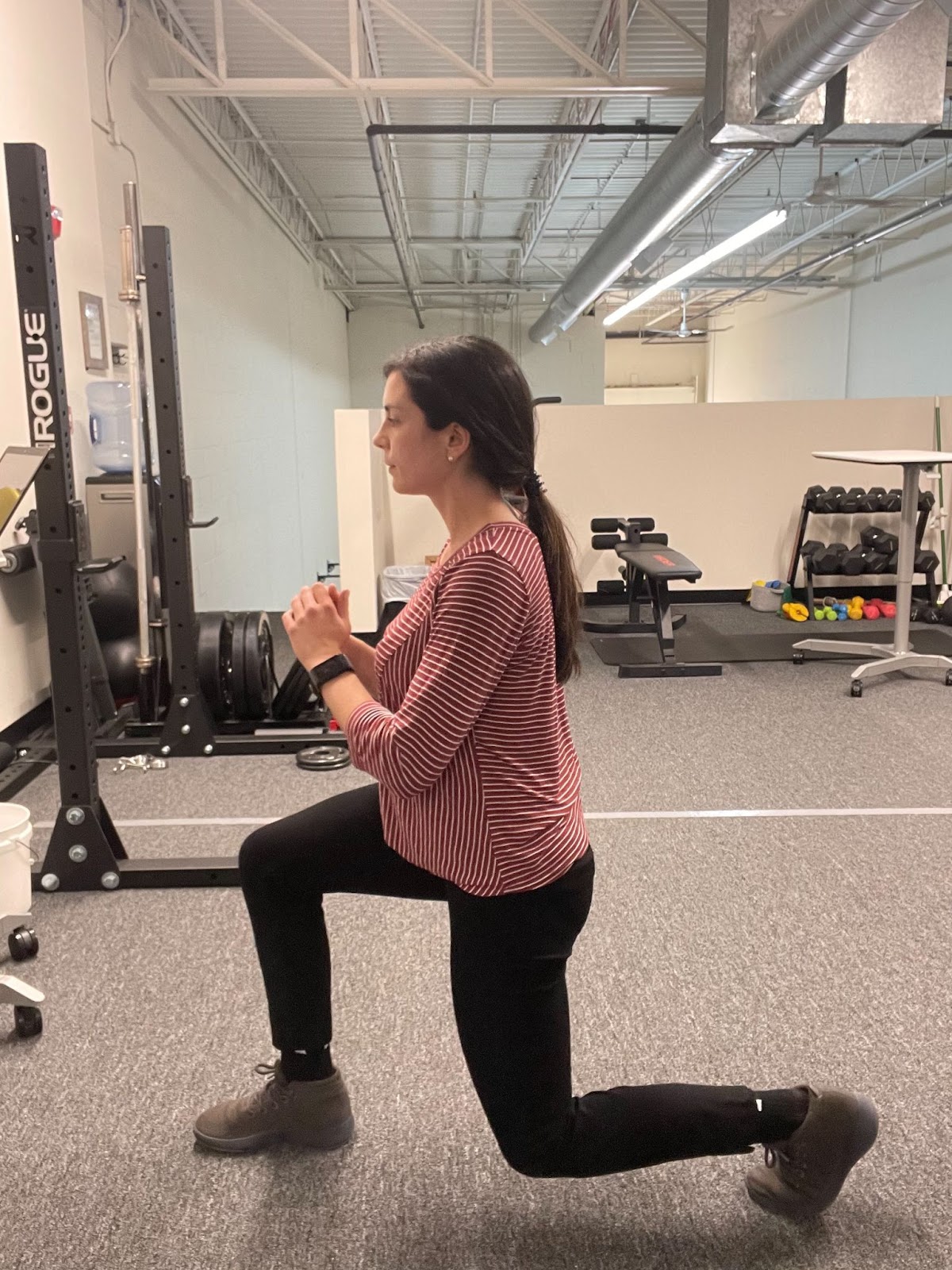
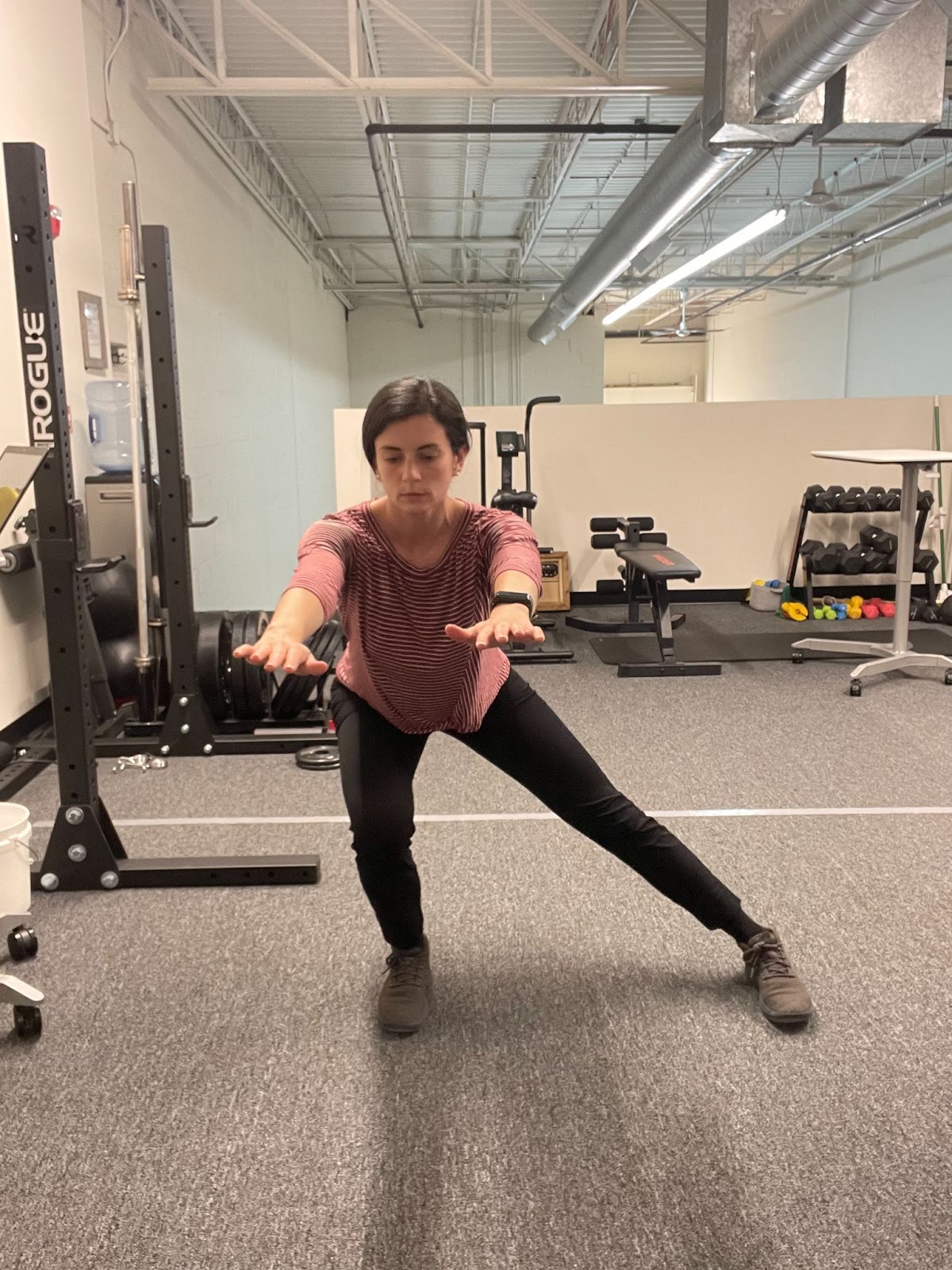
Lunges
Lunges are more of a unilateral exercise, which is great for targeting differences in strength from you left to your right side. You can perform lunges in both the sagittal plane (front and back) and in the frontal plane (left and right) as pictured above.
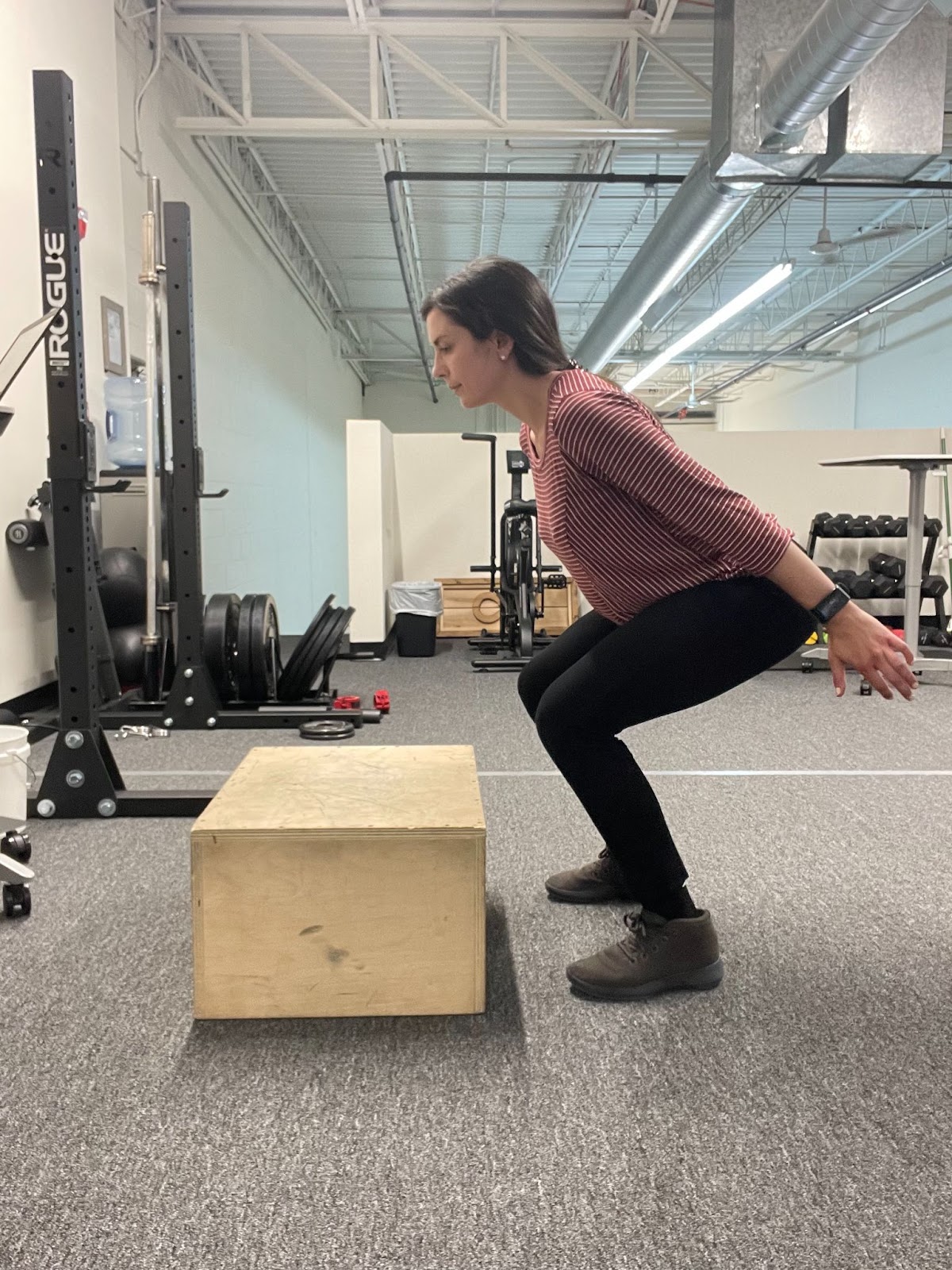
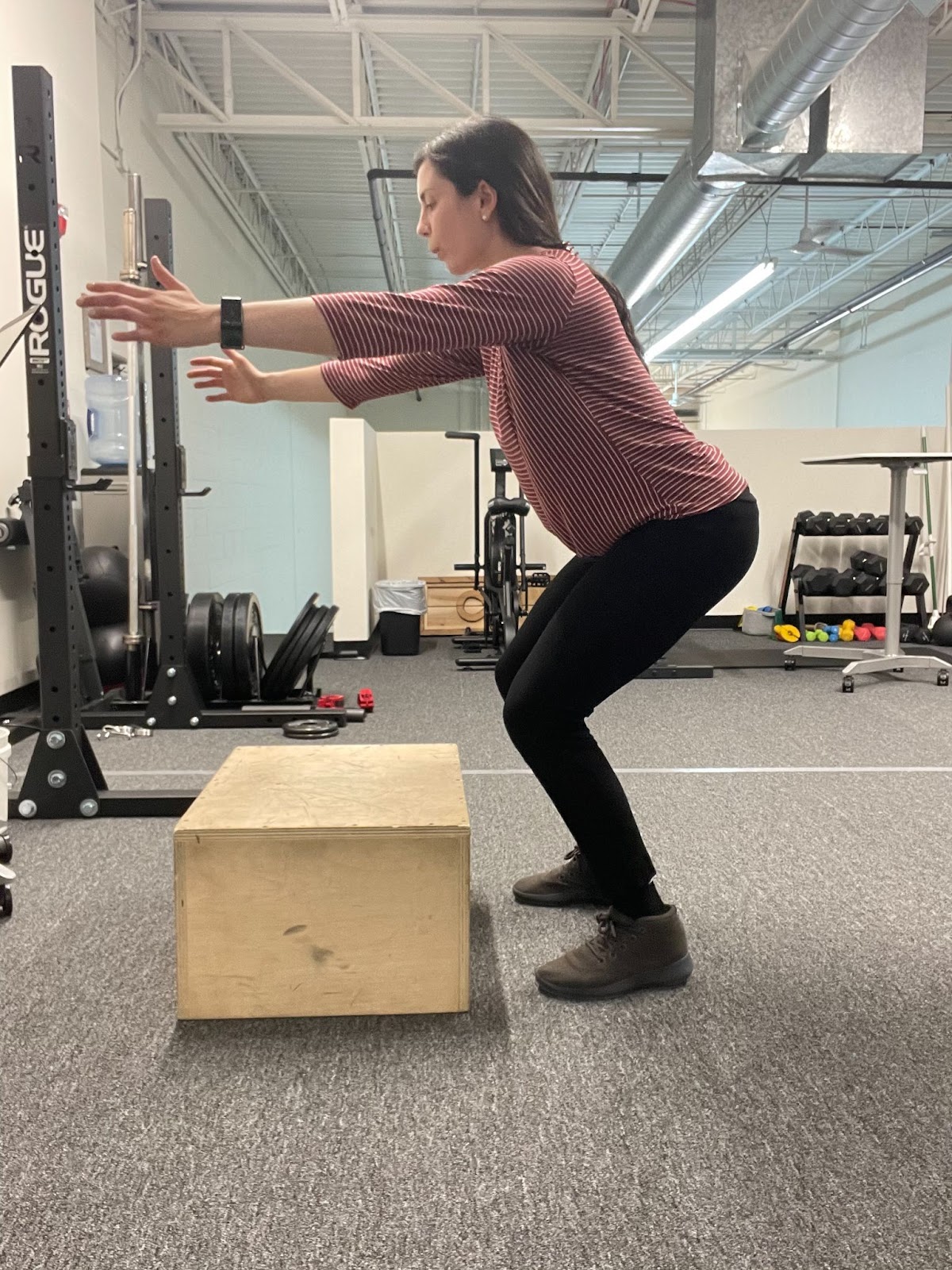
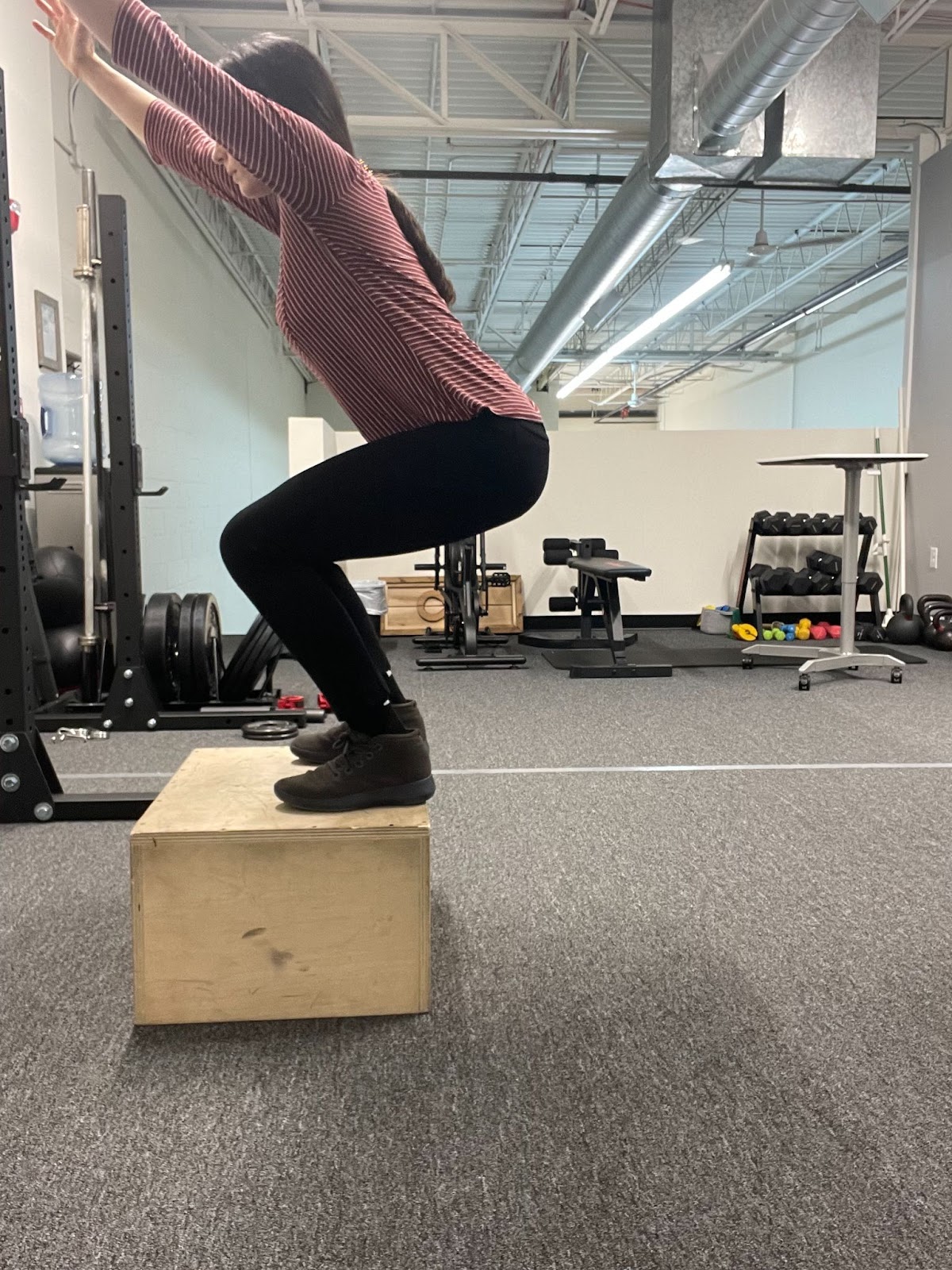
Box Jump
Great for improving power and speed in your quadriceps! This explosive motion is great for improving performance.
This concludes our Knee edition of the Resiliency series. If you learned something, give us a shout! If you know someone who would learn something, pass it along with a share!
Thank you for reading and stay tuned for future posts…..
Everyone likes to try to search for the best “How-to” when it comes to helping their own injuries.
There is NO WAY that you can tell me you haven’t googled for “the best treatment for [ENTER PAINFUL AREA HERE]”
I decided that it would be a great idea to put out some content that I am calling the “Resiliency Series“. Over the next few months (or however long it takes for me to run out of content), I will be covering the most common areas of the body where people have their aches and pains. Each week will cover a specific area that we suggest people work on in order to resist injury.
This will NOT serve as a way to treat an injury or direct medical advice, but it will be a resource that will house the most up-to-date information on how to make yourself stronger and and more… RESILIENT! We ALWAYS suggest you seek medical attention if you feel you need more help.
Topics that will be covered include:
The lower back! The most common area of long lasting pain for MANY people in our population.
The knee! A very common area for many active people to have issues with at some point in their lives.
The shoulder! Another very common place that needs long-lasting attention in regards to strength and flexibility. There are SO many misconceptions about what someone should or should not do with regards to their shoulders – with a history of pain or not…
The foot! Lots and lots of foot pains have hobbled into the clinic from all the COVID-19 warriors looking to become runners all of a sudden… Feet need strength training, too! In pain or not, if you want healthy and happy feet, stay tuned.
I will probably keep going but that’s all for now 🙂
I am going to start off the series today with some of the BEST ways that you can stay resistant to injury on a more general level.
Here are my most helpful tips that you can apply TODAY.
Sleep is the most effective performance enhancing drug known to man… And it’s free. This is INCREDIBLY important to remember and should be the #1 place to begin when trying to address long-term resiliency and injury prevention. Sleep doesn’t only improve and enhance your physical state, but it also enhances your mental capacity as well. We all function better with more Z’s… You can do all the stretching and strength training in the world, but if you are running on 4-5 hours or sleep per night, its like driving with your E brake on. You’ll get to your goals but it will absolutely take longer to get there
Most injuries are from doing too much, after doing too little for too long… If you do more than your body can handle, it will tell you. If your capacity to handle that said activity is low, then the ramp up needs to be MUCH slower than you may think it needs to be. If you have a goal to increase how much you do (ie. increase how far you are running), you should absolutely be adding to your overall activity (mileage in that case) little by little. Also… think about the entire week of activity, vs day to day. In the example of running, you should be thinking about your total mileage over the course of the week vs just the day itself, it all adds up.
Understand that when your stress levels are high and life is a bit nutty, you can be at risk of an injury. Just like when your body is a bit stressed and tired you are more apt to get sick? Same thing goes for injuries. If life’s tossing you lemons, don’t try and squeeze the shit out of them with super hard workouts. Ease up a bit, stay active but don’t shoot for personal bests.
Your GREATEST risk of an injury is a previous injury. Sorry folks, this is a proven fact and complete prevention isn’t ACTUALLY possible. If you have had an injury once, you are at risk for developing it again. You can only reduce your risk of getting hurt!
How can you reduce your risk? Learn more in the Resiliency Series to come!
Today we are highlighting Lily who has been with us since the Fall of 2019. Lily is a high school crew athlete who was dealing with knee pain that lead her to stop running at practice. The pain crept in seemly out of nowhere and she noticed that it just was not going to go away on it’s own.
“I have been doing crew since 6th Grade and really enjoyed rowing out on the water with my friends. When I joined the High School Crew Team in late August 2019 however, I noticed that my knees would begin to hurt during our warm-up runs and would then prevent me from participating in the other activities in practice. Due to the already existent pain, my knees would then begin to hurt when I was sitting down, often at school. This would prevent me from paying attention to my full abilities in class.”
She was impacted on a daily basis by her symptoms and was at a loss of what to do about it. Being a teen, she felt that she shouldn’t have to deal with pain like she was having.
“I had pain in my knees when I was walking up and down hills or stairs, running, jumping or any form of impact on my knees. I often found that my knee pain would flare up during the day at school.”
After the first session with Lily, I knew that I was working with an incredibly dedicated young lady. It isn’t uncommon for a young client to speak for themselves during the evaluation (versus their parent), but it is truly impressive when it does happen. Lily took the lead and consistently advocated for herself throughout her entire rehab. She was very diligent with her program and communicated with us between sessions like a mature adult.
“Before starting the treatment I did not think that there was any way that my pain and discomfort could be helped. I knew that, after talking to a Orthopaedic Surgeon, nothing could be done to directly treat the symptoms.”
I can’t say there wasn’t any eye rolling, big sighs or, “do we have to?!’s” during sessions, however, Lily worked hard, poured in a ton of effort and always did her best.
“Even though sometimes the treatment is difficult, after every session I feel stronger and my knees do not hurt nearly as much as they did only a few months ago.”
At this point, Lily is in her third and final rehabilitation phase. She has progressed to returned to running, she performs her strength routine at least 2 days per week on her own, and returns to our office for a monthly session to review and progress her home program.
“I can now run, with little to no pain for a relatively long period of time. The treatment has not only strengthened my leg and the other muscles surrounding my knees, but also my core and upper body. This has an incredible advantage when rowing and allows me to participate in all the practices and spend time with my friends and teamates.”
We asked Lily to tell us what others should know about seeking treatment at Infinite Potential PT.
“I believe that if you are prepared to work hard and persevere through the treatment plan that Lori gives you, which can sometimes feel like a challenge (especially when you have other commitments to your studies & crew team, and also want to spend time with friends and family!), you will definitely feel the benefits! Don’t give up – trust that you are strong enough, both physically and mentally, to succeed and become the best that you can!”
Thank you, Lily for your hard work! It was a pleasure to have gotten to know you and help you through this process.