by Dr. Loni Rodriguez | May 19, 2020 | Exercise advice
A lot of people out there are missing their gyms and can’t wait to get back to their normal workout routine. Over the past few months, we’ve all had to adjust our exercise habits and try to find a new way to stay healthy and motivated. At first it was novel to change up our program and find new ways to exercises. It was even a bit of fun trying to think of creative ways to workout, but we all really just want to make sure what we’re doing is actually making us stronger, more fit, and healthier! The last thing anyone wants is to hurt themselves working out at home or waste their time not getting in better shape. Here are my 5 tips for working out at home to make sure what your doing is safe, smart, and effective.
1. Your workout program should be consistent. When you think about your exercise routine it should be consistent. The frequency of how often you’re exercising, and the intensity of the workouts should be relatively steady. Of course it’s fine to add one extra day in a week or to have a bit of a more challenging session, but overall things should be pretty consistent. What I would NOT recommend is a schedule where you take a whole week off and then workout 6 days the next week. Or where week 1 the workouts are super easy and then the next week are the hardest workouts of your life. Keep things consistent and slowly make things more challenging to see progress.
2. It should get more challenging over time. If you want to see yourself get stronger or healthier, you need to increase the challenge of your program over time. This means slowly making things harder as your body adapts to the workouts you’ve been doing. Here is an example- day 1 you do 3 sets of 10 bodyweight squats and they were tough to do. On day 15 you do 3 sets of 10 bodyweight squats and they were easy! This means your body has adapted and gotten stronger, which means you have to change something to make it harder now. You could add a few more reps, weights, or even an extra set. Choose one of these to change, but don’t choose all of them.
3. Choose one progression at a time. When you realize you’re ready to make an exercise harder, pick one small thing to change at a time. If squats are getting easy to do, try to add more reps, weights, or even an extra set. Here is an example of what I would NOT recommend doing- 3 sets of 10 bodyweight squats is easy for me to do now. To make it harder I’m going to hold a 20-pound kettlebell, increase each set to 20 reps, and do a 4th set as well. Don’t change too many factors at once, making any one of those modifications would be awesome, just don’t try to change them all at the same time.
4. Keep a goal in mind. Think about what you’re trying to get out of your home program. Is it to get stronger? Do you want to improve your cardio? Or maybe you just want to get a good sweat in a few times a week. Any of those goals are great! Keep that goal in mind when you’re exercising and make sure that’s what the program is doing for you. Your workouts should help you reach that goal by being specific and targeting the right parts of your body. Balance is good, so having a mix of these different goals is great, but focusing on one at a time will make your workouts more effective.
5. Enjoy your workout. At the end of the day you doing a workout is something you do for yourself. It’s something that you should enjoy and have fun with. I always say the best form of exercise is the one that you like doing. If you’re not a runner know that you don’t have to be. If you’re not a weightlifter you also don’t have to be one. Find the kind of exercise that gets you excited and then stick with it! Every type of exercise has its purpose and can be really helpful in specific ways, but at the end of the day you need to enjoy the time you spend exercising.
Let us know what you’ve been working on at home. If you have any questions, comments, or need help making sure your home workouts are following these 5 tips let us know!

by Pippa Teague, Strength Coach | Oct 10, 2019 | Abdominals, Conditioning, Exercise advice, Injury Prevention, knee pain, Ladies, lifts, Personal training, Recovery, strength training, Uncategorized, working with injury, youthtraining
Lunges are a great unilateral movement to work not only the muscles involved but also work balance and stability.
They can be done with little space required
-difficulty can be added by including weight- kettlebell or dumbbells
Here are some lunge variations:
The reverse lunge
- start with the feet hip width apart and facing forwards
- with your back remaining straight take one foot backwards, allowing both knees to bend as the back knee touches the ground lightly
- push off the back foot keeping the front foot firmly planted
- drive through the heel and return the leg beside the other
Repeat on the other side
this works the glutes, quads and hamstrings and is also a great way to improve knee stability
Alt reverse lunge
Lateral Lunge
We often forget to move laterally. Lateral movement is great for stabilizing the hips and works your inner thigh and glutes.
- start with your feet together
- Step out wide to the side, transferring the weight over to the side you just stepped with, keeping both feet planted on the ground and facing forwards
- sit back into a squat position and go as low as you feel you are able to
- drive through your foot and return to the starting position
Repeat on the other side
Lateral lunges w/ kb
Static (split squat) Lunges
During this movement the feet remain in the same position (static)
This movement is great for those of us who are not so good with balance when moving and is the least challenging of all the lunges. Static lunges help build balance and strength from a stationary position.
Muscles worked are your thighs and glutes
- Start in a split stance- hip width apart with one leg in front of the other
- Lift onto the toes of your back foot and lower that knee down to the ground allowing the front knee to bend also to a 90 degree angle parallel to the ground
- Press through the heel of your front foot and straighten the legs back up.
- Keep your torso upright. Most of your weight should be felt through the front leg
Repeat 8-10 reps and then switch to the other leg
Split Squat w/ kb
Alternating jump lunges
Similar to the reverse lunge but with an element of power and plyometric transition with a jump from one lunge position to the other by switching feet in the air
This exercise challnges the same muscles as the regular reverse lunge but also adds a cardiovascular effect by increasing the heart rate and helps burn more calories.
tips to help your jumping lunge
- master the basic lunges first-reverse lunges and walking lunge
- aim for soft landings, avoid landing hard on your knee
- chest and torso stays upright
- be light on your feet and try to spring through the ball of your feet to gain some air time
- you can increase the difficulty by increasing reps, jumping higher and spending less time on the ground
Alt jump lunges
Try some lunges today and let us know how you get on!
Happy lunging !
by Pippa Teague, Strength Coach | Sep 30, 2019 | Conditioning, Exercise advice, Injury Prevention, Personal training, Recovery, Running, strength training, Uncategorized, youthtraining
by Pippa Teague
Infinite Potential Strength Coach
I would like to start off by giving the research credits to Barbell Medicine and their 3 part series has been summarized below.
Previously a lot of peoples beliefs surrounding youth and resistance training involved some of the following quotes and I still hear some of these coming up today:
“Resistance training stunts growth”
“Kids shouldn’t lift weights-it will damage their growth plates”
Well…both of these statements have been proven to be wrong and we have slowly shifted from that mindset.
Childhood is the time where we need to be focusing on building bone mass and structure by weight bearing activities!
It is ok for kids to weight train and resistance train-in fact, its GOOD for them!
Studies have shown these three important factors to resistance training as a youth
- Resistance training should be essential for aspiring athletes
- Participation early in life correlates to later life
- Those who don’t resistance train are at a higher risk of negative consequences
Developing those skills early in life is very important if we want to remain healthy and fit as we get older.
Today 10 year olds are participating in the same amount of exercise as 60 year olds!
We are failing at getting our youth to exercise the amount that has been recommended – 5-17 year olds should engage in 60 mins of moderate to vigorous activity/day! Only 40% are actually achieving this!
Here is a breakdown of some age ranges and examples of how to include resistance training int their exercise.
Ages 6-8 – FUNdamentals, game oriented exercise, coordination, balance, agility
Ages 10-13 (males ) 9-11 (females) – learning to train, plyometric and free weights with a variety of training
Adolescence 14-18 (males) 12-18 (females) training to train, sport specific plus other training, heavy and slow resistance training
Adulthood Ages 18+ – training to compete, sport specialty, resistance training still an integral part
One study found that strength training reduced injuries three fold over the course of 1 soccer season! It also improved cutting speed and jumping !
Another study looked at females in repetitive sport e.g. running, and found that those youth athletes were 3 times more likely to have a lower bone mineral density than females who did the repetitive sport but also were resistance training.
Resistance training is important not just for youth athletes but for growing children.
Longer programs elicit larger effects and it is important for youth athletes to maintain resistance training alongside their sport for optimal results!
Citation: ‘resistance training for youth part I and part II’
www.barbellmedicine.com
by Pippa Teague, Strength Coach | Sep 19, 2019 | Conditioning, Exercise advice, Injury Prevention, lifts, Personal training, Running, squats, strength training, Uncategorized
By Jenny Gusella
These days there are endless workout options, from spinning to barre to HIIT to personal training, bootcamps, home DVDs and more. There’s also tons of information and scientific research floating around about the benefits of one workout versus the next. With your head spinning from information overload, you finally decide to seek an expert opinion, so you ask a trainer like me, “OK. Tell me the truth. What is the best workout?”
The best workout is the one that you will actually do. Whether it’s because it’s the quickest, or you love the instructor, or your friends go to that gym, or your favorite coffee shop is next door, or because you genuinely love the workout, there is no reason too small if that reason is enough to get you to complete the workout.
The human body is much more simple than we think. Eat food, move around, sleep, repeat tomorrow. Of course, in between those things is an entire life – a career, familial responsibilities, not to mention social pressures, self-doubt, etc. All of those things complicate the basics, but you have the power to uncomplicate fitness. Are you stressed that you don’t have an hour to spare to workout? Simple solution: do a 45 minute workout. Are you dreading doing that 3 mile run you promised yourself you’d do? Simple solution: Don’t do the run. Do some squats, lunges and pushups, or go for a bike ride, or walk your dog.
Yes. I just said, “don’t do the run.” Running in particular is a topic that comes up so often in this line of work. So many of us dread running, and yet force ourselves to do it anyways, as if it’s some sort of requirement. I am here to tell you: YOU DO NOT NEED TO RUN IF YOU DON’T WANT TO. Ever. (Unless you’re being chased.) I am also here to tell you that you do not need to be “a runner” to go on some runs. If you like it, do it, if you don’t, do something else. It truly is that simple. Think about Forrest Gump. Why did he start? “I just felt like running.” Why did he stop? “I’m pretty tired. I think I’ll go home now.”
The next time you find yourself in a workout rut and are about to ditch the gym, ask yourself if there’s maybe another physical activity you’d rather do instead, and try to direct yourself down that route. Don’t worry if your workout doesn’t “scorch the most calories” or “target 90% of your muscles” – just move!
by Pippa Teague, Strength Coach | Sep 6, 2019 | Client Achievements, Flexibility, Jumprope, Ladies, lifts, Personal training, Running, strength training, Uncategorized
-Pippa Teague
Infinite Potential Personal Trainer/Strength coach
NASM CPT
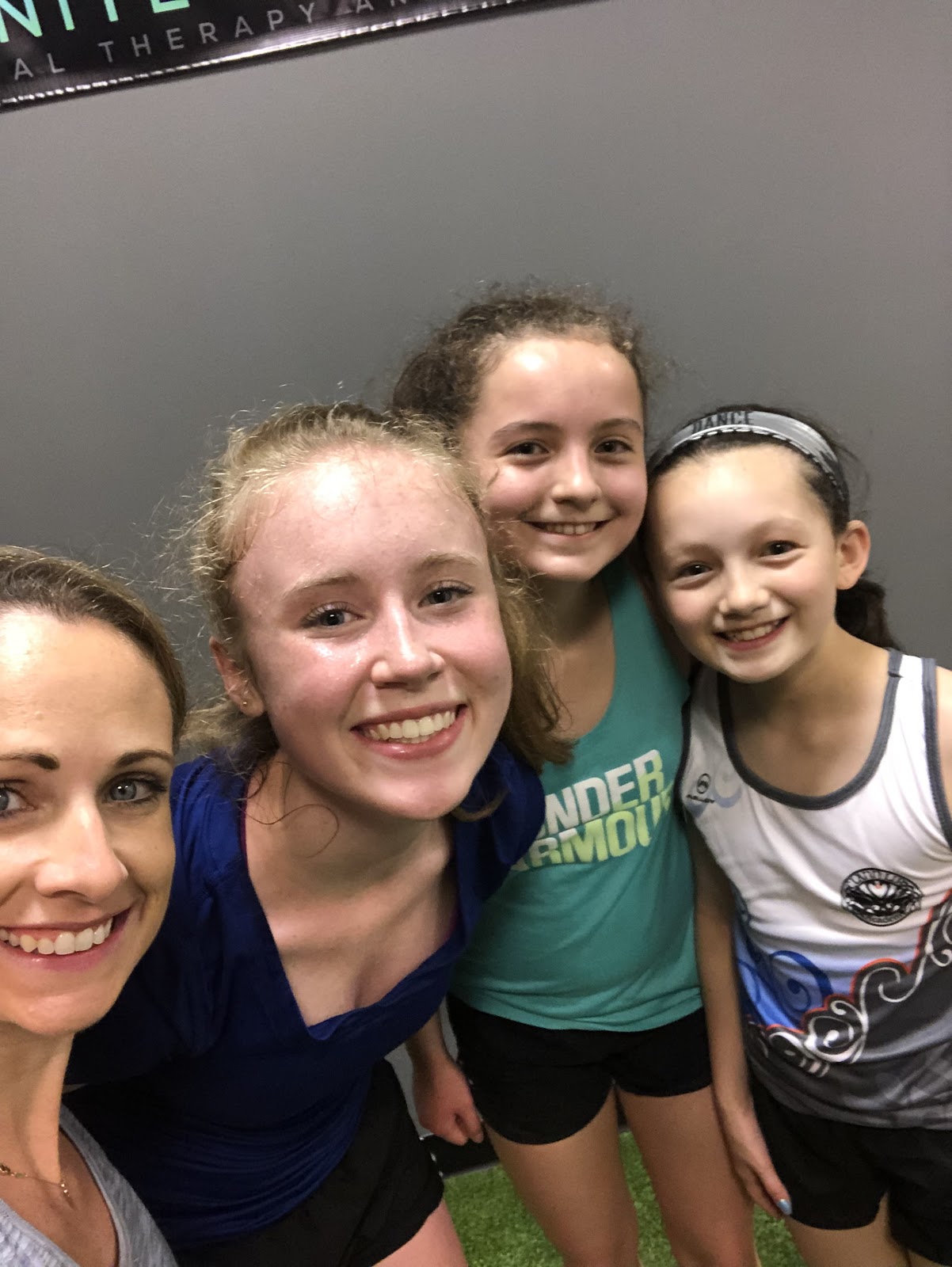
Starting in May 2019, Niamh, Isabel, Grace and Georgia have been working with me twice a week for personal training sessions.
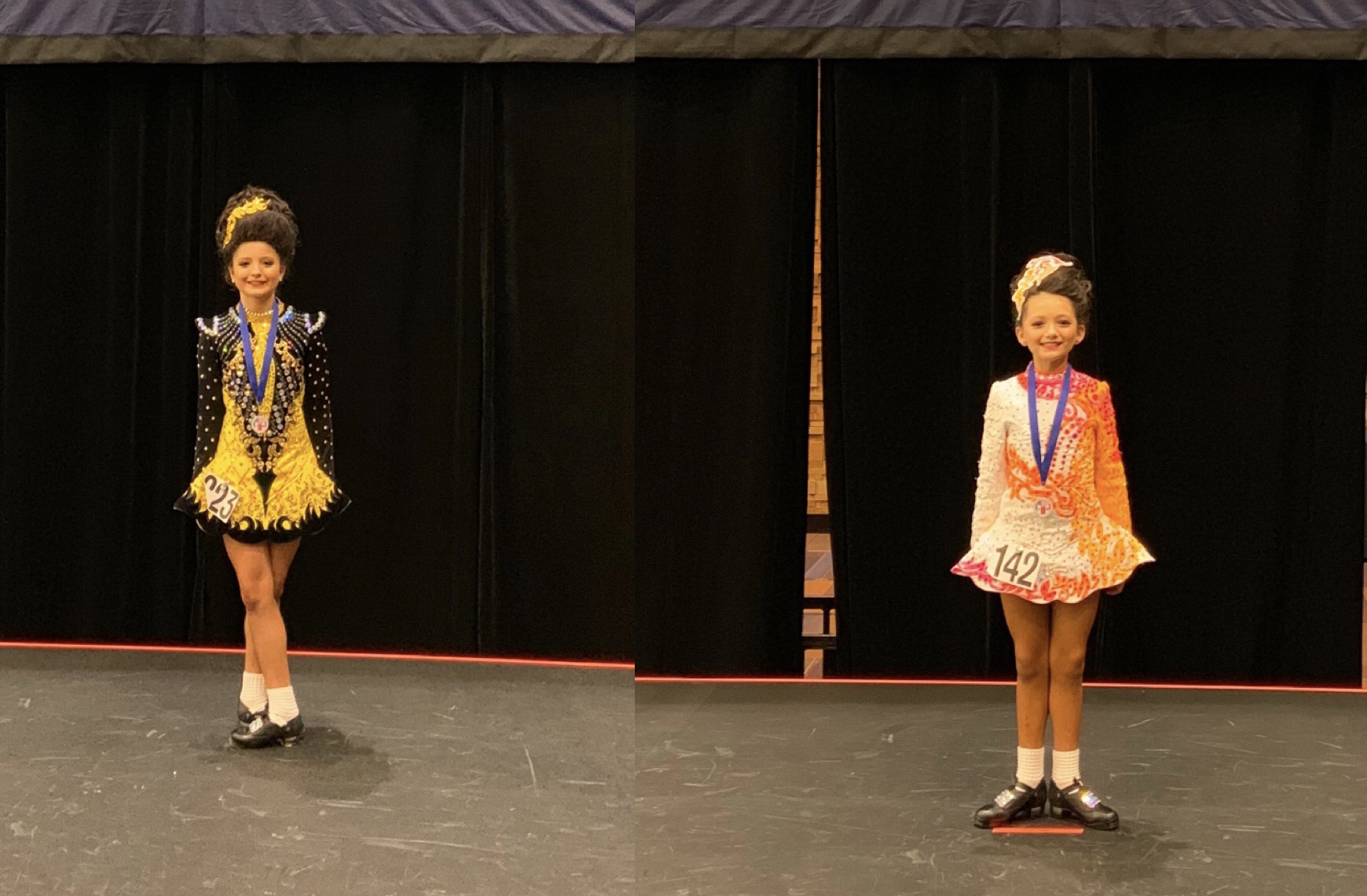
They are all competitive Irish dancers and their teacher wanted them to improve overall strength and power to perform jumps and upper body control to help them in their dancing performances.
From day 1 they showed amazing discipline and hard work. Even though they are young (11-14) they definitely know what they need to do and are motivated to be able to achieve their goals, trying anything I ask of them (without complaining !) and putting their full effort into it.
They even made it to their sessions twice a week during summer vacation!
We work mainly on building strength using dumbbells, kettlebells, barbells, resistance bands and body weight in a circuit style or CrossFit style workout.
I love working with different kids involved in different sports. It’s so fun watching them improve and to see results! It can be challenging at times to keep the workouts fun and varied but I look forward to my sessions with them.
Niamh and Isabel’s mom, Claire said ‘The girls love working with Pippa, they tell me that they have a lot of fun even though it’s hard work! Their power and strength have definitely improved. They have a lot more body awareness and control. I can actually see the physical changes in their legs! ‘
They all recently competed in the North American Irish Dance Championships and all four got recalls! Grace also qualified and is heading to Dublin to compete in the World Championships this April!
I am very proud of these girls and can’t wait to see what else they can achieve!