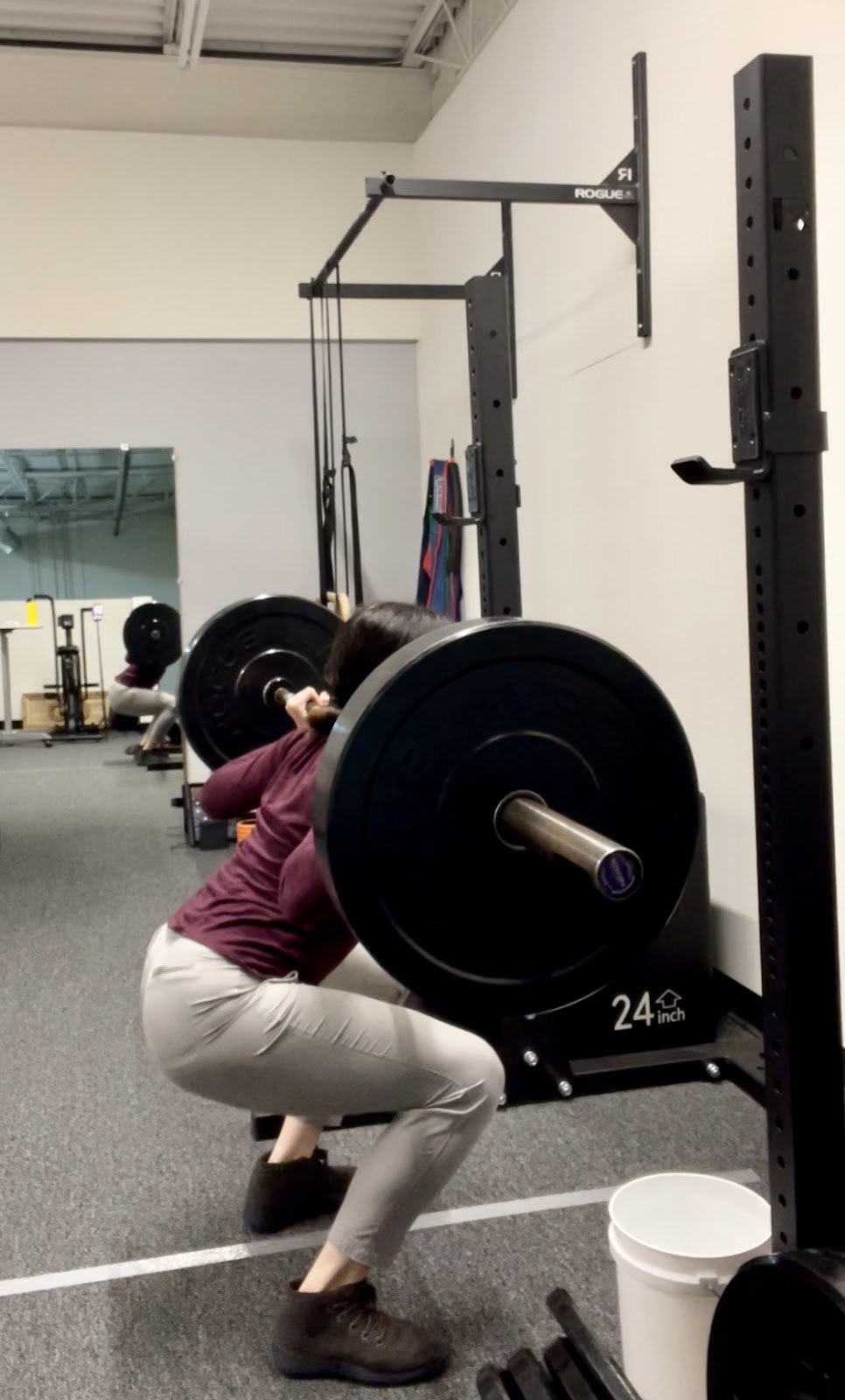
It’s no mystery that we are fans of resistance training at IPPTW. And it’s not only because it keeps us strong.There’s a whole lot of other benefits to training with load, and I’m here to dive onto a few…
Improve flexibility
This one might be a little confusing. We don’t typically associate resistance training with flexibility. However, especially when focusing on full range of motion, resistance training will promote flexibility, and has proved in some cases to be superior to static stretching.
Increase bone density
We need to do load bearing resistance training to keep our bones strong, its physics! Especially as we age, it is important to combat bone wasting with lifting in ways that load our skeleton- squats, deadlifts, lunges, push ups, etc. , etc.
Improve BP and Sugars
Compared to other forms of exercise, resistance training proves to be superior for managing bood sugar levels long term. A combination of resistance training and endurance training has shown to lower blood pressure just as much as antihypertensive medications, and in theory, should have longer lasting effects
Sleep More!
Lifting helps us sleep better. In fact, compared to the non lifter, a person who regularly strength trains is less likely to have poor sleep quality. Sleep is so important for so many reasons, but more as it relates to physical therapy and what I do on a daily basis, it is important for managing pain. Sleep deprivation has been linked to higher levels of inflammation and pain, and therefore is a factor when I’m treating an injury.
Improve mental health
Resistance exercise training has been shown to greatly reduce depressive symptoms in adults regardless of health status, total volume of training, or significant improvements in strength. Getting stronger is great for both the physical and mental body.
Aging Well
In addition to balance training and functional exercise, resistance training is one of the most effective types of exercise to age gracefully. By working on making strong muscles, we can help combat and reverse the adverse effects of aging, while preventing future disability and injury! Simply put, strong=less fragile.
I don’t need to remind anyone of all the lifestyle changes we’ve had to make over the past few months. Everyone has had to make different changes depending on your particular habits, but we all can relate to the common theme of being able to do less. We definitely are spending more time at home, less time in the gym, and less time being active in general.
Because of this, we’re seeing a difference in our ability to stay fit and healthy. A lot of how we know this is based on how we feel. Personally, I feel like I haven’t been as healthy as I’d like because I can’t play in my soccer leagues anymore and I haven’t been able to go to the gym at all. It’s hard to measure being less active and healthy, but that’s what research is for! There was an article published in the European Journal of Sports Science on May 12th, 2020 that looks at this exact topic. The authors review the impact of being sedentary due to COVID-19. Even better, they also provide some recommendations for how to combat the effects of being more sedentary. I’m going to do a bird’s eye review of this article and help outline their tips for physical activity and nutrition.
The first thing this article talks about is how we can lose muscle strength very quickly if we are totally inactive. You can see these changes after just 2 days of total bedrest. Thankfully, we are not on total bedrest. Even if we are confined to our homes and are only able to leave the house for groceries or a walk in the neighborhood, that is still a great way to maintain some muscle strength. Combine that with some structured exercise and you can definitely prevent muscle loss during this time at home.
The article also looks at some more specific topics like blood sugar levels and how people with conditions like diabetes or heart disease should especially take action to stay healthy during this time. Decreased activity has a direct effect on our bodies blood sugar levels and our cardiovascular fitness. One thing they found is that most of us are getting a lot fewer steps each day. I usually aim to get 10,000 steps on a normal day, but recently that is not even a remote possibility. I find that by the time I finish doing some work in the afternoon I’m lucky if I‘ve done 1,000 steps. This article recommends that you aim for at least 5,000 steps each day, which is much more manageable in my opinion. If possible, try getting outside and go for a walk, jog, or hike. Mixing it up and trying different ways to keep moving will help make it easier to get your steps in each day. By doing this you will help keep your blood sugar more regular and even help maintain your cardiovascular system.
Finally, the article also talks about nutrition and how we need to strike the balance between eating enough without overeating. I found it really interesting that they mention it is common for people in very stressed environments to actually under eat. People who are sick or have a very strict home confinement situation may feel so stressed that their diet is suppressed. Personally, that is how I felt at the start of quarantine. Things were changing so fast and we had no control over it. I found myself not hungry or getting full after just a few bites of dinner, which is highly unusual for me. It’s definitely gotten closer to normal now, but I still feel my diet has changed the past few months.
The other side of this is the group of people who are finding themselves much less active, bored, and with a free time to snack and eat more. Since we have been social distancing you might have started watching more Netflix, reading, or just relaxing around your home. If you combine that with your normal eating habits, you may start to gain weight or lose some of the fitness you were maintaining. The article states people are seeing 35-40% less energy expenditure than they usually do. This basically means we are burning a lot less calories and if we don’t make a slight adjustment to our intake, we will probably gain some weight. The article recommends reducing your daily intake by about 15% or so. Of course this will vary person to person so ask for help if you’re not sure what you should be doing!
Overall I found this article to be really interesting and practical for making some lifestyle changes that will help keep us healthy during this time of quarantine. The big takeaways I found were:
Exercise at least 30 minutes each day
Take at least 5,000 steps each day and getting outside can be helpful to do this
If you’ve been really stressed and lack appetite, make sure you’ve been eating enough
If you feel you’ve been overeating, try reducing your daily intake by 15%
Stay positive and optimistic! Things will get better and return to normal
Keep these tips in mind and please let us know if you have any questions or concerns on how to use this information!
Here is the article citation for reference: Narici M, De Vito G, Franchi M, et al. Impact of sedentarism due to the COVID-19 home confinement on neuromuscular, cardiovascular and metabolic health: Physiological and pathophysiological implications and recommendations for physical and nutritional countermeasures [published online ahead of print, 2020 May 12]. Eur J Sport Sci. 2020;1‐22. doi:10.1080/17461391.2020.1761076
They can’t talk, they can’t tell you what makes it hurt, how severe it is, how it makes them feel, or what makes them feel better.
You can’t ask questions like, “Does eating make the pain worse?”
Or… “Has this been going on for a long time, you just haven’t done anything about it?”
You must rely on watching their body language and for signs of distress. But man, to base your plan of attack on a dogs sign of pain is really challenging.
It is hard because when you see these said signs (shivering, whimpering, panting), you want to try not to freak out and run to the emergency room. Sometimes, things like this just go away on their own. Also, everyone knows how expensive the vet can be and you are 110% at their mercy which means you have to have a trusted source for care.
Gracie (our 5 year-old Long-haired Dachshund) had suddenly began to show signs of distress one day. The signs would fluctuate, but she just was not herself and we made the decision to take her to the vet. After some blood testing and ruling out the real serious things, she was diagnosed with lower back pain. Now, Dachshunds are known for back issues because of their bodies, but she’s 5 years-old! She does love to play, jump and run but has had no prior history of this…
The vet’s treatment plan was high-dose anti-inflammatory medications and ‘crate’-rest for 2 weeks. I asked about physical therapy, I knew that “doggy” chiropractors existed but they didn’t have any resources for us. Nevertheless, we took the docs recommended plan and headed home. Mommy went into PT-mode.
I texted and messaged Instagram friends all over the country to see who knew what I could do for my dog with low back pain. Soon enough, responses poured in and I was in contact with one of the best animal chiropractors! (Social media is WILD). We spoke briefly on the phone and not to my surprise, the vet’s recommendations were pretty poor and she explained that it was a very ancient school of thought. I needed to find myself a local chiropractor for my pup…
A few days went by, Gracie was looking a bit better but still was well below 100%. She was not really eating, not wanting to leave her crate very much (even though that is what was recommended, I left the crate door open). She really was just feeling like crap. During this time, we also have Mr. Tucker (our other pup) right by her side cleaning her ears, eyes and mouth like a caring little bro – the CUTEST thing ever.
A few more days went by, still not looking up for our furry baby. One morning I woke up to get ready to go to OrangeTheory and took Gracie out to pee. She seemed like she had a little pep in her step without showing signs of distress so I was happy. That was until I took her outside and she stumbled and fell over on her hind legs while going to the bathroom. Her back legs were not working normally! That was it, to the vet ER I went at 5:30 am. Even though I could tell she was not in as much pain, I needed to get her looked at.
After waiting patiently and going through with the evaluation with the ER doc, they cleared her for severe loss of function via some testing and diagnosed her with MILD disc herniation and recommended HIGHER-dose pain medication for 6 weeks and complete crate rest (for 6 more weeks).
WHAT?!
But she wasn’t in pain? She was actually happy and seeing some improvements? If you clear the big scary diagnoses and say the leg weakness is a sign of a mild disc herniation then why the 6 weeks of bed rest and super high does pain meds that will knock her out?!
Could ANY of this be similar to a human? (I asked, and they said sort of but not really…) They said that if I did not follow these recommendations, I could be looking at severe negative effects and possibly needing surgery…
This seemed WAYYYY too close to some recommendations made to patients in the past who have made amazing strides without heavy meds, rest, or surgery.
Again, I reached out to the trusted chiro and she said PLEASE find a local doc. So… that is what I did. The SAME day that I brought her to the ER, she was seemingly better so I think she was gradually improving in regards to discomfort and pain, but her leg weakness and lack of coordination continued to be present. I absolutely wanted another opinion. I found a doctor of doggy chiropractic medicine that the other chiropractor approved of. We were seen for an appointment and all of my worries and thoughts of having to rest and medicate her were gone. He agreed with some mild disc-related pain, but explained that dogs are self-limiting. They will do as much activity as their bodies can handle. Yes, I needed to keep her from jumping, playing hard with her brother and limit how MUCH play… but to let her play and be normal. He did some gentle work on her and off we went.
Movement was medicine and she is now close to 100% after about a week.
Now… what did I learn from this experience?
It is really hard to trust ANYONE when your loved one is going through pain. You want what is best, but are not sure who’s recommendations to follow.
I need to continue to be very mindful of how I approach education and treatment recommendations for my clients. I found myself reflecting on how I have approached recommendations to patients. I am confident in what I tell people to do, but they HAVE to be confident themselves before they will follow what I have recommended. Even though I really did trust the original “virtual” chiropractor, I was faced with significantly different conflicting recommendations by an ER doctor… I am SO glad that I did not follow the original recommendations.
Find a medical professional that you trust. Find that medical provider that you really feel has your best interest in mind, has the resources to allow you to make your OWN informed decision on how you would like to proceed, AND has enough humility to admit when they may not know exactly what to recommend, but know someone who can help.
If this story resonated with you, please let us know leave a comment below or shoot us an email. If you are a current client and see Gracie in the office on the regular, give her a hug! She is a happy pup who loves attention.
Looking for the doggy chiropractor? Get in touch and I’m happy to share 🙂
During this movement the feet remain in the same position (static)
This movement is great for those of us who are not so good with balance when moving and is the least challenging of all the lunges. Static lunges help build balance and strength from a stationary position.
Muscles worked are your thighs and glutes
Start in a split stance- hip width apart with one leg in front of the other
Lift onto the toes of your back foot and lower that knee down to the ground allowing the front knee to bend also to a 90 degree angle parallel to the ground
Press through the heel of your front foot and straighten the legs back up.
Keep your torso upright. Most of your weight should be felt through the front leg
Similar to the reverse lunge but with an element of power and plyometric transition with a jump from one lunge position to the other by switching feet in the air
This exercise challnges the same muscles as the regular reverse lunge but also adds a cardiovascular effect by increasing the heart rate and helps burn more calories.
tips to help your jumping lunge
master the basic lunges first-reverse lunges and walking lunge
aim for soft landings, avoid landing hard on your knee
chest and torso stays upright
be light on your feet and try to spring through the ball of your feet to gain some air time
you can increase the difficulty by increasing reps, jumping higher and spending less time on the ground
I would like to start off by giving the research credits to Barbell Medicine and their 3 part series has been summarized below.
Previously a lot of peoples beliefs surrounding youth and resistance training involved some of the following quotes and I still hear some of these coming up today:
“Resistance training stunts growth”
“Kids shouldn’t lift weights-it will damage their growth plates”
Well…both of these statements have been proven to be wrong and we have slowly shifted from that mindset.
Childhood is the time where we need to be focusing on building bone mass and structure by weight bearing activities!
It is ok for kids to weight train and resistance train-in fact, its GOOD for them!
Studies have shown these three important factors to resistance training as a youth
Resistance training should be essential for aspiring athletes
Participation early in life correlates to later life
Those who don’t resistance train are at a higher risk of negative consequences
Developing those skills early in life is very important if we want to remain healthy and fit as we get older.
Today 10 year olds are participating in the same amount of exercise as 60 year olds!
We are failing at getting our youth to exercise the amount that has been recommended – 5-17 year olds should engage in 60 mins of moderate to vigorous activity/day! Only 40% are actually achieving this!
Here is a breakdown of some age ranges and examples of how to include resistance training int their exercise.
Ages 6-8 – FUNdamentals, game oriented exercise, coordination, balance, agility
Ages 10-13 (males ) 9-11 (females) – learning to train, plyometric and free weights with a variety of training
Adolescence 14-18 (males) 12-18 (females) training to train, sport specific plus other training, heavy and slow resistance training
Adulthood Ages 18+ – training to compete, sport specialty, resistance training still an integral part
One study found that strength training reduced injuries three fold over the course of 1 soccer season! It also improved cutting speed and jumping !
Another study looked at females in repetitive sport e.g. running, and found that those youth athletes were 3 times more likely to have a lower bone mineral density than females who did the repetitive sport but also were resistance training.
Resistance training is important not just for youth athletes but for growing children.
Longer programs elicit larger effects and it is important for youth athletes to maintain resistance training alongside their sport for optimal results!
Citation: ‘resistance training for youth part I and part II’