
Why Squatting and Deadlifting are GOOD for Your Back
 Why squatting and deadlifting are GOOD for your back.
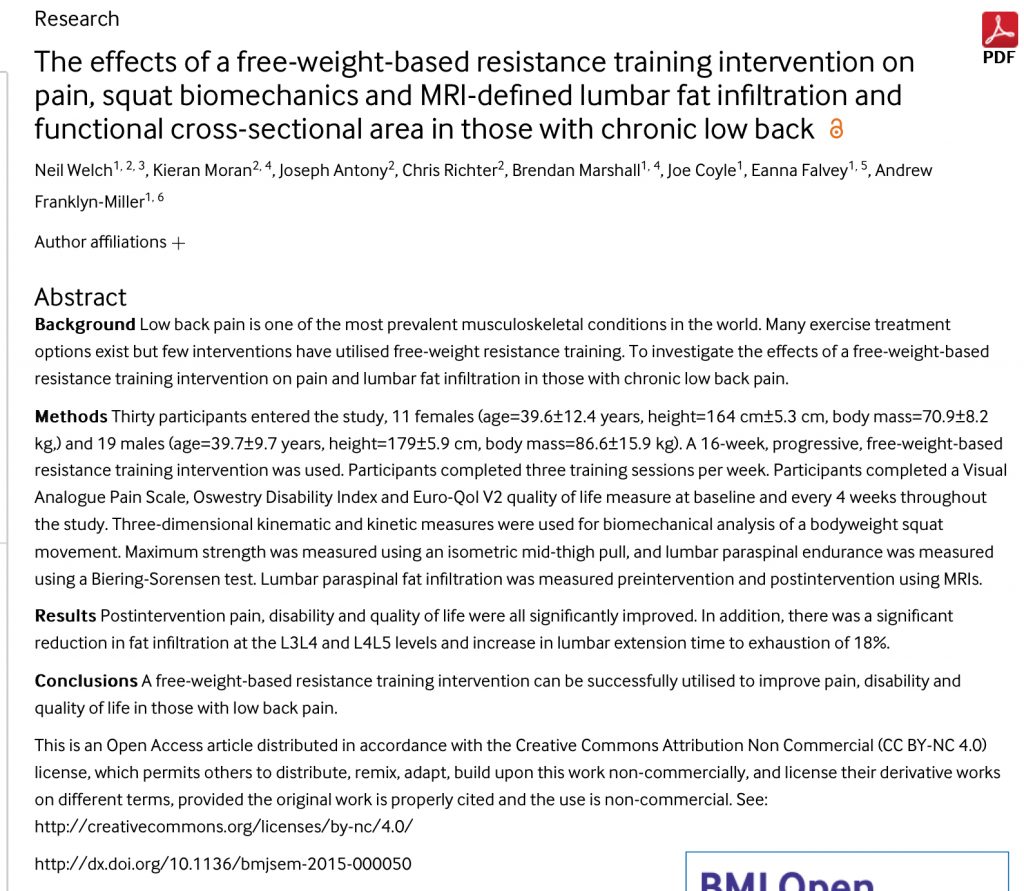
People in pain have many beliefs about their symptoms in regards to why it is present, what is causing it, what could be contributing to the pain, etc. Specific to the topic of lifting, many feel that lifting or carrying heavily weighted objects or performing heavily weighted exercise can cause low back pain. Can you strain a muscle by lifting something? Of course! However, when performed properly, a regimen of free weight-based resistance training can actually help decrease these symptoms. I stumbled across a great article that I will break down into lay terms to help explain the importance of this type of resistance in people with low back pain.
Exercise has been recommended as the most effective conservative management for persistent low back pain in combination with addressing psychological, social, genetic and physical factors. There is evidence that resistance training, specifically, can help to eliminate the requirement for surgery or injections and can help reduce the related fear associated with low back pain. It has also been shown to be more effective at addressing low back pain compared to aerobic, coordination, Pilates, or mobilization training.
When looking at different types of resistance training, we think of machine-based and free-weights. Free-weight specific resistance training helps recruit the erector spinae and other posterior chain musculature which are very important in the treatment of low back pain. An in-depth discussion of free-weight vs. machine-based exercises is outside the scope of this post, however, the focus of the following resistance training program is based upon free-weight exercise. Participation in this type of training may be contrary to popular belief about what may be detrimental to a person experiencing low back pain.
A few factors that were looked at in this study were peoples compensatory movement patterns due to pain, the amount of fatty-infiltrated muscles of the lower back, lower back muscular endurance, pain levels, quality of life, and perceived level of disability. Compensatory movement patterns are seen in people with low back pain as they try and avoid movements of the lumbar spine. Specifically movements going from sitting to standing and bending forward to pick something from the ground are often guarded. This guarding and co-contracting of trunk musculature is an altered motor pattern that can enhance the disuse of spine musculature prolong the pain continuum. With the disuse of these muscles, fatty-infiltration and decreased muscular surface area can be seen and has been proven to be associated with people dealing with persistent low back pain.
The specific movements performed in this study were based around the squat and the deadlift, two movements that are functionally performed daily by all humans. A deadlift is simply picking something up from the ground and a squat is sitting down and standing up. The participants that were included were of ages 16-60, both men and women, having a history of low back pain for >3 months. They went through a 16-week program that consisted of 3 training days per week. The resistance training was based around 7-10 rep maximum which can be associated with moderate to heavy weight training (for the purposes of this article, specifics about the positive effects of loading with heavier weight training will not be discussed).
Results? Dramatic.
Significant decrease in fatty infiltration and increase in lumbar paraspinal muscle endurance without specifically training lumbar extension – basically meaning that the resistance training performed improved spine muscle quality and strength without directly training the spine muscles. The resistance training that was performed engaged the low back muscles in an effective way!
Pain, disability and quality of life were significantly improved by over 70%!
Body mechanics and coordination of the sit to stand (squat) movement were significantly improved with decreased presence of guarding.
Take home points?
- Including free-weight-based resistance training in a rehabilitation program could improve the outcome of the treatment.
- Try not to be afraid to lift weights! As long as it is done properly, a regular strength training routine can be a very effective aspect of a rehabilitation program.
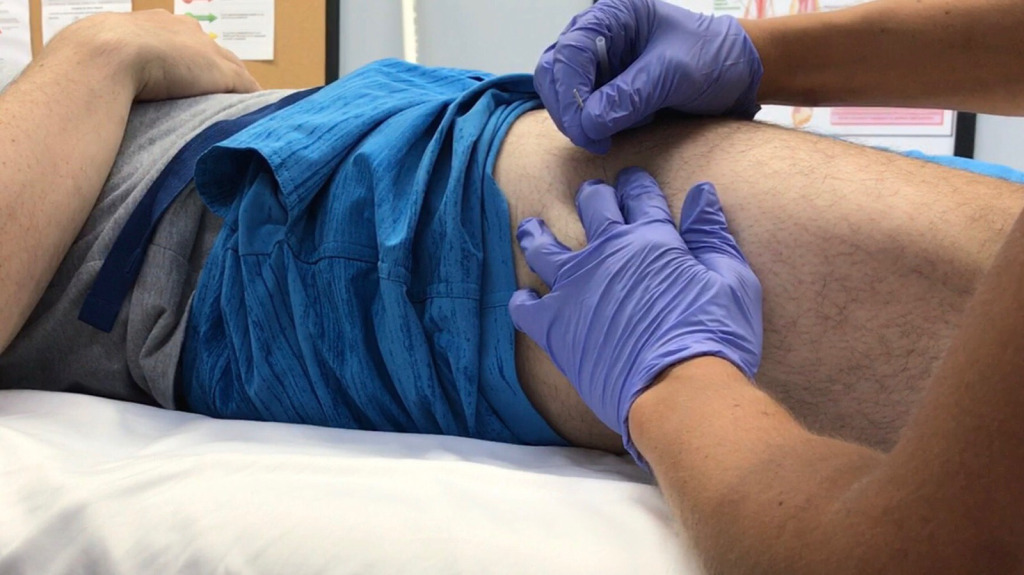
 Some of you who are reading this have either worked with myself or another therapist who practices Trigger Point Dry Needling. Some of you still do not even know what it is or what it does, but you are well aware of the benefits, am I right?