by Dr. Loni Rodriguez | Nov 12, 2018 | Exercise advice, Injury, Injury Prevention
Should you exercise through injury?
I get asked many times about continuing to exercise despite being injured. This is definitely a loaded question. If you want to know how hard you can push yourself while dealing with pain, that concept is beyond the content in this post.
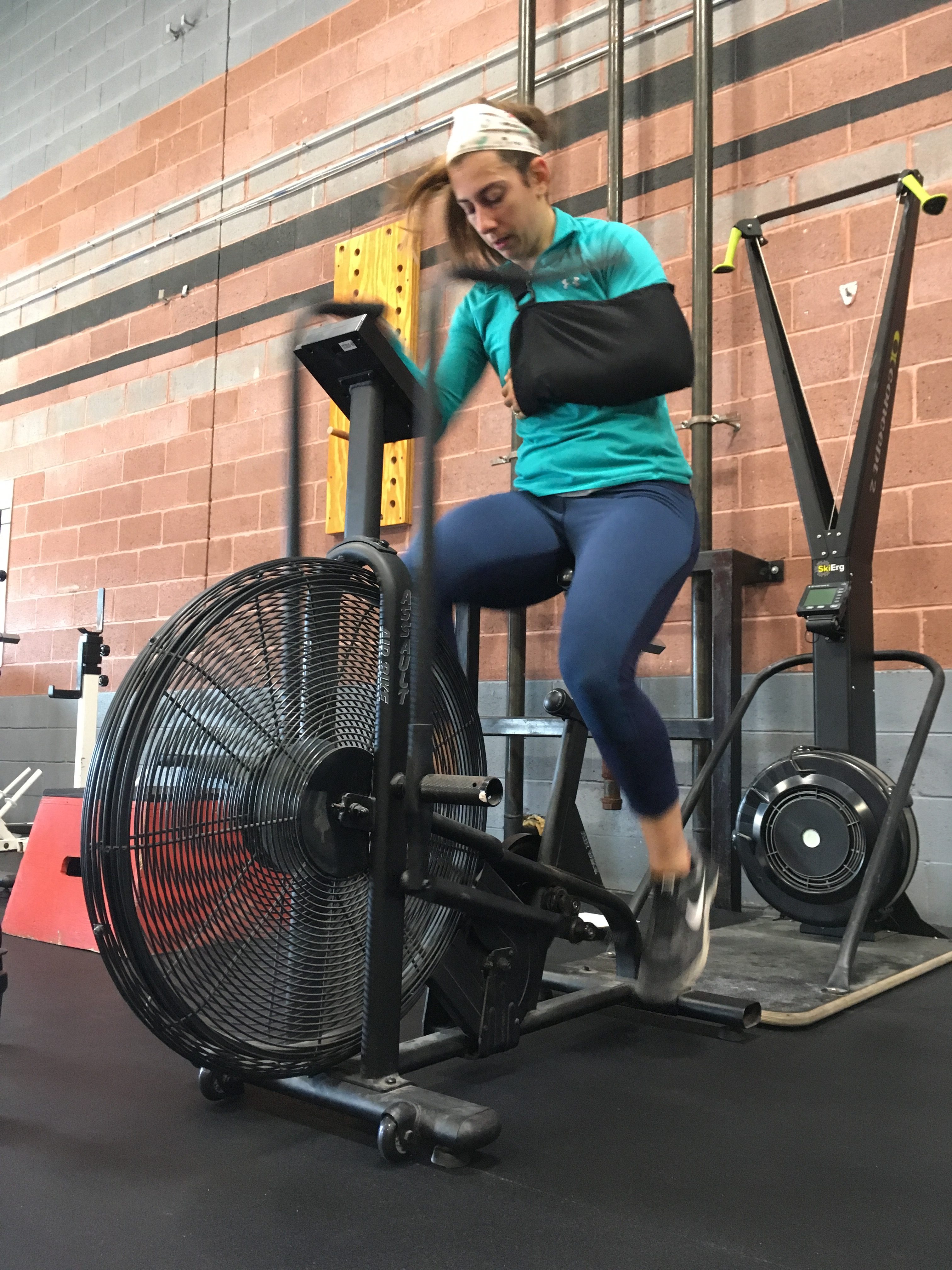
Today’s post is about what to do when you perform full body exercise on a regular basis and go and break your arm.
I would like to quickly highlight the inspiration of this post today- coach, teammate and friend, Miss. Adrienne Itri. This girl can not catch a break! She has been prepping for months for a competition this past weekend, training harder than ever and feeling the healthiest she has in a long time. She got there and gave it her all in event 1..… and broke her elbow. It was a fluke accident and could have happened to any of us. She is quite a trooper and a team player, however, showing up at the competition later that afternoon (following her trip to the hospital) AND the next day to cheer us on. No better teammate than that!
Hats off to you my good friend, I will help you every step of the way in this healing process!
Back to the post… I will be listing a few tips about the benefits of exercising around injury!
First piece of advice is… There is hope!
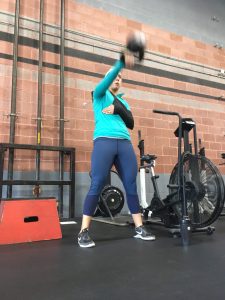
The good thing about functional fitness, is that there is a plethora of modifications that can be made to any exercise routine. These modifications can continue to allow for stimulation of muscle growth and improvements in endurance.
You won’t be doing exactly what you did before, but it will be damn near close.
Second, general exercise stimulate healing…
When you have an area of your body that needs some time to heal, it needs just that, time to heal. However, if you allow the other working parts of your body to exercise, you can stimulate the healing process of the injured region. It works through hormonal, heart rate and blood pressure stimulation.
Third, train the non-injured extremity…
There is a ton of research that shows strengthening the non-injured side can actually improve the strength of the injured side. In Adrienne’s case, she will be instructed to continue to perform as much strength training as she can using her right arm. Sure, the left arm will continue to have strength loss, however, training the right side will actually deaden the impact of not using her left arm for the next 6 weeks.
Fourth and final…
We all know that we FEEL better when we exercise. It increases endorphins, or your “feel good” hormones. If we are down and out because of a broken arm, we will feel even worse if we stay home and do nothing. So, if you are injured, please seek some advice from a trained professional who understands your injury and can help you create a modified program for the next few weeks of recovery!

by Dr. Loni Rodriguez | Sep 10, 2018 | Back Pain, Dry Needling, Injury Prevention
Where do you think your pain is coming from??
There are many questions that I ask people when they come in for their first session. One of the questions that has dramatically improved my ability to connect with a person is to ask them, “what do you think is happening…?” OR “where do you think the pain is coming from…?” This allows the person to open up and tell more of their story and gives them some control. When is the last time a doctor asked you what you thought was going on?
Are you in pain…? Where do you think it is coming from? Answer that question guided by the following:
- Was my pain caused by physical activity?
- Does physical activity actually make my pain worse?
- Will physical activity harm my (enter area of pain here)?
- Are you afraid to move because you may feel it could make the pain worse?
Do you think you have structural damage? In many cases, structural damage is not the cause of the pain and gradual physical activity is the best medicine. It is my job as a clinician to help educate, or sometimes de-educate the person. You may have heard from another practitioner, google, WebMD, that there is something structurally wrong with you. This can instill a fear and confirms your thoughts that those structural abnormalities are causing the pain.
Are you fearful of moving? Have you been told NOT to do something that you love to do? Do you feel that if you move you will make things worse and increase your pain? In many situations, moving is OKAY. I love giving people the freedom to move. Empowering people to take control of their movement, their everyday tasks, and their lives again is an amazing part of my job. There is a time and a place for rest post-injury to allow an area of the body to calm down. However, that time is very short and when pain persists, lack of movement can cause worsening of the condition.
If you are dealing with pain like this, please seek some ACCURATE education from a qualified practitioner. Please do not let someone increase your fears and heighten your anxiety. There is so much evidence to support movement, loading the body and regular activity to assist in the treatment of pain. This treatment, however, has to be done gradually and with the assist of a professional! The body is extremely resilient and can recover from the state that it is in. So, be positive and find a coach, a physical therapist who can assist you on this journey to improving your quality of life.
Reference
Fear avoidance beliefs questionnaire
by Dr. Loni Rodriguez | Jan 24, 2018 | Injury Prevention, Running
“I had some knee pain during my workout class, but I think I’ll just rest and it will go away.”
Most of the patients whom I work with are avid in the fitness world, whether it be Bootcamp, CrossFit, OrangeTheory Fitness, or running. Most everyone comes to me for the treatment of pain in various places throughout their body.
There is usually a common theme and this is how it goes…
“My pain started about a month ago, it was just a little twinge during their workout but then it went away.”
They decided to push through the pain during the next class. After a few days they notice it beginning during every workout, daily activities, sleeping, while caring for their children, working, etc.
“I thought I would just rest for a while and it would go away.”
They decided that rest was the best answer and they stop going to the gym. They start to feel sad that they can not workout, they feel like they are gaining weight, and missing out on the fun with their friends at the gym.
Now, it has been a whole 2 weeks week off from working out and they are ready to get back to it.
“I started class and my knee was fine! It wasn’t until I woke up the next day and realized that the pain was still there.”
They are now in a worse situation…
Their body has moved into a different pain stage. This is the stage when it is more difficult for the symptoms to resolve. You don’t want to find yourself here because it will be more challenging for you to return to your regular, pain-free routine. Even if your pain has subsided, going back to exercise too soon, will also disrupt the ultimate healing process.
Let’s talk a little bit about pain…
Pain is the body’s perception of a threat. That threat is the pain experienced when the initial tissue inflammation occurred, lasting about 72 hours. At that point, the body begins to heal this acute irritation and the pain that continues is no longer true inflammation.
Have you ever tried to take Advil or Motrin for a nagging pain in your knee and it just doesn’t help?
That could be due to the fact that there is no inflammation present causing your symptoms. Research has shown that there is not an actual inflammatory response from the body during the later pain stages – anti-inflammatory meds won’t help!
You do not want to let your pain get to this point. Once pain has occurred, the body’s changes the way it moves. It wants to stay away from something that caused pain before. It will change your running, squatting, snatching, burpee’ing form without you knowing it. This leads to a cascade of compensations that can lead to further issues.
So, what can you do about it?
If you have pain, get it addressed as soon as possible by a physical therapist! Acute pain can be addressed within a few weeks to a month. It can take longer to deal with pain that has been going on for weeks.
What if you do not have pain?
Find out how you can prevent it by…. Seeing your physical therapist! Full body assessments can be looked at like an annual doctors’ visit. What do they really do in a check up? They tell you you’re healthy. Who tells you that you’re moving okay? A physical therapist can help with preventative medicine, not just your primary care doctor!
Feeling like you want to make an appointment? Click HERE to book a complimentary consult at Infinite Potential Physical Therapy and Wellness and find out what we can do for you!

by Dr. Loni Rodriguez | Jan 5, 2018 | Injury Prevention, Running

It is not “normal” to have pain while you run. Many people who have this complaint describe the pain as happening in the beginning of a run, but then it “works itself out”. Others report the pain after a certain number of miles, or just after the run is completed. All of these complaints are signs from your body that something needs to be addressed.
What are the most common running injuries?
- Hip bursitis or tendinitis
- Knee pain (patellofemoral pain syndrome, patellar tendinitis)
- Shin Splints
- Achilles tendinitis
- Plantar Fasciitis
The list above all can be classified as overuse injuries. This means that throughout your training, certain regions of the body have been improperly overworked. This can occur under a few different circumstances.
One cause is a change or increase in training volume that your body is not used to or not ready for. During marathon training, your body takes quite a beating! That is not a reason not to train, however there are plenty of ways to avoid injuries during high volume training.
Another cause can be an imbalance or a faulty movement pattern during your gait cycle. This can be caused by certain muscles not working at properly as you pound the pavement.
What should you to if you are having pain or discomfort while you run?
Make sure you’re recovering well. This is not just about taking rest days! It is very important to drink plenty of water, keep up with your nutrition, get a good amount of sleep and get regular body work done. Body work can include massages or trigger point dry Needling. Body work also includes self treatment techniques such as foam rolling or self trigger point release.
Some of my favorite recommendations for areas to foam roll or release on runners:
- Entire hip and buttocks – this is your whole butt and side of your hip
- Quads (NOT all the way down your IT band) – it is not recommended that you should be foam rolling your IT band, rather you should be working on the muscles around it
- Calves
- Bottom of the feet
Get assessed by your local Physical Therapist. It is very important to get any type of pain evaluated by a professional as most pain will not just go away. There are usually simple things that can be done to quickly decrease the symptoms and resolve the problem. It is also much easier to have success with treatment when an injury is caught early on.
Book a running assessment!

This assessment is performed by a Physical Therapist who will observe your gait and perform a video analysis of your running technique. A running assessment can be a very important tool to be used to help correct mechanics and possibly paint the picture as to why pain may be occurring.
Ready to book an appointment?
Book Now.
Questions? Feel free to contact the office at 617-249-4011 or email loni@infinitepotentialptw.com
