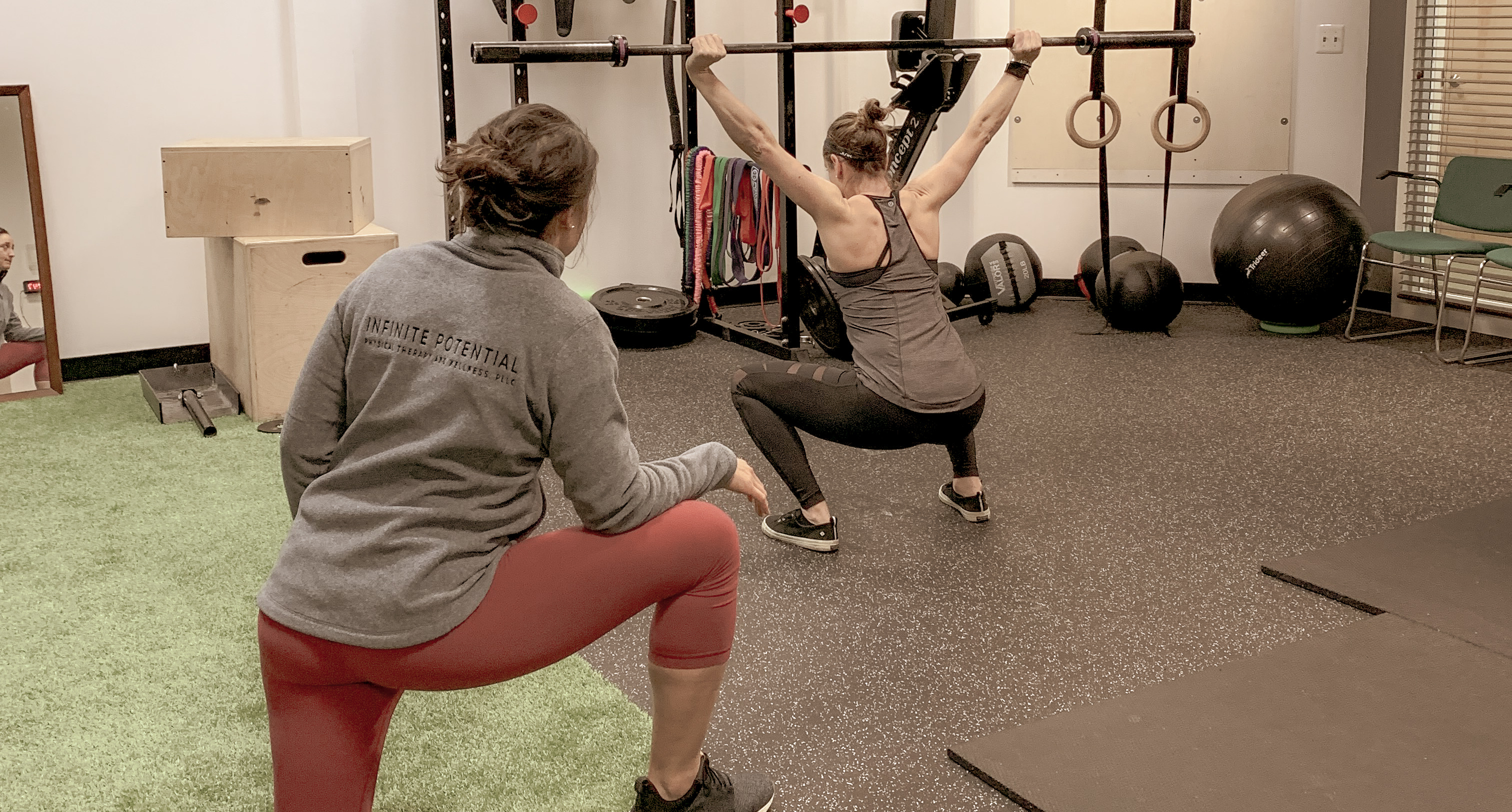
It’s been quite a while since we did a client highlight so we are well overdue! This marks restart of a fabulous tradition where we highlight client success stories on the regular. People enter our office feeling frustrated and in pain, and over time they typically transition into feeling in control, empowered, and resilient. This series highlight those who are willing to share their stories with us our audience their own words.
Meet Andy
Andy was.. well, in his words, “I’m your typical middle aged white guy, just trying to live a pain-free life.”
Andy dealt with lower back soreness and pain. This led to trouble walking for long distances, and swinging a golf club. It also meant just simply bending to pick something up or rolling in bed, led to a shot of pain.
“My back effected all of my activities, from working out and hiking to simply standing and talking to people. Additionally, I didn’t sleep well…”
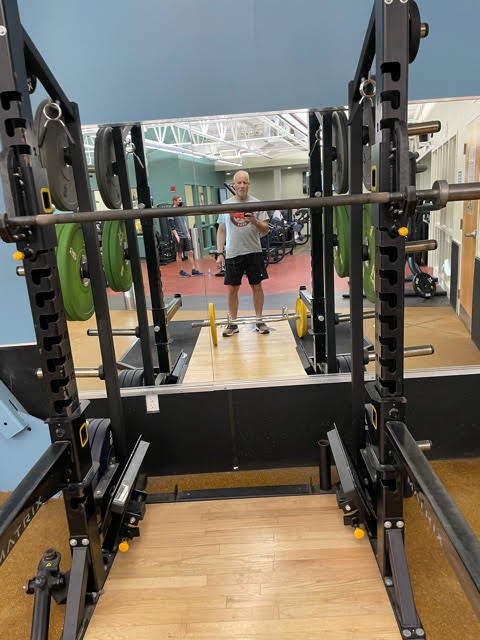
Andy ironically has a son who is a PT, which is where his at-home, self-help treatment started. His son reached out to me and told me that I need to see his dad because he felt he needed something more than what he could give him.
“The program pushed my limits. Initially we started slowly with stretching and then started to add weight training and intensity. I experienced some ups and downs with treatment, and some setbacks. But, with Loni’s help, we moved through those issues and now I am virtually symptom free.”
Andy was asked how the program was different than what he had experienced in the past for PT.
“The at home program was very helpful. The mobile app provided me with a structure and enough subtle pressure to keep me stretching and lifting as prescribed. We tweaked the program based on what worked and didn’t work.”
Andy was a great client because he not only trusted the process, but he also was honest about what he felt wasn’t working and what was. He was open to new options and pivoting his plan as long as it was in line with his goals.
“Life is so different without pain. I’m back to “normal” activities without having to think about my limitations, or feel sore afterwards. You notice pain. The good news is that I’m no longer noticing…I’m just doing.”
It is so great when someone finally turns a corner and notices that they, well, don’t notice “it” (their pain) anymore. If you have ever been in pain, you know what I mean.
“Loni was great to work with. She’s very smart, organized, prepared, engaging and fun. I looked forward to treatment sessions, and trusted that her work would lead to a good outcome…which it did!”
He even said I was fun! Look at that.
Andy was a one of a kind patient. He followed the plan, worked diligently on everything we discussed. He evolved both mentally and physically which I feel, was the true turning point to his recovery out of pain. The mental hurdles someone faces when dealing with pain are sometimes enormous and despite some work, he was a true testament this concept. Being his PT, he challenged me. He really made me think about how to approach his back pain and I thank him for being someone who made me a better PT, despite sometimes being a pain in the… 😉 (Just kidding, Andy.)
Thank you, Andy, for being a great client. I look forward to continuing to help you stay pain-free and strong for a lifetime.
Remember our Strength Coach, Pippa? She recently moved on to a new and exciting adventure to join the Curry College Nursing program! She begins her first semester in January 2022!
We do things a bit differently here at Infinite Potential PT. Some of you who are reading this have been here, some of you have not. We want to be sure that you all are either reminded or made aware of the way we roll here at IP. We also think that it’s about time to reintroduce ourselves.
What’s our method?
First, put out the fire. We use manual therapy, light exercise and self at home treatment to help get the pain down.
Second, we find the true cause. Work on improving the root cause of the issue so it can truly heal and improve. We are always continuing to evaluate and re-evaluate to make sure we are on the right path and are uncovering all of the issues.
Third, we create the long-term fix. Most people come in with the goal of never having their problem come back. This is fairly realistic if you are doing the right things along the way. Every patient’s plan progresses towards a long term strength training path to really keep their issue from ever coming back.
What sets us apart from the traditional PT model?
We specialize in working with active people! The majority of our population is active in the gym or in sports. Our clients are motivated individuals who are looking to help the pain that is negatively affecting their ability to do what they love.
We work people. What does not challenge you, does not change you. If you are coming to PT, your goals are likely to get better. If you aren’t pushed a bit, you won’t reach your goals. We use a combination of manual therapy and exercise to help people but love to transition as soon as possible to barbells, dumbbells, and kettlebells.
We work with people from sideline to starting line, from the bedside to the barbell. We know how to take you from feeling your worst to feeling ready to work at your best and beyond. In most traditional models, you are cut off once you can go about your daily life without limitation. That doesn’t work for most of our patients. Many times, pain only happens when you reach that 10th mile on a run, or with that big challenge at the gym. We know how to help you throughout the entire process and won’t stop until you are completely satisfied with how you feel.
Why do we get great results?
We use our knowledge and resources to follow people from the beginning of their pain experience to their path of prevention. Most clients begin as physical therapy clients and end as training clients. We help bridge the gap between rehab and training. The best path to pain prevention is strength training!
What would be your path?
In pain and limited, transitioning to…
Out of pain but still limited, transitioning to…
Stronger but still not 100%, transitioning to…
100% but baseline is BS so you then work with a strength coach to keep the gains rolling so your pain doesn’t come back.
Running injuries are very common, and if you’ve done any type of sustained running for fitness, you probably already know this. The chance of injury during sport for runners is as high as 75%, which is likely due to the repetitiveness of the sport and the high amounts of load experienced by the body. The average runner takes about 5,000 steps on a 30 min run, and every impact with the ground is purposed to create up to 2.5xbody weight. So… we are talking a lot of load.
Medial Longitudinal Arch
Quick anatomy
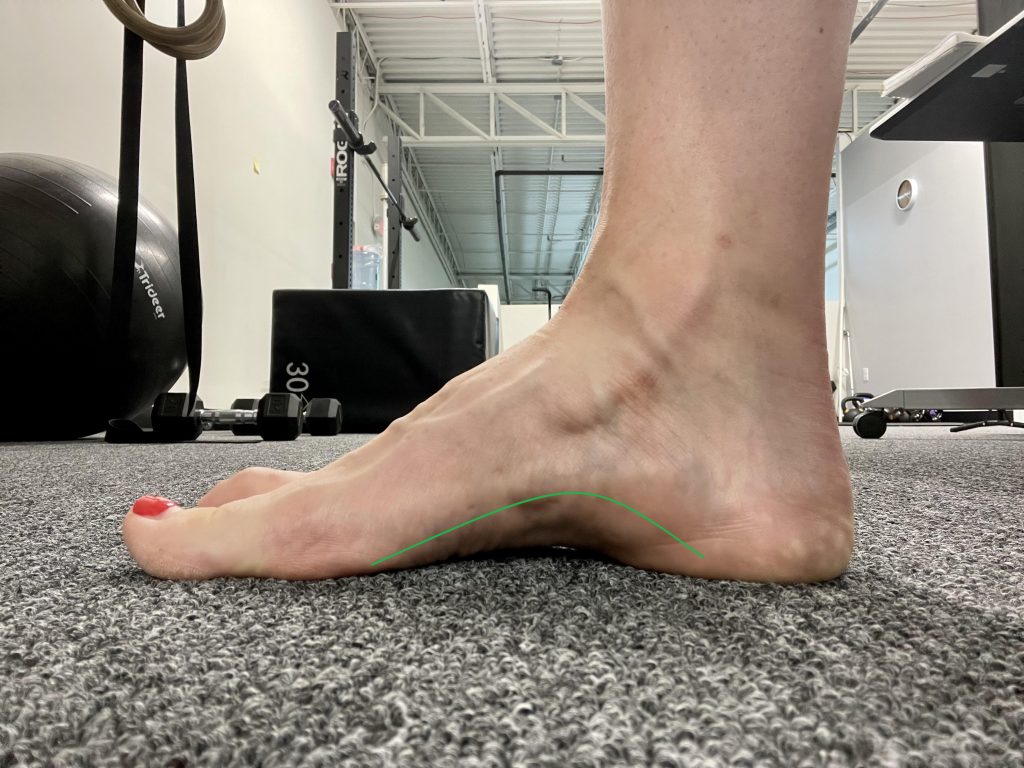
You have 4 layers of 11 muscles in just your foot called your intrinsic foot muscles. Their primary function is to help maintain the medial longitudinal arch of your foot, AKA the arch on the inside of your foot. This arch assists with shock absorption upon initial contact and with springiness upon toe off. These muscles are especially challenged with running because of the increased load through your leg with each impact.
Weakness/instability → OVERpronation→ Less shock absorption→ Predisposition for overuse injury
Here me out, our feet are supposed to pronate, and pronation is not “bad.” It is part of a natural and normal gait cycle. However, if the pronation is uncontrolled or excessive, we lose the ability to absorb shock effectively and to push off due to lack of stability in the foot. This is something that I screen athletes for during gait analysis to see if it is part of the equation (why they are seeing me).
Here on some drills to get you started with some “foot core” training. They best isolate your arch and intrinsic muscles, except for the heel raise because you are using toe muscles that travel up the calf. However, I will almost always have someone try these IN ADDITION to resistance training up the chain (ankle, knee, hip, trunk).
Foot Drills
Toe Yoga
Works on neuromuscular control, which is necessary to establish before strengthening these muscles. You may be surprised at how difficult it is to control the little muscles that pull your big toe upward and press your big toe down into the floor. Practive engaging these muscles without rolling inward/outward. You should see your arch prominently while performing!
Toe Splay
This one is pretty similar to the above exercises with less isolation. Try to focus on bringing your big toe away from your other toes especially, as the muscle that performs this motion plays a key part in arch stability. Initially, I would recommend trying the toe yoga and toe splaying in seated at first, and then progress to standing as able.
Toe elevated heel raise
As mentioned above, this exercise engages muscles in your calf as well, particularly those that flex your toes. Most of the time, this provides a nice stretch at the bottom of the heel raise. We’ve configured this exercises by placing a PVC pipe under a yoga mat secured by a couple of weights. You can also use a broom/mop handle- be creative!.
Forward Lean
This is good practice for actually running, as this more forward position is normal in running gait. You might find that your arch immediately engages when you start to lean forward. As for the leaning drills, start standing on both legs, and then progress to SL as able. You can use your hands at a wall for support initially.
Give these a try and let us know what you think. It’s a great place to start! As always, if you are dealing with a current injury, it is best to see a physical therapist to be evaluated and given a personalized treatment plan.
Attention all CrossFit and OrangeTheory (OTF) Members! This article takes you step by step on how to properly frame your return to full gym participation.
I see LOADS of you folks walk through the doors of Infinite Potential PT. It is incredibly important that we help educate the public about how it properly return to the gym or activities you love to do.
This article is not meant to be the be all end all or any sort of medical advise. It is, however, a skeleton plan at how to get yourself from being sidelined to being back to full participation in the gym!
Before I began working with members of CrossFit and OTF, I did not have a solid grasp on what it took to rehab someone in their shoes. Any competent PT knows how the body works and knows how to get most people out of pain. For me 2-3 years ago, the average client I was working with was not asking me to help them get past pain with heavy back squatting or through mile 14 of a 26.2 mile marathon. They were asking for help because of pain with lifting a heavy gallon of milk or putting on their seatbelt. Sure, sometimes the people I see now need that too, but those types of complaints are usually helped early in their rehab process and the larger goals are focused on. Many PT’s, like myself 2-3 years ago, only felt confident helping people wean back to being a participant in a fitness class, but not necessarily taking them the entire way to the end goal of being completely confident in their abilities.
So, what does it take to get yourself back to the old you of being resilient AF and being able to do whatever you want in the gym?
I tell the previous story because it is important to be working with a medical professional that understands not only what you do but HOW to get you back. Below is a step-by-step guide to follow to give you a grasp on what rehab should look like.
Step 1: Establish your long term goals.
This is very important so you can get a meaningful plan in place that can be tracked, monitored, and adjusted.
Each of those goals need to possess a few “SMART” characteristics:
Specific: It has to have a particular subject – ie. Running pain-free vs being active without pain – running is more specific
Measurable: It has to be able to be tracked over time – ie. Running a 5k pain-free vs “running” pain-free is not measurable
Achievable: You have to know your own body – ie. Running a 5k pain-free vs running a marathon pain-free – first off, a marathon is not pain-free but if you have not run a marathon pre-injury, then running one post injury may not be a realistic goal whatsoever.
Relevant: It has to be meaningful to you or you won’t work towards it.
Time sensitive: You need to put a time cap on it – ie. Running a 5k pain-free by September. Putting an end date allows you to set markers along the way and keeps you accountable.
So… sit down and make that goal. This is a step that can NOT be skipped.
Step 2: Establish a starting point.
This is an incredibly important step as this is the “point A” to the “point B”. Without figuring out where to start from, you can’t establish a plan to the end goal!
You want to figure out your exact status with regards to what activity you want to get back to doing. So… Think hard about where you are write it down! It has to be specific.
For example: “I can’t run right now” is not enough. Can you run for 1 minute? 1 mile? 30 seconds?
Figure it out and write it down.
Step 3: Establish your short term goals.
This is really where a PT or other medical professional can help you set some realistic, achievable markers of progress and short-term goals. They can help you understand tissue healing times and normal courses of rehab to best advise you on what to expect based on what you have going on.
For example: If someone is dealing with a long-term diagnosis of a shoulder tendonitis (or condition of a tendon) and wants to be pain-free lifting overhead within a month, the therapist will helpfully give you information on the normal course of rehab. A tendon takes time to heal and change back to a state where it can handle the loads that exercise / life puts on it. That time can range anywhere from 3-12 months depending on many, many, many factors. This is an important time to say that it is important to have a guide familiar with injuries like yours, the goal you want to achieve, and the path to get you there.
The following example sets the stage and understanding of how to set realistic expectations when dealing with an overuse injury.
Appropriate long term goal: “I want to be lifting my previous weights overhead, pain-free within the next 6 months.
A few short-term goals or progress markers based on the above:
With little to no pain, be able to handle lifting moderate weight with angle modification (ie. Landmine press on an angle vs overhead press with a barbell) within in 4 weeks.
With little to no pain, be able to handle lifting moderate weight overhead with grip modification using dumbbells within 8 weeks.
Step 4: Establish a plan
This is the tricky part and definitely needs some guidance. I can not get too specific here because every single person is different, but I can play off the example in the previous step to show you what the plan would look like.
The plan must begin with taking the end goal, short-term markers and starting point and figure out what needs to be implemented in order to achieve the short term markers step by step.
The plan must include:
isolated work / exercise done on the area of injury
global work done on the surrounding areas to continue to improve supporting strength
cardiovascular training to maintain fitness and promote tissue healing
Goal-centered activities such as a return to running program that begins with walking to simulate what they body has to do in order to run
Each of the above are progressed and managed as life happens and changes occur but this is the usual start to any rehab program that I plan.
Step 5: Track the progress
This is the fun part but also most challenging to explain. The rehab process is always up and down and never, or vary rarely, linear. You don’t just keep getting better and better. There are constant ups and downs, setbacks and speed bumps. That all being said, the ups and downs are 100% normal and should be expected. This sets the stage for realistic expectations and reduces the desire to search for more answers or a better plan as the program continues. If someone dealing with injury rehab does not know that pain will constantly resurface in the process or recovery, they will jump ship pretty darn fast.
Does this seem overwhelming? It should! Unless you are a PT who deals with this daily. But even though I see this day in and day out, I still get overwhelmed by cases that are not making the expected process.
That being said, the point of all of this is to expose you to the skeleton of what a proper rehab program should look like. Your program should include very specific activities and exercise routines that are prescribed with your goals in mind.
Not all PT’s are created equal and I am going to put a shameless plug here for my rehab programming. I have taken many CrossFitters and OTF members of all ages and ability levels right back to the point of returning to full class participation. Many of those people were being seen a few days per month or less and the work was being put in consistently outside of our office walls.
Click here to see a scroll through an activity-specific “Return to Competitive CrossFit” home program
Click here to see a scroll through an activity-specific “Return to OTF” home program.
Thank you for reading!
If you are interested in learning more, please do not hesitate to contact us directly. We want to make sure you are informed about how our programs work!
We ALSO offer complimentary consults to do just that (above).
Today we are highlighting Lily who has been with us since the Fall of 2019. Lily is a high school crew athlete who was dealing with knee pain that lead her to stop running at practice. The pain crept in seemly out of nowhere and she noticed that it just was not going to go away on it’s own.
“I have been doing crew since 6th Grade and really enjoyed rowing out on the water with my friends. When I joined the High School Crew Team in late August 2019 however, I noticed that my knees would begin to hurt during our warm-up runs and would then prevent me from participating in the other activities in practice. Due to the already existent pain, my knees would then begin to hurt when I was sitting down, often at school. This would prevent me from paying attention to my full abilities in class.”
She was impacted on a daily basis by her symptoms and was at a loss of what to do about it. Being a teen, she felt that she shouldn’t have to deal with pain like she was having.
“I had pain in my knees when I was walking up and down hills or stairs, running, jumping or any form of impact on my knees. I often found that my knee pain would flare up during the day at school.”
After the first session with Lily, I knew that I was working with an incredibly dedicated young lady. It isn’t uncommon for a young client to speak for themselves during the evaluation (versus their parent), but it is truly impressive when it does happen. Lily took the lead and consistently advocated for herself throughout her entire rehab. She was very diligent with her program and communicated with us between sessions like a mature adult.
“Before starting the treatment I did not think that there was any way that my pain and discomfort could be helped. I knew that, after talking to a Orthopaedic Surgeon, nothing could be done to directly treat the symptoms.”
I can’t say there wasn’t any eye rolling, big sighs or, “do we have to?!’s” during sessions, however, Lily worked hard, poured in a ton of effort and always did her best.
“Even though sometimes the treatment is difficult, after every session I feel stronger and my knees do not hurt nearly as much as they did only a few months ago.”
At this point, Lily is in her third and final rehabilitation phase. She has progressed to returned to running, she performs her strength routine at least 2 days per week on her own, and returns to our office for a monthly session to review and progress her home program.
“I can now run, with little to no pain for a relatively long period of time. The treatment has not only strengthened my leg and the other muscles surrounding my knees, but also my core and upper body. This has an incredible advantage when rowing and allows me to participate in all the practices and spend time with my friends and teamates.”
We asked Lily to tell us what others should know about seeking treatment at Infinite Potential PT.
“I believe that if you are prepared to work hard and persevere through the treatment plan that Lori gives you, which can sometimes feel like a challenge (especially when you have other commitments to your studies & crew team, and also want to spend time with friends and family!), you will definitely feel the benefits! Don’t give up – trust that you are strong enough, both physically and mentally, to succeed and become the best that you can!”
Thank you, Lily for your hard work! It was a pleasure to have gotten to know you and help you through this process.