
by Dr. Loni Rodriguez | Nov 19, 2018 | Back Pain, Exercise advice, Injury, Injury Prevention, knee pain, lifts, squats, working with injury
What to do when you are having pain during a workout?
Have you ever just left the gym or class when pain starts to occur? How annoying is that?! First off, you didn’t get a workout in, second, you might have hurt yourself… I hope not, and third, what do you do now? Should you go back to the gym tomorrow? Take a week off?
I really would like this post to come across the right way. I am by no means, telling you it is okay to push through any significant pain while exercising. What I would like to do is to provide a guideline of what to do when pain comes on during a workout.
Before I get into the guideline, there is one major exception:
*If you actually feel like you had an injury, as in, there was an EVENT that caused your pain, please stop exercising and seek medical attention*
Eg.
- if you fall off the treadmill, and feel a pop or snap in a joint followed by severe pain
- if you hit your head
- if something occurs and you notice immediate swelling and pain
…you get the point
What this guideline is NOT…
- A way to treat your pain
- A way to continue to exercise multiple sessions in a row without seeing guidance from a medical provider
- A way to avoid formally dealing with your injury
Point being… please seek medical advice to really help your issue!
In the meantime, I want you to be able to have some understanding of how to allow training to continue despite some pain vs taking time off.
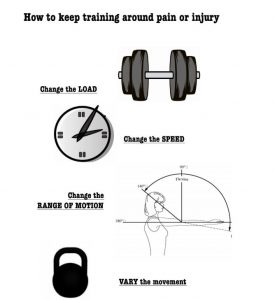
First… reduce the weight
- Try using a lighter weight, but continue the movement as prescribed.
- If the reps continue to be painful…
Next… slow it down
- Keep the weight and try using performing the movement slowly.
- If the reps continue to be painful…
Next… change the range of motion
- Keep the weight, return to a normal speed and limit how far you go into the movement being performed.
Finally… vary the movement
- There are various ways to perform different exercises.
- You can continue to get the same training effect while performing the movement in a slightly different way.
Here are a few examples of how you can vary the workout if you are experiencing pain during specific movements:
Knee pain with squatting?
- Reduce the load
- Alter the tempo – 3 seconds down, 3 seconds up
- Reduce the range of motion – Squat to a box or a bench
- Change the movement – go from front squats or goblet squats to a back squat
Back pain with deadlifting?
- Reduce the load
- Alter the tempo – try a quick lift from the floor and a slow lower
- Reduce the range of motion – Lift from an elevated surface (blocks or plates)
- Change the movement – go from a barbell to a hex bar or kettlebell
Use this to help keep yourself training, but PLEASE… also seek medical advice. There are many other things to be done in order to get you back to being pain-free during workouts… most of the time, it’s more exercise! Not rest.
by Dr. Loni Rodriguez | Nov 12, 2018 | Exercise advice, Injury, Injury Prevention
Should you exercise through injury?
I get asked many times about continuing to exercise despite being injured. This is definitely a loaded question. If you want to know how hard you can push yourself while dealing with pain, that concept is beyond the content in this post.
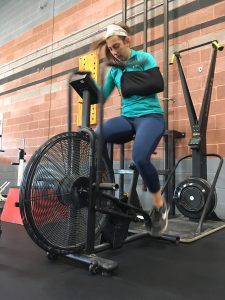
Today’s post is about what to do when you perform full body exercise on a regular basis and go and break your arm.
I would like to quickly highlight the inspiration of this post today- coach, teammate and friend, Miss. Adrienne Itri. This girl can not catch a break! She has been prepping for months for a competition this past weekend, training harder than ever and feeling the healthiest she has in a long time. She got there and gave it her all in event 1..… and broke her elbow. It was a fluke accident and could have happened to any of us. She is quite a trooper and a team player, however, showing up at the competition later that afternoon (following her trip to the hospital) AND the next day to cheer us on. No better teammate than that!
Hats off to you my good friend, I will help you every step of the way in this healing process!
Back to the post… I will be listing a few tips about the benefits of exercising around injury!
First piece of advice is… There is hope!
The good thing about functional fitness, is that there is a plethora of modifications that can be made to any exercise routine. These modifications can continue to allow for stimulation of muscle growth and improvements in endurance.
You won’t be doing exactly what you did before, but it will be damn near close.
Second, general exercise stimulate healing…
When you have an area of your body that needs some time to heal, it needs just that, time to heal. However, if you allow the other working parts of your body to exercise, you can stimulate the healing process of the injured region. It works through hormonal, heart rate and blood pressure stimulation.
Third, train the non-injured extremity…
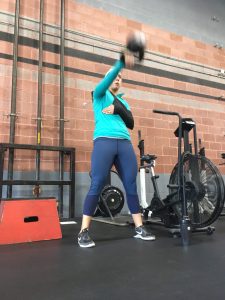
There is a ton of research that shows strengthening the non-injured side can actually improve the strength of the injured side. In Adrienne’s case, she will be instructed to continue to perform as much strength training as she can using her right arm. Sure, the left arm will continue to have strength loss, however, training the right side will actually deaden the impact of not using her left arm for the next 6 weeks.
Fourth and final…
We all know that we FEEL better when we exercise. It increases endorphins, or your “feel good” hormones. If we are down and out because of a broken arm, we will feel even worse if we stay home and do nothing. So, if you are injured, please seek some advice from a trained professional who understands your injury and can help you create a modified program for the next few weeks of recovery!
