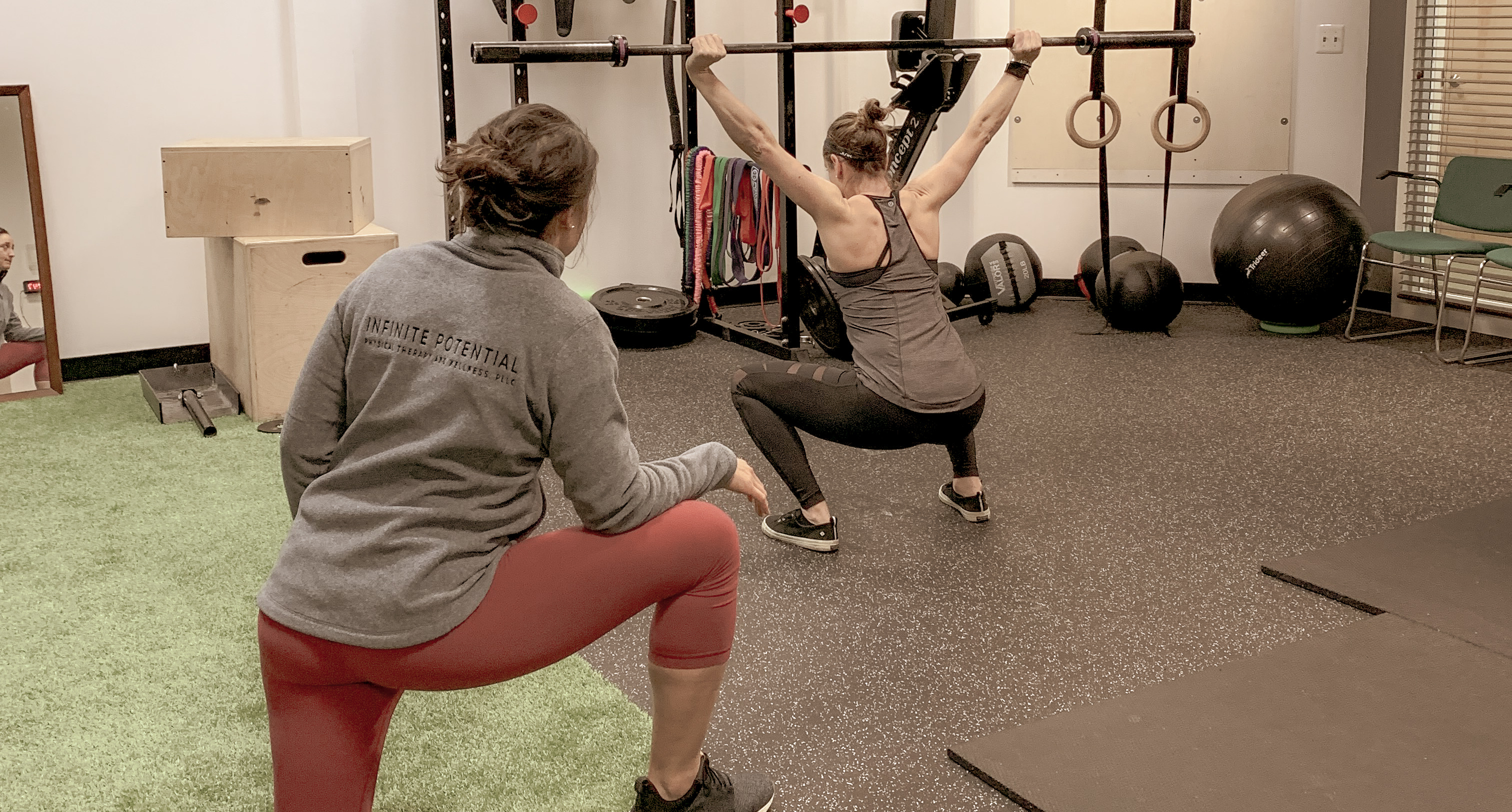
by Dr. Loni Rodriguez | Mar 12, 2020 | crossfit, Exercise advice, Injury Prevention, Injury Prevention, lifts, Pain Relief
Attention all CrossFit and OrangeTheory (OTF) Members! This article takes you step by step on how to properly frame your return to full gym participation.
I see LOADS of you folks walk through the doors of Infinite Potential PT. It is incredibly important that we help educate the public about how it properly return to the gym or activities you love to do.
This article is not meant to be the be all end all or any sort of medical advise. It is, however, a skeleton plan at how to get yourself from being sidelined to being back to full participation in the gym!
Before I began working with members of CrossFit and OTF, I did not have a solid grasp on what it took to rehab someone in their shoes. Any competent PT knows how the body works and knows how to get most people out of pain. For me 2-3 years ago, the average client I was working with was not asking me to help them get past pain with heavy back squatting or through mile 14 of a 26.2 mile marathon. They were asking for help because of pain with lifting a heavy gallon of milk or putting on their seatbelt. Sure, sometimes the people I see now need that too, but those types of complaints are usually helped early in their rehab process and the larger goals are focused on. Many PT’s, like myself 2-3 years ago, only felt confident helping people wean back to being a participant in a fitness class, but not necessarily taking them the entire way to the end goal of being completely confident in their abilities.
So, what does it take to get yourself back to the old you of being resilient AF and being able to do whatever you want in the gym?
I tell the previous story because it is important to be working with a medical professional that understands not only what you do but HOW to get you back. Below is a step-by-step guide to follow to give you a grasp on what rehab should look like.
Step 1: Establish your long term goals.
This is very important so you can get a meaningful plan in place that can be tracked, monitored, and adjusted.
Each of those goals need to possess a few “SMART” characteristics:
Specific: It has to have a particular subject – ie. Running pain-free vs being active without pain – running is more specific
Measurable: It has to be able to be tracked over time – ie. Running a 5k pain-free vs “running” pain-free is not measurable
Achievable: You have to know your own body – ie. Running a 5k pain-free vs running a marathon pain-free – first off, a marathon is not pain-free but if you have not run a marathon pre-injury, then running one post injury may not be a realistic goal whatsoever.
Relevant: It has to be meaningful to you or you won’t work towards it.
Time sensitive: You need to put a time cap on it – ie. Running a 5k pain-free by September. Putting an end date allows you to set markers along the way and keeps you accountable.
So… sit down and make that goal. This is a step that can NOT be skipped.
Step 2: Establish a starting point.
This is an incredibly important step as this is the “point A” to the “point B”. Without figuring out where to start from, you can’t establish a plan to the end goal!
You want to figure out your exact status with regards to what activity you want to get back to doing. So… Think hard about where you are write it down! It has to be specific.
For example: “I can’t run right now” is not enough. Can you run for 1 minute? 1 mile? 30 seconds?
Figure it out and write it down.
Step 3: Establish your short term goals.
This is really where a PT or other medical professional can help you set some realistic, achievable markers of progress and short-term goals. They can help you understand tissue healing times and normal courses of rehab to best advise you on what to expect based on what you have going on.
For example: If someone is dealing with a long-term diagnosis of a shoulder tendonitis (or condition of a tendon) and wants to be pain-free lifting overhead within a month, the therapist will helpfully give you information on the normal course of rehab. A tendon takes time to heal and change back to a state where it can handle the loads that exercise / life puts on it. That time can range anywhere from 3-12 months depending on many, many, many factors. This is an important time to say that it is important to have a guide familiar with injuries like yours, the goal you want to achieve, and the path to get you there.
The following example sets the stage and understanding of how to set realistic expectations when dealing with an overuse injury.
Appropriate long term goal: “I want to be lifting my previous weights overhead, pain-free within the next 6 months.
A few short-term goals or progress markers based on the above:
- With little to no pain, be able to handle lifting moderate weight with angle modification (ie. Landmine press on an angle vs overhead press with a barbell) within in 4 weeks.
- With little to no pain, be able to handle lifting moderate weight overhead with grip modification using dumbbells within 8 weeks.
Step 4: Establish a plan
This is the tricky part and definitely needs some guidance. I can not get too specific here because every single person is different, but I can play off the example in the previous step to show you what the plan would look like.
The plan must begin with taking the end goal, short-term markers and starting point and figure out what needs to be implemented in order to achieve the short term markers step by step.
The plan must include:
- isolated work / exercise done on the area of injury
- global work done on the surrounding areas to continue to improve supporting strength
- cardiovascular training to maintain fitness and promote tissue healing
- Goal-centered activities such as a return to running program that begins with walking to simulate what they body has to do in order to run
Each of the above are progressed and managed as life happens and changes occur but this is the usual start to any rehab program that I plan.
Step 5: Track the progress
This is the fun part but also most challenging to explain. The rehab process is always up and down and never, or vary rarely, linear. You don’t just keep getting better and better. There are constant ups and downs, setbacks and speed bumps. That all being said, the ups and downs are 100% normal and should be expected. This sets the stage for realistic expectations and reduces the desire to search for more answers or a better plan as the program continues. If someone dealing with injury rehab does not know that pain will constantly resurface in the process or recovery, they will jump ship pretty darn fast.
Does this seem overwhelming? It should! Unless you are a PT who deals with this daily. But even though I see this day in and day out, I still get overwhelmed by cases that are not making the expected process.
That being said, the point of all of this is to expose you to the skeleton of what a proper rehab program should look like. Your program should include very specific activities and exercise routines that are prescribed with your goals in mind.
Not all PT’s are created equal and I am going to put a shameless plug here for my rehab programming. I have taken many CrossFitters and OTF members of all ages and ability levels right back to the point of returning to full class participation. Many of those people were being seen a few days per month or less and the work was being put in consistently outside of our office walls.
Click here to see a scroll through an activity-specific “Return to Competitive CrossFit” home program
Click here to see a scroll through an activity-specific “Return to OTF” home program.
Thank you for reading!
If you are interested in learning more, please do not hesitate to contact us directly. We want to make sure you are informed about how our programs work!
We ALSO offer complimentary consults to do just that (above).
Reach out so you don’t miss out.

by Pippa Teague, Strength Coach | Oct 10, 2019 | Abdominals, Conditioning, Exercise advice, Injury Prevention, knee pain, Ladies, lifts, Personal training, Recovery, strength training, Uncategorized, working with injury, youthtraining
Lunges are a great unilateral movement to work not only the muscles involved but also work balance and stability.
They can be done with little space required
-difficulty can be added by including weight- kettlebell or dumbbells
Here are some lunge variations:
The reverse lunge
- start with the feet hip width apart and facing forwards
- with your back remaining straight take one foot backwards, allowing both knees to bend as the back knee touches the ground lightly
- push off the back foot keeping the front foot firmly planted
- drive through the heel and return the leg beside the other
Repeat on the other side
this works the glutes, quads and hamstrings and is also a great way to improve knee stability
Alt reverse lunge
Lateral Lunge
We often forget to move laterally. Lateral movement is great for stabilizing the hips and works your inner thigh and glutes.
- start with your feet together
- Step out wide to the side, transferring the weight over to the side you just stepped with, keeping both feet planted on the ground and facing forwards
- sit back into a squat position and go as low as you feel you are able to
- drive through your foot and return to the starting position
Repeat on the other side
Lateral lunges w/ kb
Static (split squat) Lunges
During this movement the feet remain in the same position (static)
This movement is great for those of us who are not so good with balance when moving and is the least challenging of all the lunges. Static lunges help build balance and strength from a stationary position.
Muscles worked are your thighs and glutes
- Start in a split stance- hip width apart with one leg in front of the other
- Lift onto the toes of your back foot and lower that knee down to the ground allowing the front knee to bend also to a 90 degree angle parallel to the ground
- Press through the heel of your front foot and straighten the legs back up.
- Keep your torso upright. Most of your weight should be felt through the front leg
Repeat 8-10 reps and then switch to the other leg
Split Squat w/ kb
Alternating jump lunges
Similar to the reverse lunge but with an element of power and plyometric transition with a jump from one lunge position to the other by switching feet in the air
This exercise challnges the same muscles as the regular reverse lunge but also adds a cardiovascular effect by increasing the heart rate and helps burn more calories.
tips to help your jumping lunge
- master the basic lunges first-reverse lunges and walking lunge
- aim for soft landings, avoid landing hard on your knee
- chest and torso stays upright
- be light on your feet and try to spring through the ball of your feet to gain some air time
- you can increase the difficulty by increasing reps, jumping higher and spending less time on the ground
Alt jump lunges
Try some lunges today and let us know how you get on!
Happy lunging !

by Pippa Teague, Strength Coach | Oct 7, 2019 | Abdominals, Back Pain, Client Achievements, Conditioning, Exercise advice, lifts, Recovery, strength training, Uncategorized
Today we are highlighting Michelle who has been with us since August 2018 after dealing with severe lower back and hip pain.
“I was in constant pain in my lower back and afraid that I would have to accept this as a new standard of living for myself. On July 4, 2018, I went to bed with excruciating pain in my lower back and tingling in my leg. I never had this happen in my life and had no idea what to do. The pain came out of nowhere, but now I realize that it was probably building for some time and came to the surface then. I was in my 20s and felt like I was in my 90s because of what I was told by doctors about managing my lower back issues and overall pain levels.”
Upon meeting Michelle, I quickly realized that she was in need of reassurance and was really looking for someone to guide her. She was desperate for answers and did not know where to turn as her symptoms were not just resolving on their own. She was provided with conflicting advice and was not sure who she could trust. This is a major issue that I see in many of my clients and it is my job to help make sense of some of the things that they have been told.
“My struggle affected every part of my daily life. I was always thinking about the pain when I was at work or out with friends and family. I didn’t want it to come back and was afraid that everything I was doing was making it worse whether I was exercising or staying still. I felt out of control in my body. I had no idea what I should do. My doctor told me to wear a neck brace and to essentially stay still. My spine specialist told me that I had a disc herniation in my lower back, which was scary to hear. I was not in a car accident and have always been healthy, so I did not understand why this happened.”
Michelle was in a tough position coming into our office. Many of our patients experience pain that affects their daily life and it is sometimes extremely difficult to manage on their own.
“Loni helped me get to a place where I felt stronger and comfortable in my daily life. I got to a point where I stopped feeling the pain. I gained the confidence to exercise regularly and lift boxes, etc. without being scared to injure myself. I would not be where I am today without Loni and Infinite Potential.”
Michelle has been a pleasure to work with from day one. She has shown endless appreciation for what we have provided and is also very open to new ways of thinking about her pain, alternative approaches to treatment, and has shown willingness to trust the process. Michelle has made consistent progress since beginning with us and has sought care past her original injury committing to strength training since completing her time in physical therapy. Strength training was not a part of her regular routine but she has since adopted the practice as a regular weekly activity. She has made significant progress in the realm of strength, endurance and power achieving goals that she never thought were possible.
We asked Michelle what she wants others to know about her experience with Infinite Potential PT. Here is what she had to say:
“I want others to know that they should go to Infinite Potential (IP)! The business is different than the standard physical therapy at out-patient centers or hospitals, but this is what makes her special and one-of-a-kind. I had been in and out of PT at hospitals before being a client at IP. I was only there for a few weeks (6 at most) and then discharged and my issues would come back. I wasn’t given one-on-one treatment plan like I get here. Loni spends the time to really understand your needs and help you not just for a short time, but for your life. I wish everyone could discover what I’ve found in Infinite Potential. Loni has been life-changing and I will follow her wherever I go. I live closer to the North Shore now and commute to see her weekly! She’s the best!
Our passion at IPPTW is to empower people to realize their full potential. We strive to decrease their fears, help them understand what is going on and what can be done in the long and short term. We want to be YOUR resource for help and feel strongly that we can give you informed guidance to help you make decisions about your health.
If this story spoke to you, or speaks to someone you know, please pass it on. Can you relate to Michelle? Let us know by replying to this email.
by Pippa Teague, Strength Coach | Sep 19, 2019 | Conditioning, Exercise advice, Injury Prevention, lifts, Personal training, Running, squats, strength training, Uncategorized
By Jenny Gusella
These days there are endless workout options, from spinning to barre to HIIT to personal training, bootcamps, home DVDs and more. There’s also tons of information and scientific research floating around about the benefits of one workout versus the next. With your head spinning from information overload, you finally decide to seek an expert opinion, so you ask a trainer like me, “OK. Tell me the truth. What is the best workout?”
The best workout is the one that you will actually do. Whether it’s because it’s the quickest, or you love the instructor, or your friends go to that gym, or your favorite coffee shop is next door, or because you genuinely love the workout, there is no reason too small if that reason is enough to get you to complete the workout.
The human body is much more simple than we think. Eat food, move around, sleep, repeat tomorrow. Of course, in between those things is an entire life – a career, familial responsibilities, not to mention social pressures, self-doubt, etc. All of those things complicate the basics, but you have the power to uncomplicate fitness. Are you stressed that you don’t have an hour to spare to workout? Simple solution: do a 45 minute workout. Are you dreading doing that 3 mile run you promised yourself you’d do? Simple solution: Don’t do the run. Do some squats, lunges and pushups, or go for a bike ride, or walk your dog.
Yes. I just said, “don’t do the run.” Running in particular is a topic that comes up so often in this line of work. So many of us dread running, and yet force ourselves to do it anyways, as if it’s some sort of requirement. I am here to tell you: YOU DO NOT NEED TO RUN IF YOU DON’T WANT TO. Ever. (Unless you’re being chased.) I am also here to tell you that you do not need to be “a runner” to go on some runs. If you like it, do it, if you don’t, do something else. It truly is that simple. Think about Forrest Gump. Why did he start? “I just felt like running.” Why did he stop? “I’m pretty tired. I think I’ll go home now.”
The next time you find yourself in a workout rut and are about to ditch the gym, ask yourself if there’s maybe another physical activity you’d rather do instead, and try to direct yourself down that route. Don’t worry if your workout doesn’t “scorch the most calories” or “target 90% of your muscles” – just move!
by Pippa Teague, Strength Coach | Sep 6, 2019 | Client Achievements, Flexibility, Jumprope, Ladies, lifts, Personal training, Running, strength training, Uncategorized
-Pippa Teague
Infinite Potential Personal Trainer/Strength coach
NASM CPT
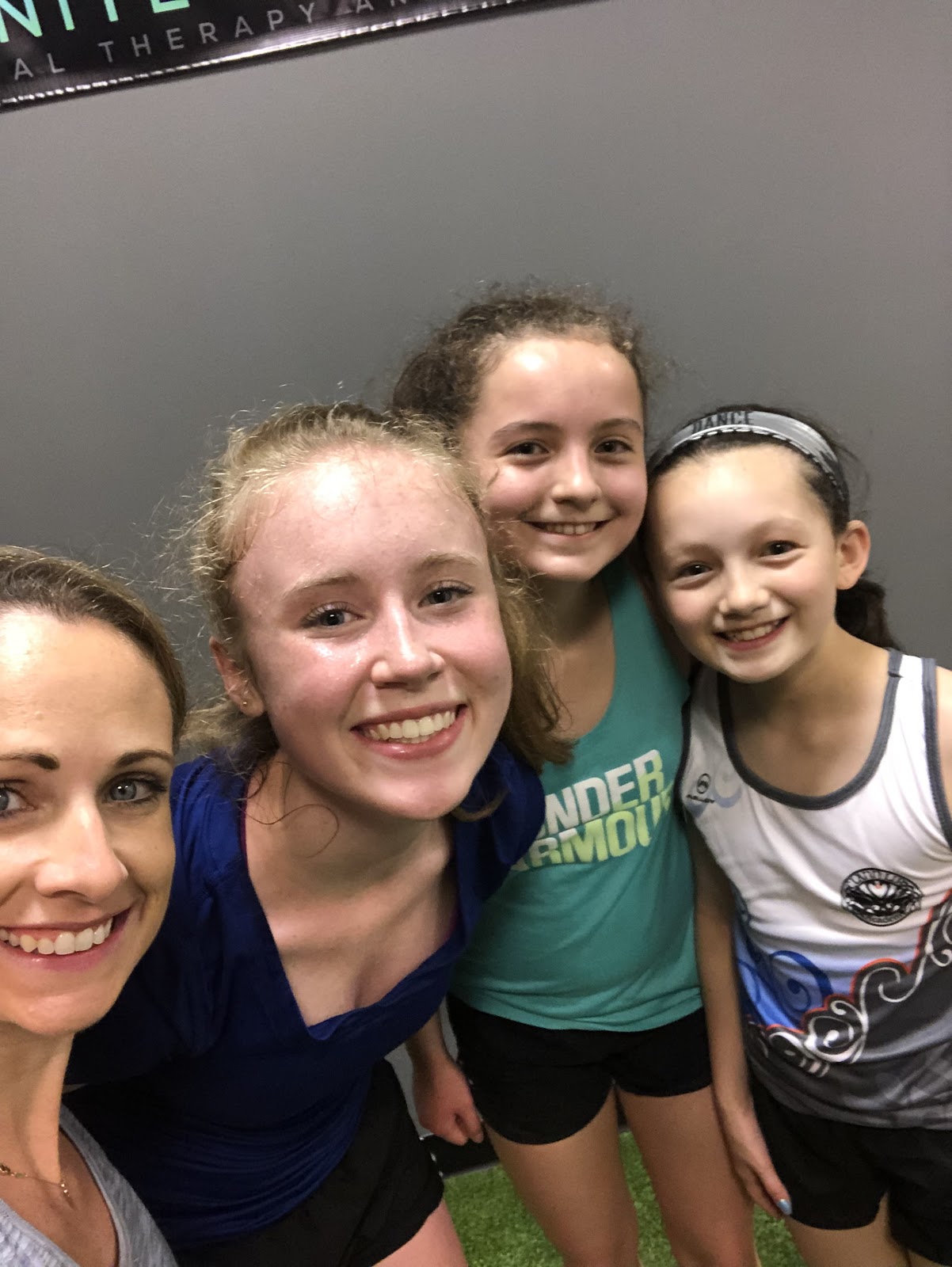
Starting in May 2019, Niamh, Isabel, Grace and Georgia have been working with me twice a week for personal training sessions.
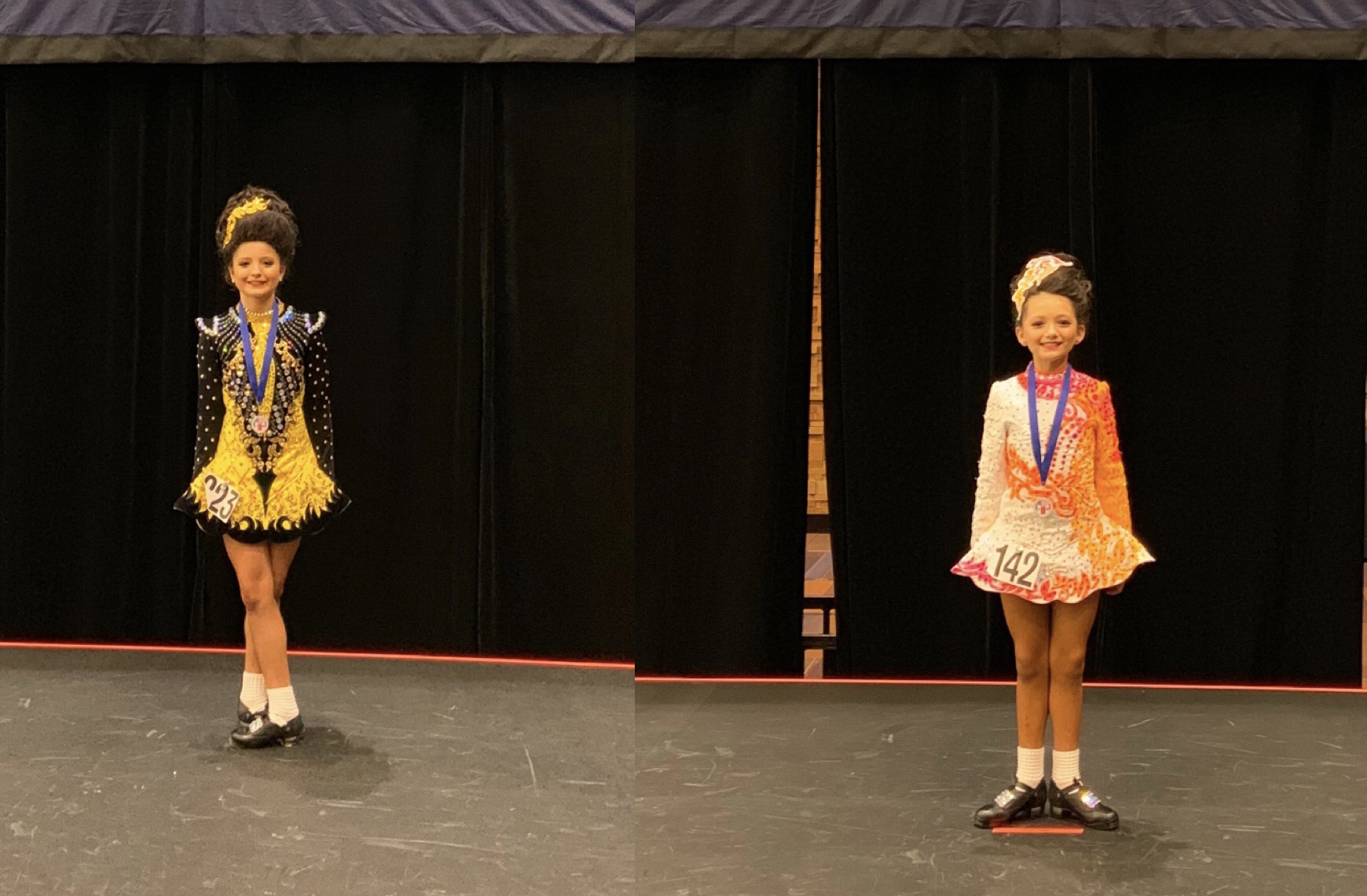
They are all competitive Irish dancers and their teacher wanted them to improve overall strength and power to perform jumps and upper body control to help them in their dancing performances.
From day 1 they showed amazing discipline and hard work. Even though they are young (11-14) they definitely know what they need to do and are motivated to be able to achieve their goals, trying anything I ask of them (without complaining !) and putting their full effort into it.
They even made it to their sessions twice a week during summer vacation!
We work mainly on building strength using dumbbells, kettlebells, barbells, resistance bands and body weight in a circuit style or CrossFit style workout.
I love working with different kids involved in different sports. It’s so fun watching them improve and to see results! It can be challenging at times to keep the workouts fun and varied but I look forward to my sessions with them.
Niamh and Isabel’s mom, Claire said ‘The girls love working with Pippa, they tell me that they have a lot of fun even though it’s hard work! Their power and strength have definitely improved. They have a lot more body awareness and control. I can actually see the physical changes in their legs! ‘
They all recently competed in the North American Irish Dance Championships and all four got recalls! Grace also qualified and is heading to Dublin to compete in the World Championships this April!
I am very proud of these girls and can’t wait to see what else they can achieve!
by Pippa Teague, Strength Coach | Jun 25, 2019 | Brain health, Conditioning, Exercise advice, lifts, Pushups, Running, squats, strength training, Uncategorized
By Kerry Moynihan
Certified Personal Trainer
Fit 4 Life After 50
Visualize this: You walk into a room. You are on the hunt… on the hunt for your glasses. You search high. You search low. They are on the top of your head.
Next scenario: You open the fridge with purpose: “What in the name of all that is holy was I looking for? Wait, wait…it will come to me!”
Sound familiar? Happens to the best of us.
Our lives are chock full of responsibility- work, children, parents, household. We are juggling it all. Why wouldn’t brain fog be a byproduct?! Why don’t we practice self care by exercising body and brain to make our everyday tasks more manageable? Medical evidence substantiates the fact that we should!
It goes without saying that regular exercise builds muscle, improves metabolism, and maintains bone health. It improves mood, encourages better sleep, and puts us on the path to better physical health.
Beyond that, a study out of the University of British Columbia cites that CONSISTENT AEROBIC exercise boosts the hippocampus. That’s the part of our miraculous brain that involves memory and learning. Their recommendation: 120 – 150 minutes of moderate exercise weekly. That’s exercise that gets your heart pumping and your sweat on. Power walk, dance, stair climb, swim – do whatever fuels your aerobic passion to keep you on that consistent path. And with any new routine, play it safe and check in with your health care professional prior to beginning.
Our brains are beautiful and complex. According to this study, the brain benefits of exercise are directly related to reduced inflammation, reduced insulin resistance and the release of chemicals in the brain that encourage the health of brain cells.
It’s a “no brainer.” Exercise is where it’s at for life-long body and brain health.
