by Dr. Loni Rodriguez | Nov 25, 2019 | Personal training
By: Kerry Moynihan, Certified Personal Trainer
Fit4LifeAfter50.com
It’s that holiday gift giving time of year. Be a super Santa in your fitness fan’s life by placing something special under the tree. Here are some at home equipment ideas for your Christmas shopping list:
- TRX HOME2 SYSTEM: $169.95
Suspension trainers allow you to use your own body weight to build muscle and strength. The TRX system (Total Resistance eXercise) is at the top of the market. Your at-home system can be suspended in the door frame for a convenient and mobile workout.
- AB DOLLY: $79.99
The Ab Dolly roller system builds core galore. Exercises range from upper body rollouts to lower body knee pulls – allowing you to target all major muscle groups. It isn’t nicknamed “Satan’s Skateboard” for no reason. Ab Dolly exercises are challenging and effective.
- RESISTANCE BANDS: $10.00
These loopy latex bands are effective, stretchy, portable and perfect for stocking stuffing. They can be used for a range of exercises from glute & hip activation to shoulder, arm and back work. If your fitness fan is a traveler, these are the pick – easily packable.
- FOAM ROLLER: $14.99
Foam rollers aid with muscle stiffness and loosen muscular knots. Perfect gift for those plagued by post-exercise soreness. Rolling improves range of motion and helps with muscle fatigue. This is sure to be a fan favorite.
- EXERCISE BALL/YOGA BALL: $19.88
This uber durable elastic ball comes with a pump to blow it up to approximately 30 inches. It’s major benefit is that due to its instability, it recruits more muscle, allowing for super efficient, effective and challenging exercises like: push-ups, wall squats, crunches, roll-outs, to name just a few. Plus, the color options make this a festive and fun gift.
- BOMBAS PERFORMANCE SOCKS: $15.00 +
Like working out on a cloud! Bombas use the softest of yarns to create comfortable, cozy, anti-microbial and moisture-wicking socks. Added to that, the Bombas company believes in a “one purchased – one donated” philosophy. So far over 25 million clothing items have been donated to homeless shelters and organizations thanks to Bombas customers and the Company’s sense of community. That’s a seasonal win/win.
Wishing you a wonderful season of family, friends, fun and fitness! 🎁
by Dr. Loni Rodriguez | Nov 21, 2019 | Injury Prevention
Dr. Loni here, coming to you with some info on why we get hurt!
There are many causes for injuries, WAY too many to list and name. Why is that? We are all different human beings with different inner workings, work schedules, ability levels, past histories of injury, medical conditions, motivation levels, fears, sleep qualities, nutrition habits, and the list goes on…
So what is the number one predictor for injury? Hands down, the research tell us that the number one predictor of injury is previous injury.
This, however is not something that we can modify. We can’t take back time. So, what CAN we modify? Well, give this next statement a read…
Most injuries occur from doing too much after doing too little for too long.
So… why do we get hurt?
Injuries and pain have a TON of contributing factors, too many to name and too specific to each person to narrow down to an all inclusive list.
One of the best ways to look at an injury or develop a prevention strategy is to think through these key points:
- Are you dealing with current injury or pain? Did YOU put YOUR body through more than it used to at a faster speed than it could adapt to?
- Are you thinking about Injury prevention: Can you find out what your goal is and create an exercise routine around that goal? Will it allow your body to SLOWLY adapt and become resilient to the activities you want to put it through?
Think a bit less about how to FIX what is going as the first line of defense on using specific fixing methods for pain relief, movement correction, etc.
Think more about the relevant causes, make some short-term modifications, maybe add some fixing methods in along the way to help you get by, and put a plan in place to SLOWLY allow your body to adapt to what you want it to do.
Did you learn something here? Let us know! Do you know someone who would benefit from reading this? Pass it along.
Until next time…

by Dr. Loni Rodriguez | Nov 14, 2019 | working with injury
The picture above is with my grandma who turned 82 this month! Happy Birthday Grandma!
There are times when clients will let me know of their woes before the session. Usually by email… It is as if they are trying to prep me so I am ready for them to lay it on me.
I am going to share a story of a client of mine who has come SO far, but is still having some issues with leg and back pain.
A line in the email received before the session was… ”Well, I think I have lost my motivation for all of this. We will have to talk tomorrow…”
At first, that makes me sad because it is my job to keep her motivated. It is my job to be the voice of reason, to help her see the light at the end of the tunnel and to be her guide. I thought that there was a possibility that I had failed her. No, I can not help everyone (even though I would like to think so)… But I know darn well that there is still hope for this one.
Going into the session, I had no idea what to think, I had no idea what she was going to come in with or where the session would end up.
Well… in walked (patient who will be named Jane for the purposes of confidentiality).
Jane: “You know Loni… I don’t know if I will ever get over this”
Loni: “Why do you say that?”
Jane: “Well, I workout 4-5 days per week. I lift heavy things, I squat, I run, I lunge and do sit ups. Why does my back and leg still hurt after a full 8 hour day of housework?”
Loni: “Tell me about how you would feel last year if you were to do 8 hours of housework?”
Jane: “Oh, there is no question that there would be NO WAY I would be able to do 8 hours of housework. My leg wouldn’t have been able to handle that.”
Loni: (Silent smile)
Jane: “I have progressed haven’t I?”
Loni: “Yes ma’am!“
This is a great example of understanding that being pain-free or symptom free is not always the best end goal. Of course, that is what we want and can keep working towards. But in reality, the best goals are the small, incremental ones and really based upon FUNCTION. Those goals should also be frequently revisited. Why? Because it allows you to see that progress! It lets you look back and reflect on where you started and where you are. It can significantly brighten your outlook.
The person in this story came to me barely able to do 2 sets of 5 bodyweight squats without having significant pain.
Her Monday’s now look like 5 sets of 5 back squats using 75 pounds.
I could not be more proud of her and I feel very privileged to be part of her journey.
Next time you are feeling down about where you are in the present, take a peak at where you started.
Thanks for reading, keep on keepin’ on…

by Dr. Loni Rodriguez | Oct 31, 2019 | nutrition
Why Nutrition?
Nicholas Frazier
Nutrition Specialist @ IPPTW
Dr. Loni and I sit down every other month or so and like to spitball ideas. We throw things on whiteboards and just discuss best practices. We talk about what we see works and doesn’t work with the clients we work with. We’ve both managed programs with hundreds of individuals and see what are the major missing components to their training. We’ve discussed how to develop programming that best suits certain athletes. We’ve talked about teaching coaches how to connect common faults to corrective exercises. Most recently we sat down and talked about the idea of functional living.
The idea was we both have so many athletes that spend so much time crushing it in the gym. They put so much effort into rehab work and their fitness, and struggle to see results. It led to us conversely discussing the fact that most spend that time in the gym, maybe 5-8 hours of their week which totals to 3% of their week? With a total of 168 hours in the week, what are they doing the other 160 hours or 97%?
Our conclusion was that guidance on Nutrition would have the biggest impact on people’s success. We discussed what method we liked the most and both of us concluded the macronutrient method was the most sustainable and realistic for the general population. By calculating and prescribing macronutrients based off a client’s age, sex, weight, and activity level and educating them how to balance their caloric intake based on their goals, weight loss, gain, maintence, we could help them find a sustainable approach to their nutrition that would long term provide the health results they were looking for.
Experience has shown than when we can take control of the major areas of our health including fitness, nutrition, mobility, recovery, and mindset, we are much more likely able to achieve our goals. We spend countless hours on working out and countless dollars on programs, trainers, and classes and wonder why they don’t work? When in fact they may be working just fine, but we don’t have control of our nutrition and aren’t fueling our body properly.
My favorite analogy when it comes to nutrition is thinking about your body as a car. You may own a Porsce. You may spend all the time in the world detailing it, keeping it clean, and upgrading it to perfection. But if you don’t put any fuel in it, you aren’t going anywhere.
We’d love to help you with your nutrition. With years of experience in nutrition and fitness, we are able to draw a road map to fit your needs and help you reach your goals! When you’re ready to follow it, we are ready to help!
-Nick
Have any questions or ready to get started you can reach out to nutrition@infinitepotentialptw.com
by Dr. Loni Rodriguez | Oct 28, 2019 | Exercise advice
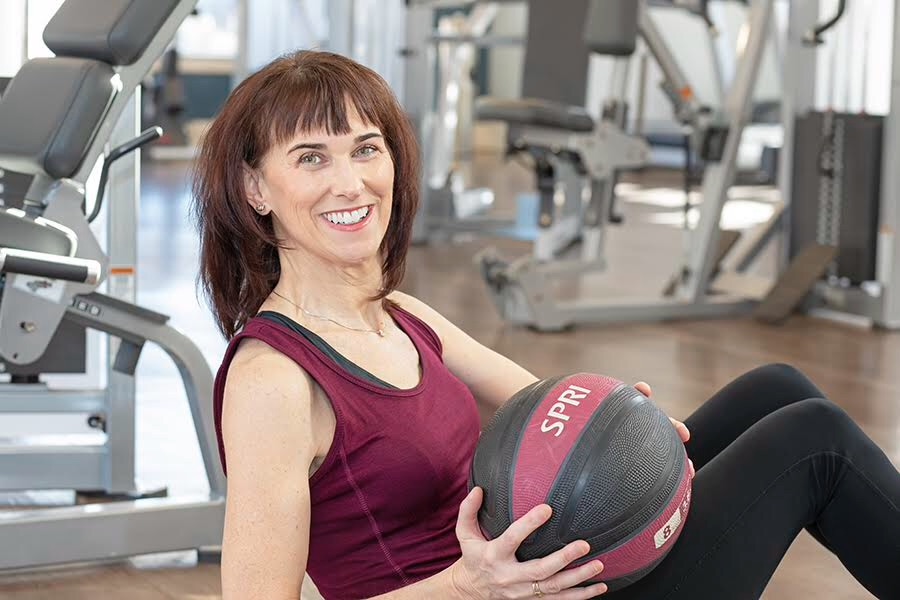
Kerry Moynihan
Personal Trainer
Two-time Breast Cancer Survivor
October always gives me pause. With its proliferation of pink it’s a reminder that this month marks breast cancer fundraising and awareness season.
I was caught in the breast cancer cross hairs in 2003 and again in 2013, so I’m a major supporter of all efforts to eradicate this dreaded disease. Until that day, patients and survivors, alike, must take their own health into their own hands and do what they can to live healthy, full lives.
During treatment simply moving from the bed to the couch may feel overwhelming. But studies show physical activity and maintaining muscle mass, encourages patients to take better care of themselves, allows them to engage in enjoyable activities during treatment, and helps with quicker treatment recovery time.
The American Cancer Society recommends all patients, in treatment or post, follow the U.S. Surgeon General’s physical activity guidelines stating that adults should get AT LEAST 150 minutes of cardio each week and strength train twice for ALL muscle groups for AT LEAST 20 minutes per sweat sesh.
As with all exercise, consistency is key so choosing an enjoyable exercise outlet is important in keeping you in the game. And depending on physical limitations, finding the right workout is vital. It’s always a good idea to check-in with your physician and consult with a certified personal trainer to tailor-make an effective and enjoyable individualized program based on treatment and post-op needs.
Aside from its physical benefits, exercise is a mental outlet for stress and anxiety and a cancer diagnosis is without a doubt stressful. While we workout, endorphins (chemicals produced by the body) naturally relieve our stress, boost our mood, and increase our overall well being.
When thriving through a cancer diagnosis, I have found it’s important to use ALL of the tools in the tool chest: exercise being a vital one. It soothes body and soul reminding us that we are strong, capable and alive.
