by Pippa Teague, Strength Coach | Jun 25, 2019 | Brain health, Conditioning, Exercise advice, lifts, Pushups, Running, squats, strength training, Uncategorized
By Kerry Moynihan
Certified Personal Trainer
Fit 4 Life After 50
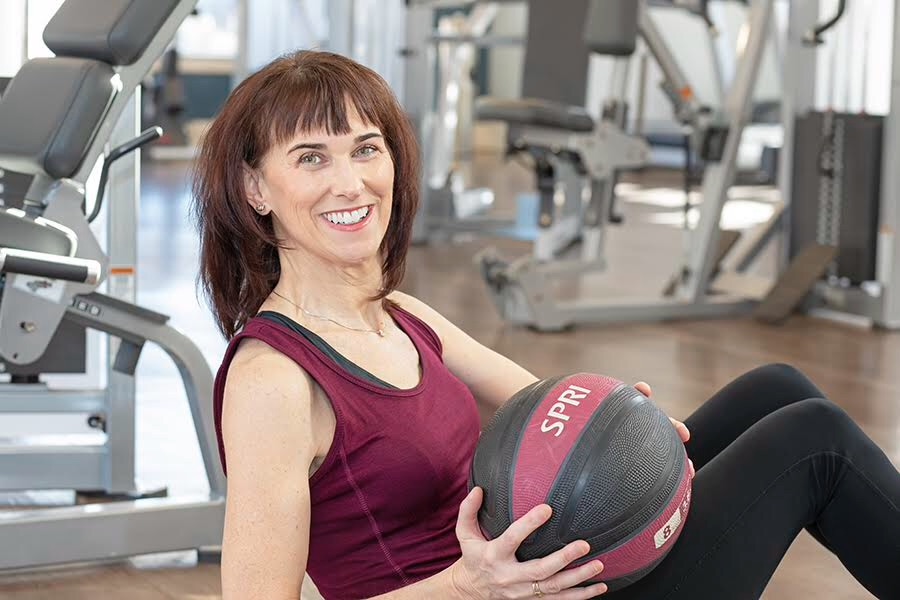
Visualize this: You walk into a room. You are on the hunt… on the hunt for your glasses. You search high. You search low. They are on the top of your head.
Next scenario: You open the fridge with purpose: “What in the name of all that is holy was I looking for? Wait, wait…it will come to me!”
Sound familiar? Happens to the best of us.
Our lives are chock full of responsibility- work, children, parents, household. We are juggling it all. Why wouldn’t brain fog be a byproduct?! Why don’t we practice self care by exercising body and brain to make our everyday tasks more manageable? Medical evidence substantiates the fact that we should!
It goes without saying that regular exercise builds muscle, improves metabolism, and maintains bone health. It improves mood, encourages better sleep, and puts us on the path to better physical health.
Beyond that, a study out of the University of British Columbia cites that CONSISTENT AEROBIC exercise boosts the hippocampus. That’s the part of our miraculous brain that involves memory and learning. Their recommendation: 120 – 150 minutes of moderate exercise weekly. That’s exercise that gets your heart pumping and your sweat on. Power walk, dance, stair climb, swim – do whatever fuels your aerobic passion to keep you on that consistent path. And with any new routine, play it safe and check in with your health care professional prior to beginning.
Our brains are beautiful and complex. According to this study, the brain benefits of exercise are directly related to reduced inflammation, reduced insulin resistance and the release of chemicals in the brain that encourage the health of brain cells.
It’s a “no brainer.” Exercise is where it’s at for life-long body and brain health.
by Pippa Teague, Strength Coach | Jun 20, 2019 | Conditioning, Exercise advice, Injury Prevention, strength training, Uncategorized
Pippa Teague
IPPTW strength coach, NASM CPT
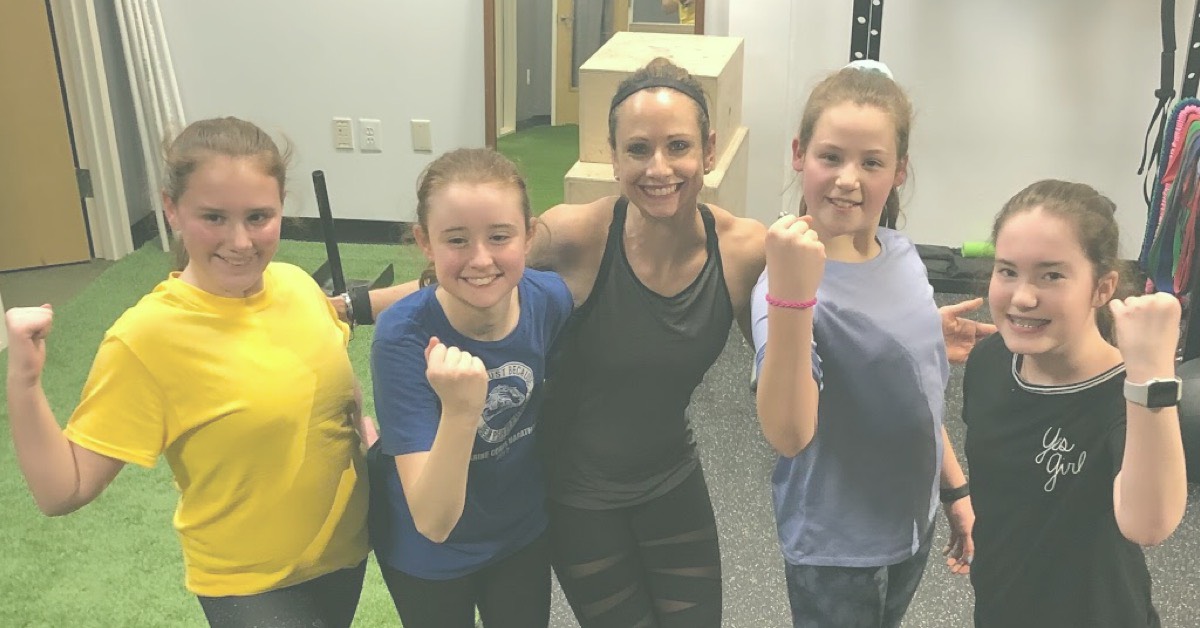
I’ve been working with kids now for over 15 years, mostly as a figure skating coach but most recently as a personal trainer/ strength coach for both specific sport performance gains and also general health gains.
I love seeing how the improvements translate from off the ice to on the ice.
For young athletes who want to excel in their chosen sport, some form of strength and conditioning is essential and specific needs can be met with a personal trainer to zone in on areas that they are struggling or need to improve on.
As well as improving specific sports performance implementing some form of strength and conditioning at a young age will help the following:
- Builds healthy, strong bones and muscles (which in turn will prevent injuries down the line).
- Encourages a healthy lifestyle and educates them to continue to live this way into their adulthood
- Better nutrition and exercise decreases the chance of having to deal with obesity and diabetes in later years
- Reduces stress and releases endorphins (the happy hormone)
- Gives them a sense of achievement and confidence decreasing depression
Strength and conditioning doesn’t have to be going to the gym and lifting weights unless you have sport specific needs or goals. Getting kids to workout out can be as easy as going for a bike ride, exploring a hiking trail, visiting a local rock climbing place, playing back yard games, swimming etc and the list goes on.
The more they enjoy what they are doing and the people they do it with they will “work” hard!
Working with kids definitely keeps me on my toes but it’s definitely my favorite clientele to work with
by Pippa Teague, Strength Coach | May 22, 2019 | Breathing, Conditioning, Flexibility, Foam rolling, Injury Prevention, strength training, Stretching, Uncategorized
Pippa Teague, Strength Coach
Infinite Potential Physical Therapy
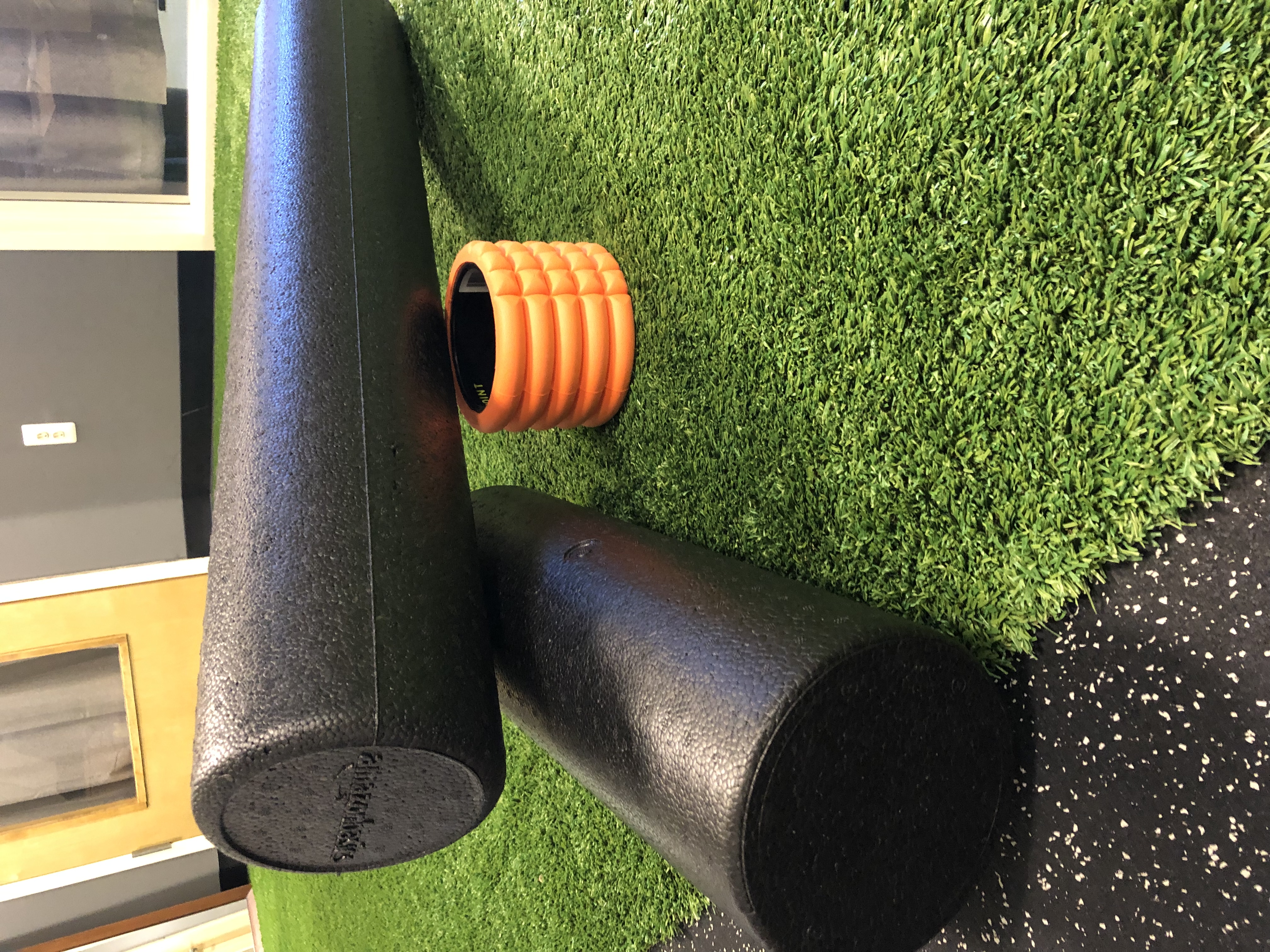
So.. what the heck IS foam rolling exactly? Well, it is rolling parts of your body (muscles) on a foam roller giving yourself your own “massage” or some might say “self myofacial release”.
It is frequently used to promote recovery, flexibility and athletic performance. However, as everyone began to become obsessed with it over the past few years, we have learned more about what it DOES NOT do verses what is DOES do. It has NOT been proven to provide long term effects on recovery, perform, OR flexibility. Short term effects on flexibility? Sure. Long term (what we really want)..? Not so much.
The widely accepted theory is that foam rolling / lacrosse balling / super nova-ing is a way to “release” fascia (soft tissue surrounding all organs, muscles, bones and nerve fibers), adhesions, muscular restrictions, etc. This restriction, adhesion or tightness of this fascia causes decreased joint range of motion and blood flow.
Here is the real deal.. to actually CHANGE the tissue that is underneath your skin (aka fascia) you need a SIGNIFICANTLY higher force than a human exerting it on themselves would need to be used! So let’s get one thing straight.. you ARE NOT releasing anything..
So why are we getting those short-term improvements in flexibility, pain relief, etc..?
The theory is that foam rolling CAN stimulating the nervous system to relax which in addition will improve pain tolerance. Similar to other things like stretching, deep breathing and meditation..
Our Advice? USE IT IF YOU LIKE IT AND UNDERSTAND THAT IT PROVIDES SHORT TERM EFFECTS ONLY.
Apply during your warm up (no more than 2-3 mins)
5-10 passes over each muscle group
We know that more does not mean improved outcomes…
So.. in short. Foam rolling or self mobilization can give you short term gains in flexibility, decrease muscle soreness and pain. KEY WORD IS SHORT TERM! What can it do long term? …..? Unsure.
If you foam roll and you feel like it helps you in your workouts and promotes recovery, then keep it up! If you foam roll and are in agony and doesn’t seem to help you then giving it a miss might not be a bad idea!
Learn how your body reacts and do what feels good!
by Pippa Teague, Strength Coach | May 1, 2019 | Conditioning, Exercise advice, Jumprope, strength training, Uncategorized
By Pippa Teague NASM CPT, WS
Infinite Potential Personal Trainer, Orangetheory coach, Professional Figure Skating Coach
I love double unders and jump rope in general but I know dubs don’t come easy to everyone and there are some tricks and tips that can help!
In general, jump rope is a great conditioning tool. As a competitive figure skater I would use it frequently to warm up in the rink and before competitions. It is light and easy to bring to smaller spaces and gets that heart rate up fast!
Being effiecent in jump rope and getting those dubs will help to improve the following:
-Speed
-Coordination
-Endurance
-Body control
-Strength
-Power
-Reaction speed
Here is my guide to achieving your first double under.
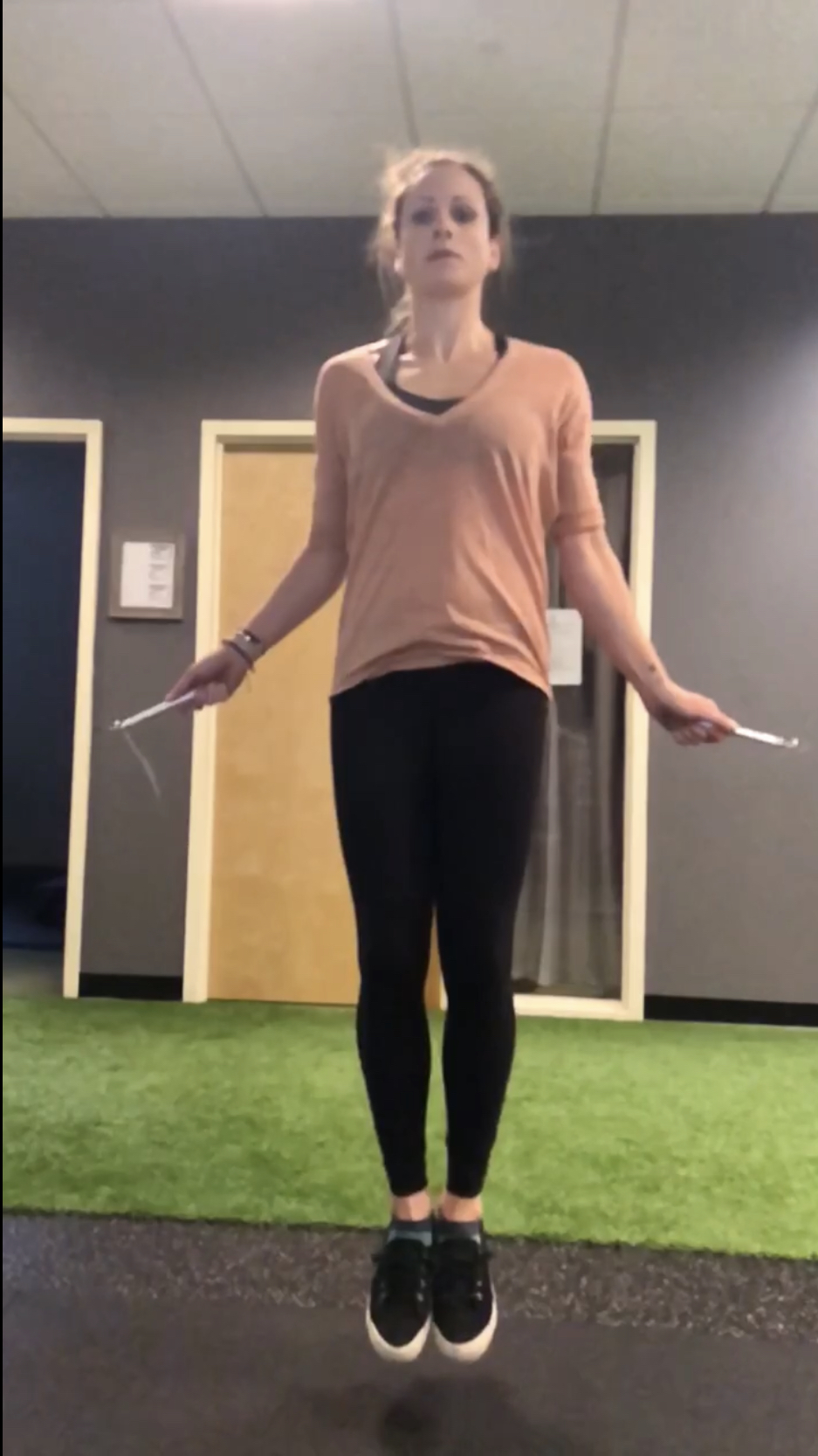
First make sure you are efficient with your single unders. Be able to quickly manage about 20 in a row unbroken. A big mistake I see very often is trying to make large circles with the arms in order to bring the rope through. Try to keep your wrists and arms close to your side. A trick to help is to squeeze a rolled up towel under each arm. As you jump the wrists actually flick down. So think about your thumb turning a tight circle towards the ground as you jump upwards. Timing should be even and smooth. Focus on one point in front of you.
Single unders
Double under timing.
Penguin taps:
Without the rope jump up and tap your legs twice. This is how fast you need to be doing the flick motion with your wrists. The jump itself should not change, you want to jump higher for the double under but legs should look the same. Often times people will bend the knees up in a tuck fashion. Try to avoid this. Toes should still leave the ground last and legs stay straight.
Once you feel like you have the singles down you should start trying a couple of doubles mixed in. Use the timing of the singles to help flow you into a double so it might be something like single-single-single -double-single
When you can manage this, try to get two in a row. The hardest part is the timing and jumping straight into the next one.
Double unders
Good luck and tag me in your double under journey !
by Pippa Teague
Infinite Potential Personal Trainer, Orangetheory coach, Professional figure skating coach
NASM CPT, WS
