
by Dr. Loni Rodriguez | Feb 10, 2020 | Abdominals, Back Pain, Flexibility, Injury Prevention
There are so many exercises in the world of fitness that we can not keep up. My advice is to keep hold on some basic moves to make sure that you are covering all your bases.
Today we are going to cover some core exercises that most people don’t do regularly. Why aren’t they doing them? Most people perform core exercises that keep your core in a “stable” or stationary position. Those types of movements are great, but one of the best things we can do is keep our “core” well rounded position (not literally…).
What do I mean by well rounded?
We want to move our bodies in all directions! We want to be able to bend forward, backward, rotate and twist. In order to be able to do so, we have to teach our core to help out.
So what is our core?
It is from your mid chest and upper back down to your mid thigh! That whole thing is your core! I am going to review some of my favorite exercises that hit all of those ares.
What is the benefit of core work?
- Can improve performance! It can help people perform better at their sport or activity and make you stronger and more confident to do household chores like carrying in groceries.
- Can help with pain! Core movements are a staple in many of our rehabilitation programs no matter where someone is experiencing pain.
- Can help flexibility! Have you ever said that you have tight hamstrings? I sure have heard that… guess what? Core exercise can help.
Here is what we recommend…
The straight leg sit up
This is a phenomenal movement that can help strengthen your abdominal muscles and get you more flexible hamstrings. It is so common that people can not do this move! Can you do it?
The back extension
Back extension exercise can help improve low back pain and flexibility. It can also help strengthen the spinal muscles that help support your entire body! If you do not have a ball like in the video, you can use a ottoman or a stack of pillows.
V-up hold
This is a holding exercise that helps the straight leg sit up and hamstring flexibility. Sometimes this can be very challenging for people to hold for any time at all so have low expectations…
Superman hold
Have you ever felt your back feel tired? This is the exercise for you. It can make your back feel like it is working and guess what? That is exactly what we are looking for!
Hip flexor strength with band
This is the top exercise that no one is doing for core! Have you ever felt that you had tight hip flexors? This exercise is for you.
Hip thrusts
This one is by FAR one of my favorite exercises. This is incredibly beneficial to help hip and lower back pain and gain flexibility!

by Dr. Loni Rodriguez | Feb 3, 2020 | Flexibility
The front rack position is a challenging position for many people who exercise with a barbell. It is involved in many movements, including the front squat, clean, jerk or pretty much any movement that requires you to keep the barbell rested on the front of your shoulders. In my experience, it’s mostly men who deal with the lack of flexibility but women alike also struggle with keeping it during many of the movements. Some struggle to get in position, and some struggle to just keep the position. There are reasons for both of those issues to happen and the way we help each are slightly different. If I had one piece of advice for anyone it would be to lose the “elbows up” mentality and think “elbows forward”. This idea gets the proper shoulder muscles engaged and really helps strengthen the position.
In this article we are going to go over the following:
- Flexibility fixes
- Strengthening exercises
- Modifications for front rack struggles
All of the above can be beneficial for anyone who has limitations in this position, but most people need an individualized program to be sure you are not wasting your time working on something that is not for you. That being said, we will also go over a few tests to be sure you know which exercises to choose. Enjoy!
Let’s check flexibility!
Do you think flexibility is the issue? Check to see if that is the case with the following tests.
Wrist mobility
You need full wrist flexibility to get a full front rack position. Test it out!
- Get on the floor on your hands and knees, pointing fingers away.
- Keep fingers flat on the floor as you shift your weight forwards.
Can you keep your palms down and get your shoulders and chest over your hands?
Yes? You have great wrist mobility and do not need to spend time here!
No? You have stiff wrists and forearms, you should probably spend time here.
Try this wrist mobility drill for 1-2 mins every time you are in the gym.
Elbow and shoulder mobility
You need a full elbow bend to get a full front rack position. Test it out!
- Stand with your arms out straight in front of you
- With your palms facing each other and thumbs up, bend your elbows as far as you can.
Can you touch your shoulders without your arms dropping?
Yes? Elbow mobility is in check and you don’t have to spend time here!
No? Elbow mobility needs some work, you should probably spend time here.
Try this elbow and shoulder mobility drill for 1-2 mins every time you are in the gym.
Strength is next!
This is an area that will help any and all wanting to either achieve, improve or refine their front rack position. Most feel that the front rack is all about flexibility, but in most cases it isn’t. It actually takes a ton of upper back, core, and shoulder strength to be able to keep that bar in place. Here are some drills that will really make a huge impact! Get ready, they get pretty spicy.
Strength Exercise #1: Banded front raises
This is a great drill that can be used as a warm-up. You want to think about pushing your elbows forward as you raise them up. I like to say, “scooping” the arms because I would like your elbows to stay bent. The bent position is VERY important as it simulates part of the front rack position. Three sets of 8 is a perfect amount.
Strength Exercise #2: Military press rotations
This one is a KILLER. This accessory movement works on everything front rack. Try and keep the forearms parallel to each other the entire time. Begin with 3 sets of 10-12.
Strength Exercise #3: Plank rocks with active scaps
This helps build the core strength as well as shoulder position and endurance. This another, like the military press rotation, helps if you have a great front rack position but have issues keeping it. Keep that upper back pushed towards the ceiling the entire time.
Strength Exercise #4: Front rack holds
This is the last and final in the front rack strength prescription. Just more front rack. Really focus on tight belly, stand straight up, and forward elbows (not “high” elbows). Remember to breathe. Start with about 50% of your max front squat and hold for 1 minute. Rest about 60-90 seconds, then repeat for a total of 3 sets. If that felt easy, go heavier next time.
Lastly, we will go over some modifications.
This is going to be talked about last because this is the quick fix everyone wants, but does not get you to where you want to be. Thanks for reading all the way through, but the stuff listed above is much more beneficial in the long run.
Modification #1: Crossed-arm Front Squat
This is quite the challenge on the shoulder muscles and it can get pretty sore on the skin. That being said, it can be a great way to opt out of the front rack.
Modification #2: Front Squat with Straps/Towels
This is a way to continue to keep the bar in front but does not require as much wrist mobility as the front squat. It is a fine modification and many use it frequently. I would not say that there is greater benefit in this one versus the crossed-arm.
Modification #3: Frankenstein Front Squat
I would not consider this a modification, but more of a drill. This helps strengthen the shoulders and gets you more comfortable with the weight of the bar in front of you. If you are proficient with the front squat mobility, but struggle to keep position after many reps, this is a great drill.
I hope this helped! Please share your feedback or send it to friends and fellow athletes who battle this front rack struggle!
by Pippa Teague, Strength Coach | Sep 6, 2019 | Client Achievements, Flexibility, Jumprope, Ladies, lifts, Personal training, Running, strength training, Uncategorized
-Pippa Teague
Infinite Potential Personal Trainer/Strength coach
NASM CPT
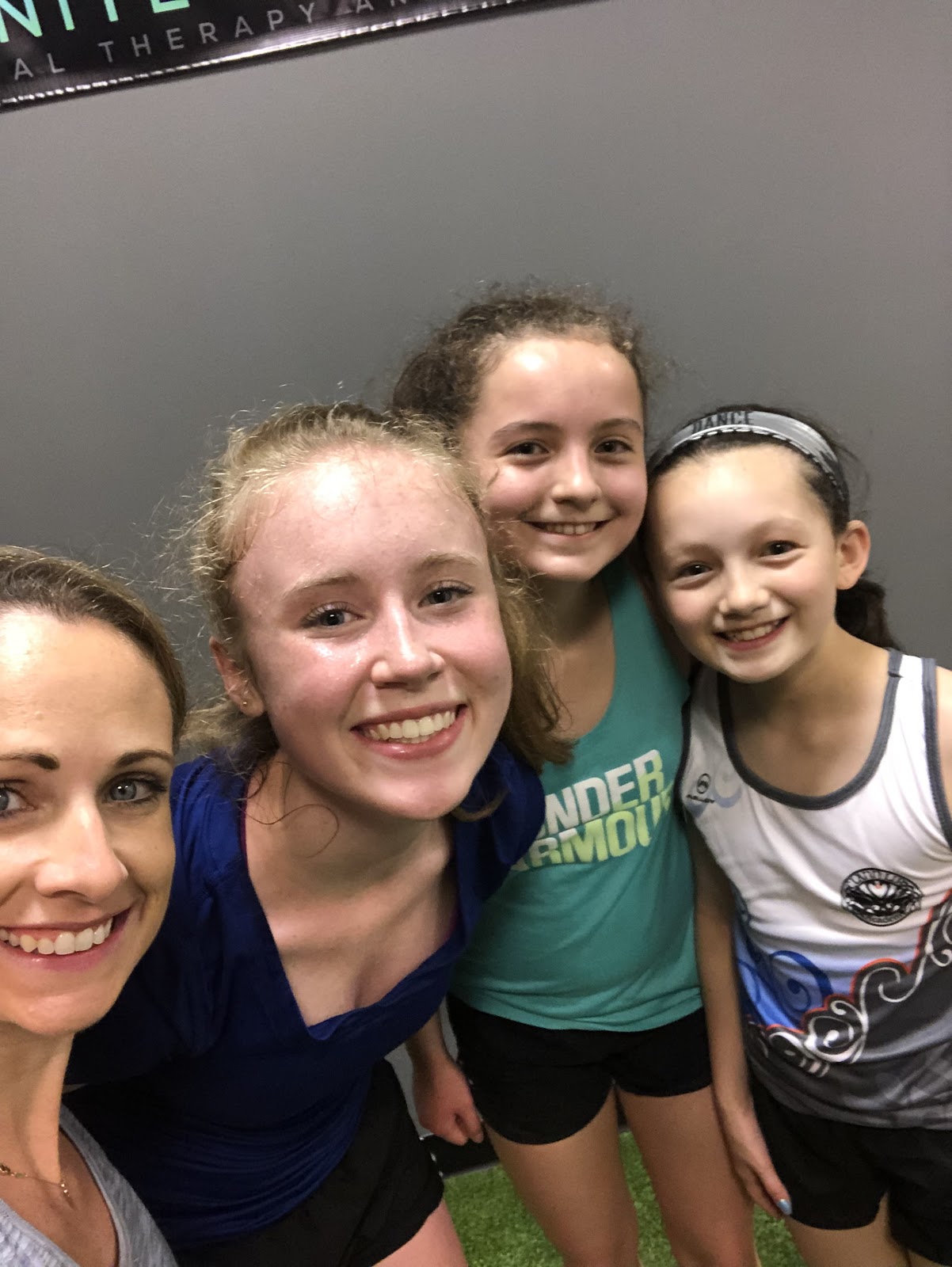
Starting in May 2019, Niamh, Isabel, Grace and Georgia have been working with me twice a week for personal training sessions.
They are all competitive Irish dancers and their teacher wanted them to improve overall strength and power to perform jumps and upper body control to help them in their dancing performances.
From day 1 they showed amazing discipline and hard work. Even though they are young (11-14) they definitely know what they need to do and are motivated to be able to achieve their goals, trying anything I ask of them (without complaining !) and putting their full effort into it.
They even made it to their sessions twice a week during summer vacation!
We work mainly on building strength using dumbbells, kettlebells, barbells, resistance bands and body weight in a circuit style or CrossFit style workout.
I love working with different kids involved in different sports. It’s so fun watching them improve and to see results! It can be challenging at times to keep the workouts fun and varied but I look forward to my sessions with them.
Niamh and Isabel’s mom, Claire said ‘The girls love working with Pippa, they tell me that they have a lot of fun even though it’s hard work! Their power and strength have definitely improved. They have a lot more body awareness and control. I can actually see the physical changes in their legs! ‘
They all recently competed in the North American Irish Dance Championships and all four got recalls! Grace also qualified and is heading to Dublin to compete in the World Championships this April!
I am very proud of these girls and can’t wait to see what else they can achieve!

by Pippa Teague, Strength Coach | May 22, 2019 | Breathing, Conditioning, Flexibility, Foam rolling, Injury Prevention, strength training, Stretching, Uncategorized
Pippa Teague, Strength Coach
Infinite Potential Physical Therapy
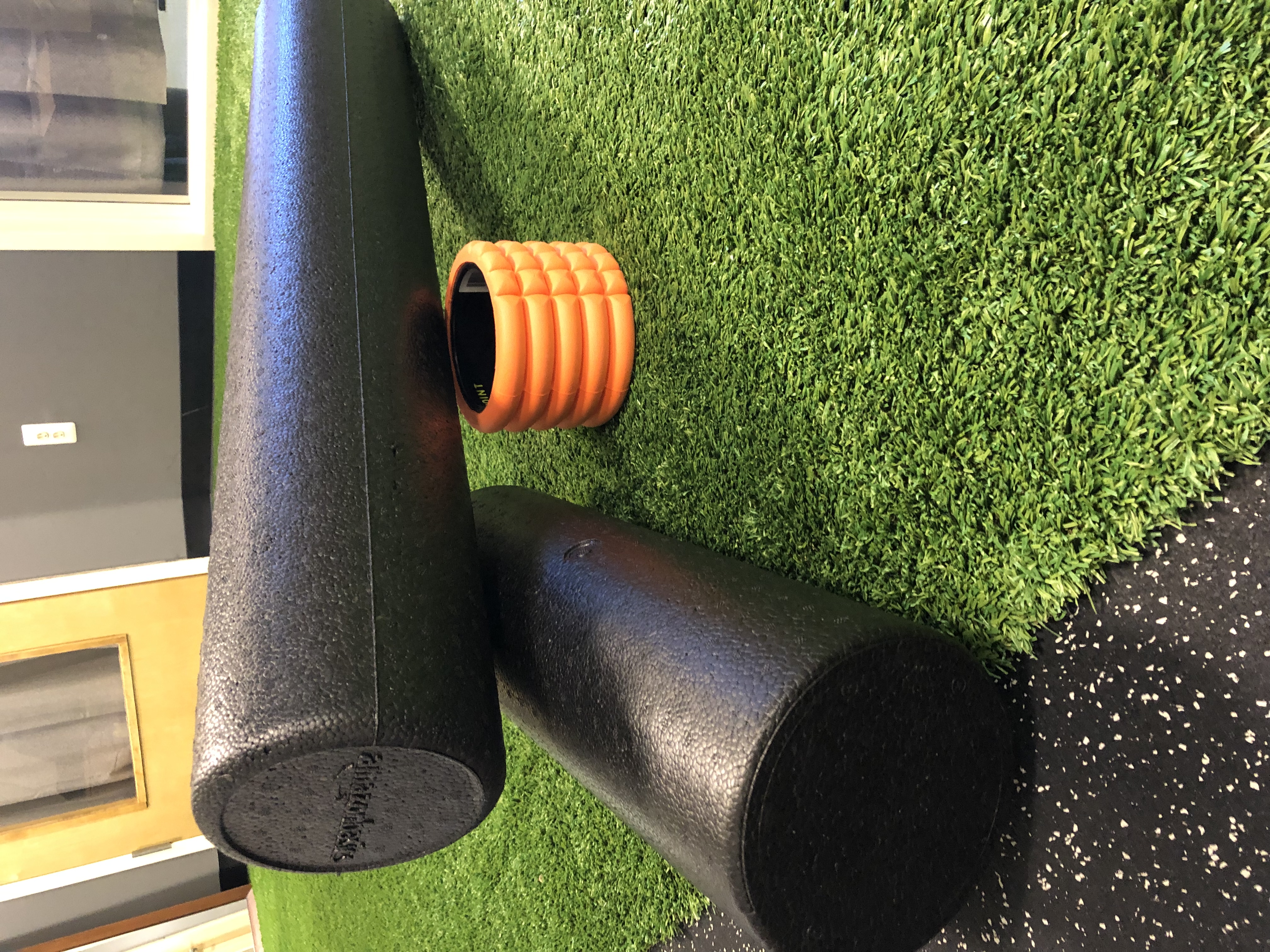
So.. what the heck IS foam rolling exactly? Well, it is rolling parts of your body (muscles) on a foam roller giving yourself your own “massage” or some might say “self myofacial release”.
It is frequently used to promote recovery, flexibility and athletic performance. However, as everyone began to become obsessed with it over the past few years, we have learned more about what it DOES NOT do verses what is DOES do. It has NOT been proven to provide long term effects on recovery, perform, OR flexibility. Short term effects on flexibility? Sure. Long term (what we really want)..? Not so much.
The widely accepted theory is that foam rolling / lacrosse balling / super nova-ing is a way to “release” fascia (soft tissue surrounding all organs, muscles, bones and nerve fibers), adhesions, muscular restrictions, etc. This restriction, adhesion or tightness of this fascia causes decreased joint range of motion and blood flow.
Here is the real deal.. to actually CHANGE the tissue that is underneath your skin (aka fascia) you need a SIGNIFICANTLY higher force than a human exerting it on themselves would need to be used! So let’s get one thing straight.. you ARE NOT releasing anything..
So why are we getting those short-term improvements in flexibility, pain relief, etc..?
The theory is that foam rolling CAN stimulating the nervous system to relax which in addition will improve pain tolerance. Similar to other things like stretching, deep breathing and meditation..
Our Advice? USE IT IF YOU LIKE IT AND UNDERSTAND THAT IT PROVIDES SHORT TERM EFFECTS ONLY.
Apply during your warm up (no more than 2-3 mins)
5-10 passes over each muscle group
We know that more does not mean improved outcomes…
So.. in short. Foam rolling or self mobilization can give you short term gains in flexibility, decrease muscle soreness and pain. KEY WORD IS SHORT TERM! What can it do long term? …..? Unsure.
If you foam roll and you feel like it helps you in your workouts and promotes recovery, then keep it up! If you foam roll and are in agony and doesn’t seem to help you then giving it a miss might not be a bad idea!
Learn how your body reacts and do what feels good!

by Pippa Teague, Strength Coach | Apr 16, 2019 | Exercise advice, Flexibility, Stretching
By Loni Rodriguez, PT
Infinite Potential Physical Therapy and Wellness
Many of us work at desk jobs, commute to work sitting in a car or on a train? You are basically sitting all day. That can’t be good for you, RIGHT?! Sitting is the new smoking…
Actually, that is a myth. Sitting is not killing us! Recent research has shown is that it is much more common to develop chronic disease from what we consume, how poorly we sleep and how much stress we endure on a regular basis. Sitting is not actually BAD for you and it is more important to be focused on modifying the foods we munch on, the alcohol we sip, our sleep quality and how much we allow stress to affect us. Those are all modifiable, at least much more modifiable than changing jobs…
Let’s rethink this for a minute… If you can not modify your job to be able to stand more frequently, I am telling you that that is okay! Doesn’t that make you feel better already? Put you at ease a bit? Sitting is not hurting you, it is not a direct cause of low back pain, or any pain for that matter. Sure, more movement throughout the day is definitely better than being sedentary. However, there are plenty of very active people who deal with health issues and pain and there are many very healthy people that sit all day. Just let that sink in a bit.
Want a good warm up and full-body mobility routine you can perform without equipment? I have provided you with a grouping of exercises below that take you through a full range of motion of all joints throughout your body. Each of the exercises can be modified by not going as deep into the postures. Click the link below to view the 5-minute routine.
5-MINUTE FULL BODY FLEXIBILITY ROUTINE
Besides the above routine that can be easily performed a few times per day, my best recommendations are listed below:
Focus on your recovery vs doing MORE. I suggested the above routine, but sometimes we focus more on what we should be doing for exercises versus modifying our daily routine.
SLEEP
Try and achieve 7-8 hours of QUALITY sleep.
HYDRATION
Shoot for drinking one half your body weight of water in ounces.
STRESS
Take some time daily to breathe, be mindful, and not let stress build. This can dramatically affect your levels of pain and stiffness on a regular basis
NUTRITION
Simply eating a clean diet can improve your overall energy levels, pain, and stiffness.
MOVE AS OFTEN AS YOU CAN
The more you can get up, the better! Take calls on a walk, plan walking meetings with the team, have a goal to take a walk at lunch 3 days per week.
By following the above advice over time, you will notice a generalized reduction in stiffness throughout your day and improved energy levels!
