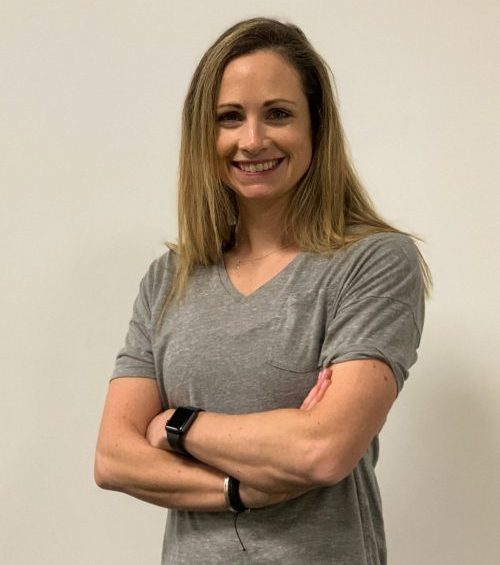
by Pippa Teague, Strength Coach | Jan 16, 2020 | Uncategorized
New Year Fitness advice.
Now we are into a new year some of you have just started a new fitness journey motivated by a fresh year to try something different and become a little better than last year.
Here are some tips to help you make it last past March!
First of all, you are still the same you and need to keep your new goals within reach. Don’t try to do too much at once or too soon . Yes, you may have all the motivation in the world right now but doing 5-6 classes a week will not help you stay consistent in the long run.
Start with as little as l0-15 minutes 3 times a week and then build that time up from there.
You will be more successful if you start on the slower side and then build up when you are ready. This is a long term strategy, it needs to be something you can continue with and build into your lifestyle.
Set realistic goals. Whether it’s weight loss, strength, or hitting a certain running distance make sure the goal is achievable. Set smaller goals to hit along the way so you can see your progress.
If you don’t feel like going to the gym or class and are starting to slack with your fitness try to remember the immediate effects you will feel by working out, not just the long term. E-g. Think how good it feels after exercising and how energized you will be, also things like your sleep will be better, and stress will be less.
This will help to keep you motivated to work out in the moment.
Schedule the classes or times you will hit the gym. Putting it in your
planner will keep you on track and maintain a routine so it becomes like brushing your teeth or going to work.
As well as writing down scheduling in a planner write down your progress. Progress may be small but over time you can look back and see how far you have come!
Good luck and Happy New Year!

by Pippa Teague, Strength Coach | Dec 3, 2019 | Exercise advice
As a personal trainer and group fitness coach I am often asked the question “when am I going to see the results”. Well, this is a tough one to answer as everyone is on a different fitness journey and everyone is different. We each have different lifestyles, jobs, body types, genetics, and age. It can be very easy to compare yourself to others who started at the same time or friends the same age. This is normal and everyone does it but truth is- we just need to enjoy the ride and not put so much pressure ourselves to see fast results.
Below is some advice to help you on your fitness journey:
Stay consistent
Be consistent with whatever it is you are doing. Classes two to three times a week, maybe you see a personal trainer, take a walk on the weekend, play tennis. Whatever your fitness regime is stick with it!
Crazy fad fitness and diets don’t work! Get involved with something you can incorporate into your lifestyle forever or at least a long time. It needs to be part of your routine, like brushing your teeth at night. Trying quick fads never stick!
Eat clean or as close to it as you can
Going to the gym everyday but still eating way too much or junk processed foods won’t get you anywhere. Sure -you will get stronger and be more fit but you won’t physically see all the results of your hard work if your nutrition is not on track. That’s not to say you need to be super crazy with it but try to get good clean food into your body- meat and veggies and not too much over processed carbs! Maybe you actually need to increase the amount you are eating, maybe you aren’t fueling your body enough! Restricting and under eating can be just as bad!
Allow yourself some cheats and don’t feel bad about it but try to eat clean 80% of the time.
Keep your eyes on the prize!
Remember the reason you started on this journey. What is your why? Stay focused and motivated. Having a fit and healthy life will improve many aspects – improved strength to do daily tasks, ability to run around with children or grandchildren, improved mental health, heart health, and sooo many more.
Training should be fun
Don’t overdo your training program. Make sure you are training smart and effective. You don’t want to have to drag yourself to the gym and you also don’t want to end up over training and feeling fatigued. Your body needs recovery time, over training will add additional unnecessary stress.
Bottom line is being confident in what you are doing and trying to achieve and not stressing out about seeing fast results!
By PippaTeague
Infinite Potential Strength Coach and Personal Trainer
by Pippa Teague, Strength Coach | Nov 11, 2019 | Abdominals, Conditioning, Exercise advice, Personal training, Pushups, Recovery, Running, Shoulders, stool, strength training, Telehealth, Uncategorized, youthtraining
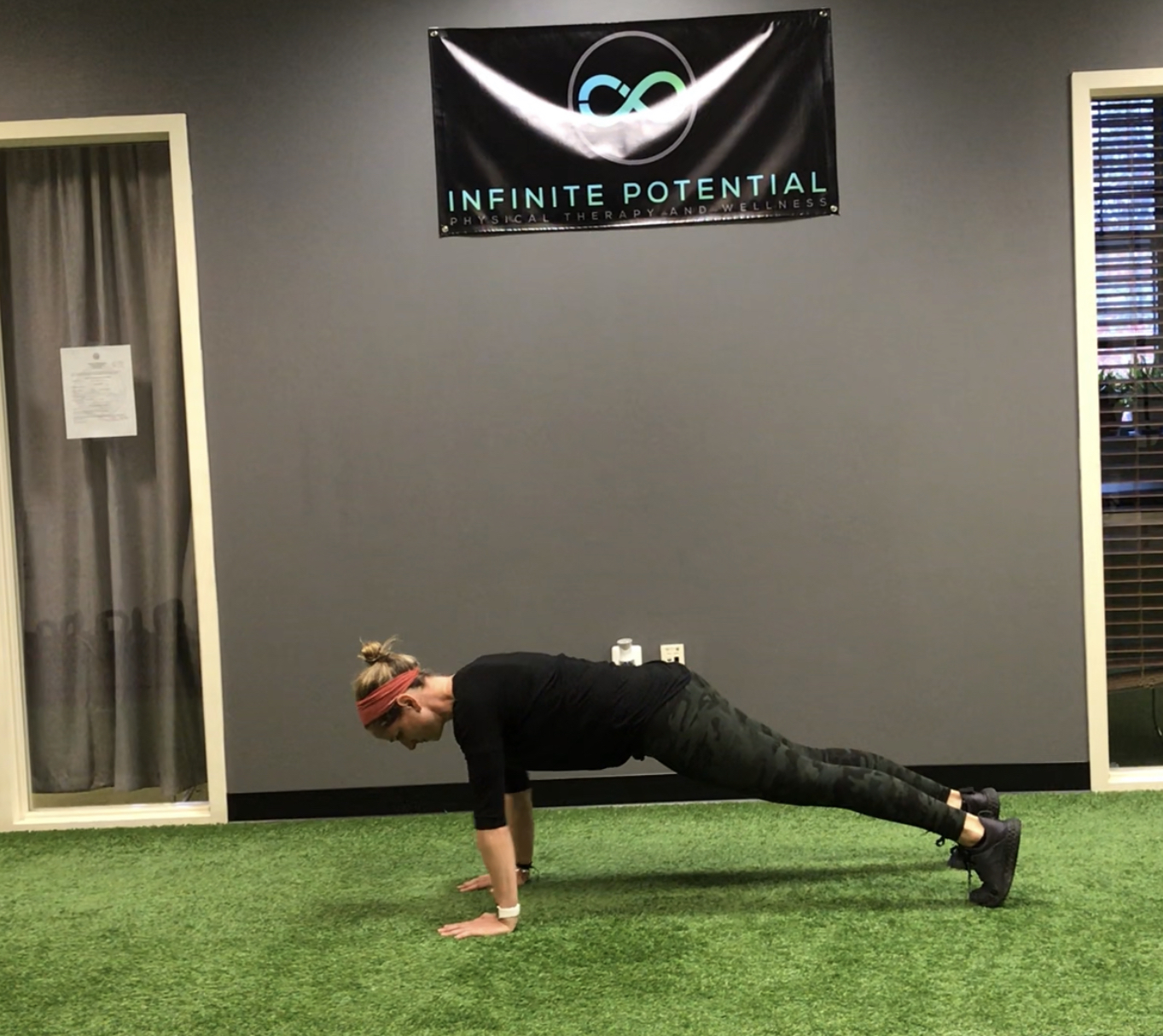
The push up is a very effective body weight movement and one that requires practice to master!
Here is my advice on how to get a push up!
First of all you need to be comfortable in a plank position, so get this position down and aim to hold for 20-30 seconds. Plank from the hands first and then forearms (which is a little more difficult).
Push up descent
Push up to a box (incline)
Next up you can try a push up to a box. Step away from the box and get into a plank position with hands on the box. Slowly lower yourself down maintaining the straight body plank position until your chest makes contact with the box. From here, squeeze and engage the core muscles and push back up to the plank position. Repeat 8-10 reps for 3 sets
Once you have mastered the push-up decline and the push up incline to a box you can move forward to the next steps.
Push up from the knees
Starting on your knees with your hands directly below your shoulders bend the elbows maintaining a straight body position, lowering slowly until your chest touches the floor. Contract your core and press your body back up.
repeat 5-8 reps for 3 sets
When you feel comfortable doing this from the knees you can try your first full push-up!
This time from a high plank position lower yourself to the floor, keeping your elbows tucked in to your side. Contract your core muscles by pulling your belly button to your spine and will pressure through your palms press yourself back up to the high plank position maintaining the straight body position throughout.
by Pippa Teague, Strength Coach | Nov 5, 2019 | Client Achievements
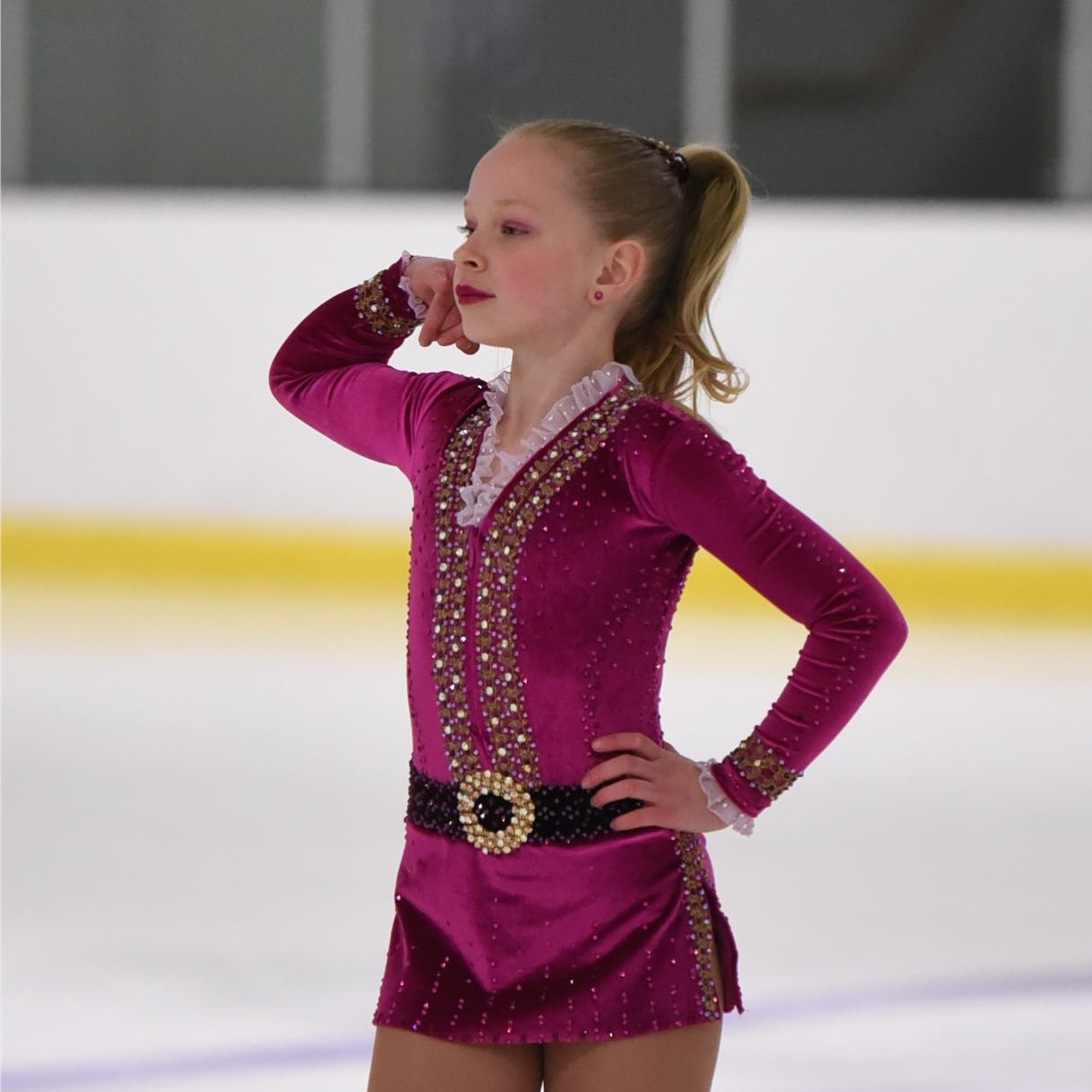
I have been working with Allie since February 2019. She is 10 years old and is a competitive figure skater. She does off ice training at Infinite Potential three times a week -twice in a group setting and one private session.
She trains on the ice 6 days a week 2-3 hours a day. With all of that tough on ice work it is very important for her to maintain strength and conditioning off the ice. This is imperative for injury prevention but also to give her some extra help in being able to get through her skating programs with strength and stamina. Off ice training strengthens her muscles, tendons, joint flexibility and core strength helping her with her sports performance but also is setting her up to be a strong adult with knowledge of correct form and posture and a solid baseline of body strength.
In our sessions we work on strength by lifting weights in squats, deadlifts, upper body push and pull movements, conditioning by getting her heart rate up during full body exercise , flexibility with specific stretches to help her skating moves such as the splits, back bends etc, as well as balance and core.
Hands down she is the strongest 10 year old I know!
This fall she is competing at The New England Figure Skating Regional Championships and we all wish her the best of luck !

by Pippa Teague, Strength Coach | Oct 17, 2019 | Abdominals, Breathing, Diaphragm, Pain Relief, Uncategorized
By Anna Burns, PT, DPT
Infinite Potential Physical Therapist
One of the simplest things you can do to manage pain is to breathe. Have you ever noticed that when you’re concentrating, exercising, or in pain, you tend to hold your breath? Our diaphragm is directly connected with our nervous system, which is where pain signals are processed. When our nervous system is on high alert with pain, stress, anxiety, or fear, engaging our diaphragm can calm the nervous system from “fight or flight” status to “rest and digest” status, thus decreasing pain and stress levels. It’s one of our best tools to manage pain; no side-effects, no out-of-pocket costs!
For various reasons over the years, we have adopted a couple of different ways of breathing that circumvent the diaphragm. One is breathing with the upper chest; this breath is “emergency” breathing, a very shallow pattern that we perform when we are stressed or scared. Breathing like this only perpetuates the “fight or flight” cycle. Check out this video for an example of Emergency Breathing.
Another way is “belly breathing,” in which we distend our bellies outward on purpose; there’s nothing to breathe with in your belly; your lungs and diaphragm are under your rib cage! While the belly rising is normal with inhalation, it should not be consciously distended. Check out this video for an example of Belly Breathing.
Optimal breathing engages our diaphragm, a large muscle that sits under our lungs and over our stomach. By breathing into this area that touches all aspects of the rib cage, the diaphragm contracts downwards to expand the surface area for oxygen intake in our lungs. When we exhale completely, the diaphragm relaxes upwards to push out the de-oxygenated air in our lungs. To activate your diaphragm, breathe in through your nose. Check out this VIDEO for an example. Visualize a balloon expanding at the bottom of your rib cage as you inhale; breathe in pain-free existence. Exhale slowly through your mouth as completely as you can until you have no air left; breathe out all the pain. Pause for a second, and then inhale again through your nose. Try not to bulge out your belly on purpose or move your spine. In fact, I love practicing this laying on my back. So take a mindful moment (or several!) throughout your day to breathe. It will help quiet your pain signals by calming down your nervous system.
