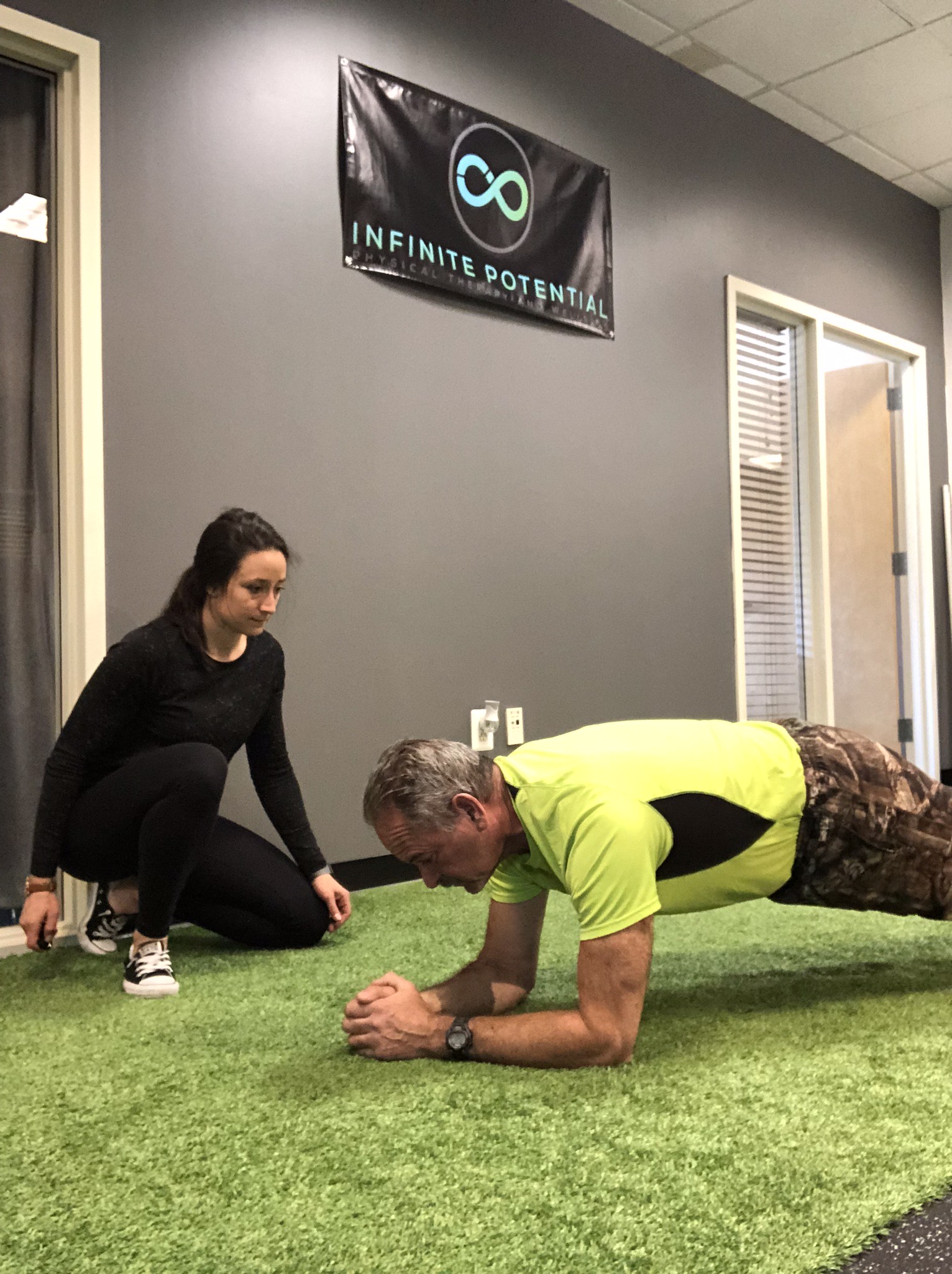
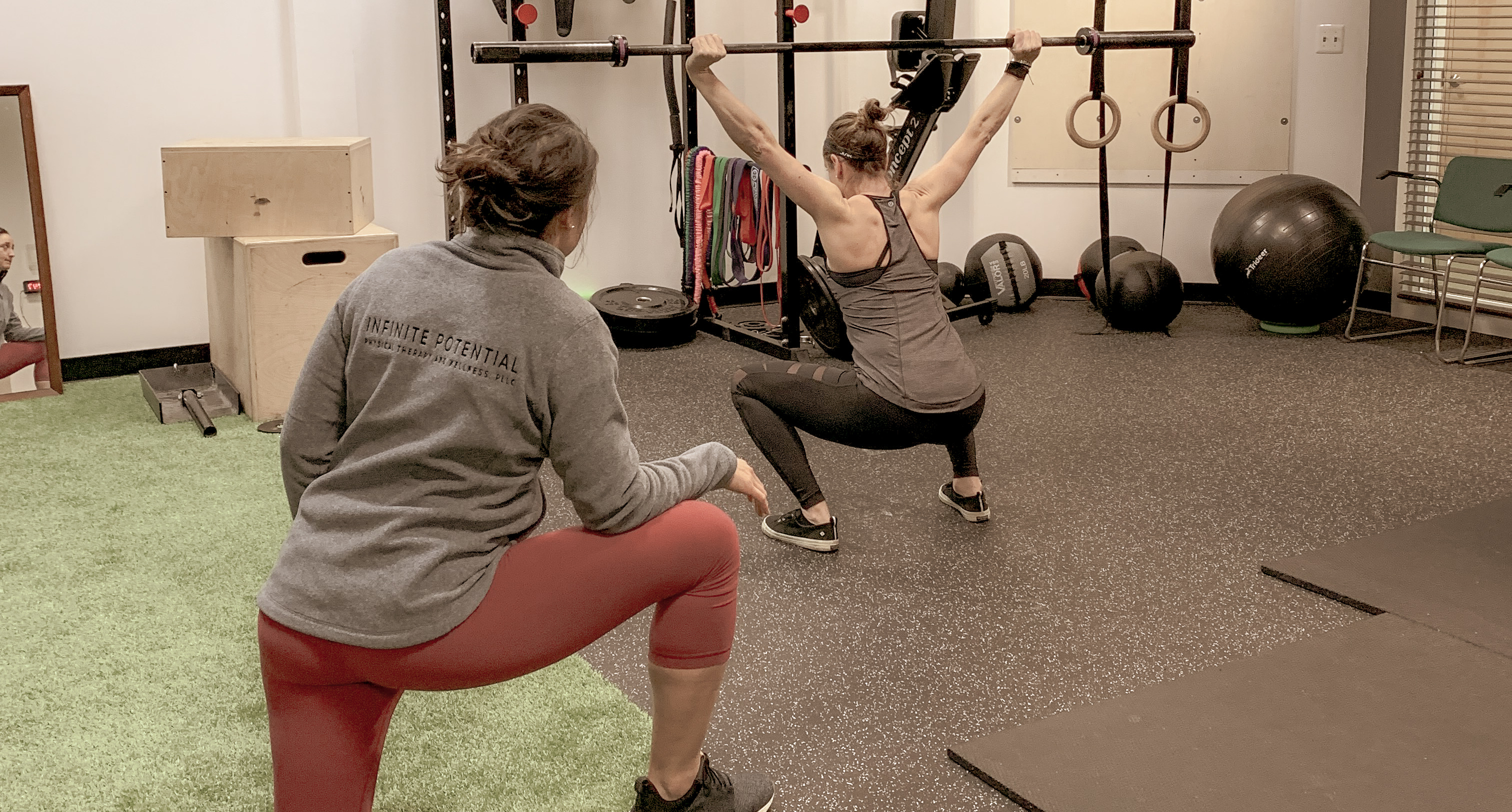
It’s no mystery that we are fans of resistance training at IPPTW. And it’s not only because it keeps us strong.There’s a whole lot of other benefits to training with load, and I’m here to dive onto a few…
Improve flexibility
This one might be a little confusing. We don’t typically associate resistance training with flexibility. However, especially when focusing on full range of motion, resistance training will promote flexibility, and has proved in some cases to be superior to static stretching.
Increase bone density
We need to do load bearing resistance training to keep our bones strong, its physics! Especially as we age, it is important to combat bone wasting with lifting in ways that load our skeleton- squats, deadlifts, lunges, push ups, etc. , etc.
Improve BP and Sugars
Compared to other forms of exercise, resistance training proves to be superior for managing bood sugar levels long term. A combination of resistance training and endurance training has shown to lower blood pressure just as much as antihypertensive medications, and in theory, should have longer lasting effects
Sleep More!
Lifting helps us sleep better. In fact, compared to the non lifter, a person who regularly strength trains is less likely to have poor sleep quality. Sleep is so important for so many reasons, but more as it relates to physical therapy and what I do on a daily basis, it is important for managing pain. Sleep deprivation has been linked to higher levels of inflammation and pain, and therefore is a factor when I’m treating an injury.
Improve mental health
Resistance exercise training has been shown to greatly reduce depressive symptoms in adults regardless of health status, total volume of training, or significant improvements in strength. Getting stronger is great for both the physical and mental body.
Aging Well
In addition to balance training and functional exercise, resistance training is one of the most effective types of exercise to age gracefully. By working on making strong muscles, we can help combat and reverse the adverse effects of aging, while preventing future disability and injury! Simply put, strong=less fragile.
Everyone likes to try to search for the best “How-to” when it comes to helping their own injuries.
There is NO WAY that you can tell me you haven’t googled for “the best treatment for [ENTER PAINFUL AREA HERE]”
I decided that it would be a great idea to put out some content that I am calling the “Resiliency Series“. Over the next few months (or however long it takes for me to run out of content), I will be covering the most common areas of the body where people have their aches and pains. Each week will cover a specific area that we suggest people work on in order to resist injury.
This will NOT serve as a way to treat an injury or direct medical advice, but it will be a resource that will house the most up-to-date information on how to make yourself stronger and and more… RESILIENT! We ALWAYS suggest you seek medical attention if you feel you need more help.
Topics that will be covered include:
The lower back! The most common area of long lasting pain for MANY people in our population.
The knee! A very common area for many active people to have issues with at some point in their lives.
The shoulder! Another very common place that needs long-lasting attention in regards to strength and flexibility. There are SO many misconceptions about what someone should or should not do with regards to their shoulders – with a history of pain or not…
The foot! Lots and lots of foot pains have hobbled into the clinic from all the COVID-19 warriors looking to become runners all of a sudden… Feet need strength training, too! In pain or not, if you want healthy and happy feet, stay tuned.
I will probably keep going but that’s all for now 🙂
I am going to start off the series today with some of the BEST ways that you can stay resistant to injury on a more general level.
Here are my most helpful tips that you can apply TODAY.
Sleep is the most effective performance enhancing drug known to man… And it’s free. This is INCREDIBLY important to remember and should be the #1 place to begin when trying to address long-term resiliency and injury prevention. Sleep doesn’t only improve and enhance your physical state, but it also enhances your mental capacity as well. We all function better with more Z’s… You can do all the stretching and strength training in the world, but if you are running on 4-5 hours or sleep per night, its like driving with your E brake on. You’ll get to your goals but it will absolutely take longer to get there
Most injuries are from doing too much, after doing too little for too long… If you do more than your body can handle, it will tell you. If your capacity to handle that said activity is low, then the ramp up needs to be MUCH slower than you may think it needs to be. If you have a goal to increase how much you do (ie. increase how far you are running), you should absolutely be adding to your overall activity (mileage in that case) little by little. Also… think about the entire week of activity, vs day to day. In the example of running, you should be thinking about your total mileage over the course of the week vs just the day itself, it all adds up.
Understand that when your stress levels are high and life is a bit nutty, you can be at risk of an injury. Just like when your body is a bit stressed and tired you are more apt to get sick? Same thing goes for injuries. If life’s tossing you lemons, don’t try and squeeze the shit out of them with super hard workouts. Ease up a bit, stay active but don’t shoot for personal bests.
Your GREATEST risk of an injury is a previous injury. Sorry folks, this is a proven fact and complete prevention isn’t ACTUALLY possible. If you have had an injury once, you are at risk for developing it again. You can only reduce your risk of getting hurt!
How can you reduce your risk? Learn more in the Resiliency Series to come!
Attention all CrossFit and OrangeTheory (OTF) Members! This article takes you step by step on how to properly frame your return to full gym participation.
I see LOADS of you folks walk through the doors of Infinite Potential PT. It is incredibly important that we help educate the public about how it properly return to the gym or activities you love to do.
This article is not meant to be the be all end all or any sort of medical advise. It is, however, a skeleton plan at how to get yourself from being sidelined to being back to full participation in the gym!
Before I began working with members of CrossFit and OTF, I did not have a solid grasp on what it took to rehab someone in their shoes. Any competent PT knows how the body works and knows how to get most people out of pain. For me 2-3 years ago, the average client I was working with was not asking me to help them get past pain with heavy back squatting or through mile 14 of a 26.2 mile marathon. They were asking for help because of pain with lifting a heavy gallon of milk or putting on their seatbelt. Sure, sometimes the people I see now need that too, but those types of complaints are usually helped early in their rehab process and the larger goals are focused on. Many PT’s, like myself 2-3 years ago, only felt confident helping people wean back to being a participant in a fitness class, but not necessarily taking them the entire way to the end goal of being completely confident in their abilities.
So, what does it take to get yourself back to the old you of being resilient AF and being able to do whatever you want in the gym?
I tell the previous story because it is important to be working with a medical professional that understands not only what you do but HOW to get you back. Below is a step-by-step guide to follow to give you a grasp on what rehab should look like.
Step 1: Establish your long term goals.
This is very important so you can get a meaningful plan in place that can be tracked, monitored, and adjusted.
Each of those goals need to possess a few “SMART” characteristics:
Specific: It has to have a particular subject – ie. Running pain-free vs being active without pain – running is more specific
Measurable: It has to be able to be tracked over time – ie. Running a 5k pain-free vs “running” pain-free is not measurable
Achievable: You have to know your own body – ie. Running a 5k pain-free vs running a marathon pain-free – first off, a marathon is not pain-free but if you have not run a marathon pre-injury, then running one post injury may not be a realistic goal whatsoever.
Relevant: It has to be meaningful to you or you won’t work towards it.
Time sensitive: You need to put a time cap on it – ie. Running a 5k pain-free by September. Putting an end date allows you to set markers along the way and keeps you accountable.
So… sit down and make that goal. This is a step that can NOT be skipped.
Step 2: Establish a starting point.
This is an incredibly important step as this is the “point A” to the “point B”. Without figuring out where to start from, you can’t establish a plan to the end goal!
You want to figure out your exact status with regards to what activity you want to get back to doing. So… Think hard about where you are write it down! It has to be specific.
For example: “I can’t run right now” is not enough. Can you run for 1 minute? 1 mile? 30 seconds?
Figure it out and write it down.
Step 3: Establish your short term goals.
This is really where a PT or other medical professional can help you set some realistic, achievable markers of progress and short-term goals. They can help you understand tissue healing times and normal courses of rehab to best advise you on what to expect based on what you have going on.
For example: If someone is dealing with a long-term diagnosis of a shoulder tendonitis (or condition of a tendon) and wants to be pain-free lifting overhead within a month, the therapist will helpfully give you information on the normal course of rehab. A tendon takes time to heal and change back to a state where it can handle the loads that exercise / life puts on it. That time can range anywhere from 3-12 months depending on many, many, many factors. This is an important time to say that it is important to have a guide familiar with injuries like yours, the goal you want to achieve, and the path to get you there.
The following example sets the stage and understanding of how to set realistic expectations when dealing with an overuse injury.
Appropriate long term goal: “I want to be lifting my previous weights overhead, pain-free within the next 6 months.
A few short-term goals or progress markers based on the above:
With little to no pain, be able to handle lifting moderate weight with angle modification (ie. Landmine press on an angle vs overhead press with a barbell) within in 4 weeks.
With little to no pain, be able to handle lifting moderate weight overhead with grip modification using dumbbells within 8 weeks.
Step 4: Establish a plan
This is the tricky part and definitely needs some guidance. I can not get too specific here because every single person is different, but I can play off the example in the previous step to show you what the plan would look like.
The plan must begin with taking the end goal, short-term markers and starting point and figure out what needs to be implemented in order to achieve the short term markers step by step.
The plan must include:
isolated work / exercise done on the area of injury
global work done on the surrounding areas to continue to improve supporting strength
cardiovascular training to maintain fitness and promote tissue healing
Goal-centered activities such as a return to running program that begins with walking to simulate what they body has to do in order to run
Each of the above are progressed and managed as life happens and changes occur but this is the usual start to any rehab program that I plan.
Step 5: Track the progress
This is the fun part but also most challenging to explain. The rehab process is always up and down and never, or vary rarely, linear. You don’t just keep getting better and better. There are constant ups and downs, setbacks and speed bumps. That all being said, the ups and downs are 100% normal and should be expected. This sets the stage for realistic expectations and reduces the desire to search for more answers or a better plan as the program continues. If someone dealing with injury rehab does not know that pain will constantly resurface in the process or recovery, they will jump ship pretty darn fast.
Does this seem overwhelming? It should! Unless you are a PT who deals with this daily. But even though I see this day in and day out, I still get overwhelmed by cases that are not making the expected process.
That being said, the point of all of this is to expose you to the skeleton of what a proper rehab program should look like. Your program should include very specific activities and exercise routines that are prescribed with your goals in mind.
Not all PT’s are created equal and I am going to put a shameless plug here for my rehab programming. I have taken many CrossFitters and OTF members of all ages and ability levels right back to the point of returning to full class participation. Many of those people were being seen a few days per month or less and the work was being put in consistently outside of our office walls.
Click here to see a scroll through an activity-specific “Return to Competitive CrossFit” home program
Click here to see a scroll through an activity-specific “Return to OTF” home program.
Thank you for reading!
If you are interested in learning more, please do not hesitate to contact us directly. We want to make sure you are informed about how our programs work!
We ALSO offer complimentary consults to do just that (above).
Today we are highlighting Lily who has been with us since the Fall of 2019. Lily is a high school crew athlete who was dealing with knee pain that lead her to stop running at practice. The pain crept in seemly out of nowhere and she noticed that it just was not going to go away on it’s own.
“I have been doing crew since 6th Grade and really enjoyed rowing out on the water with my friends. When I joined the High School Crew Team in late August 2019 however, I noticed that my knees would begin to hurt during our warm-up runs and would then prevent me from participating in the other activities in practice. Due to the already existent pain, my knees would then begin to hurt when I was sitting down, often at school. This would prevent me from paying attention to my full abilities in class.”
She was impacted on a daily basis by her symptoms and was at a loss of what to do about it. Being a teen, she felt that she shouldn’t have to deal with pain like she was having.
“I had pain in my knees when I was walking up and down hills or stairs, running, jumping or any form of impact on my knees. I often found that my knee pain would flare up during the day at school.”
After the first session with Lily, I knew that I was working with an incredibly dedicated young lady. It isn’t uncommon for a young client to speak for themselves during the evaluation (versus their parent), but it is truly impressive when it does happen. Lily took the lead and consistently advocated for herself throughout her entire rehab. She was very diligent with her program and communicated with us between sessions like a mature adult.
“Before starting the treatment I did not think that there was any way that my pain and discomfort could be helped. I knew that, after talking to a Orthopaedic Surgeon, nothing could be done to directly treat the symptoms.”
I can’t say there wasn’t any eye rolling, big sighs or, “do we have to?!’s” during sessions, however, Lily worked hard, poured in a ton of effort and always did her best.
“Even though sometimes the treatment is difficult, after every session I feel stronger and my knees do not hurt nearly as much as they did only a few months ago.”
At this point, Lily is in her third and final rehabilitation phase. She has progressed to returned to running, she performs her strength routine at least 2 days per week on her own, and returns to our office for a monthly session to review and progress her home program.
“I can now run, with little to no pain for a relatively long period of time. The treatment has not only strengthened my leg and the other muscles surrounding my knees, but also my core and upper body. This has an incredible advantage when rowing and allows me to participate in all the practices and spend time with my friends and teamates.”
We asked Lily to tell us what others should know about seeking treatment at Infinite Potential PT.
“I believe that if you are prepared to work hard and persevere through the treatment plan that Lori gives you, which can sometimes feel like a challenge (especially when you have other commitments to your studies & crew team, and also want to spend time with friends and family!), you will definitely feel the benefits! Don’t give up – trust that you are strong enough, both physically and mentally, to succeed and become the best that you can!”
Thank you, Lily for your hard work! It was a pleasure to have gotten to know you and help you through this process.
There are so many exercises in the world of fitness that we can not keep up. My advice is to keep hold on some basic moves to make sure that you are covering all your bases.
Today we are going to cover some core exercises that most people don’t do regularly. Why aren’t they doing them? Most people perform core exercises that keep your core in a “stable” or stationary position. Those types of movements are great, but one of the best things we can do is keep our “core” well rounded position (not literally…).
What do I mean by well rounded?
We want to move our bodies in all directions! We want to be able to bend forward, backward, rotate and twist. In order to be able to do so, we have to teach our core to help out.
So what is our core?
It is from your mid chest and upper back down to your mid thigh! That whole thing is your core! I am going to review some of my favorite exercises that hit all of those ares.
What is the benefit of core work?
Can improve performance! It can help people perform better at their sport or activity and make you stronger and more confident to do household chores like carrying in groceries.
Can help with pain! Core movements are a staple in many of our rehabilitation programs no matter where someone is experiencing pain.
Can help flexibility! Have you ever said that you have tight hamstrings? I sure have heard that… guess what? Core exercise can help.
This is a phenomenal movement that can help strengthen your abdominal muscles and get you more flexible hamstrings. It is so common that people can not do this move! Can you do it?
Back extension exercise can help improve low back pain and flexibility. It can also help strengthen the spinal muscles that help support your entire body! If you do not have a ball like in the video, you can use a ottoman or a stack of pillows.
This is a holding exercise that helps the straight leg sit up and hamstring flexibility. Sometimes this can be very challenging for people to hold for any time at all so have low expectations…
Have you ever felt your back feel tired? This is the exercise for you. It can make your back feel like it is working and guess what? That is exactly what we are looking for!
Are you thinking about starting something new in January? Setting some workout goals or planning to participate in a challenge at your gym?
We all love to start the New Year off right with things like new workout routines, gym challenges, or general lifestyle changes. Maybe this year your goal is to run a 5k or compete in your first CrossFit competition, or maybe it is to complete the OrangeTheory Fitness ™ “Transformation Challenge”. This is all well and good, but you must make sure what you are doing is not drastic, is realistic, and is gradual. I can not tell you how many times I have seen someone in March or April who is coming to see me for pain that came on after participating in some form of new workout regimen or routine. I am the last person to tell someone NOT to participate in something, but you have to know yourself, your body, and how to take care of it during this time!
Here are some tips that will help reduce your injury risk as you venture into your new routine.
1. PROCEED GRADUALLY
If your new plan involves a workout routine that your body is not used to then you have to proceed into that new routine as gradually as possible. Maybe that means adding a few extra gym days, or increasing your running mileage. Maybe you are planning to work with a personal trainer in addition to your regular routine in order to get stronger and fit in a new way. The best advice I can give you is make sure that you are not increasing your overall workout intensity by more than 10% per week. That means how HARD you are working should not change much from week to week.
How do you figure that out? You have to understand your baseline and then the level of intensity you are partaking in.
Here are some examples…
Let’s take days of the week. If you normally workout 2 days per week and the challenge asks for 3, then that is about a 50% increase. I am not saying to not go to the gym that 3rd day, but plan accordingly by making one of those days a bit less intense. This will decrease your overall intensity level.
How about a new workout routine… you went from doing yoga and Pilates to starting OrangeTheory Fitness ™ 2 days per week. That is a 200% increase in your intensity level. I am by no means saying that you should not start a new routine, but your intensity level has to stay low and gradually increase as you adapt to the new training program.
Just remember, that most injuries come from doing too much after doing too little for too long.
2. USE YOUR DAYS OFF TO BENEFIT YOU
It is super important for your body to have days that you aren’t in the gym. If you have a plan to go that extra day, then you need to make sure your week has an extra day in it that you are resting. A day full of errands, taking the dog for a 2 mile walk, and a full clean of the house is not a complete rest day. Does taking a full rest day sound foreign to you? That is fine, try to at least do half as much as you normally do on one of the days during the week.
3. GET YOUR RECOVERY IN
This is one of THE most important things to think about keeping as a priority during this time. I am not talking about getting on a foam roller more often, stretching more or getting massages, etc. I am specifically referring to SLEEP, HYDRATION, and CLEAN FOOD consumption. This is something that can be tracked and modified easily throughout your week.
3. LISTEN TO YOUR BODY
If you have read my content before, you know well that I am someone who promotes pushing yourself and not shying away from pain all the time. However, there are many circumstances that warrant you to slow it down, lessen the load, decrease the intensity in the short term. If pain starts to sideline you, GO TALK TO SOMEONE. It is not just going to go away if you stop doing that said painful activity. Most pains will go away on their own, but as soon as you start back up again they come back most of the time.
4. TRY A NEW NON-TRADITIONAL GYM WORKOUT
This is a great time of year to do something new that is not an intense workout. Try getting outside on local trails, trying indoor rock climbing, take up gentle yoga or meditation class. These are GREAT things to do on off-days at the gym that do not tax your body.
These are just some things to think about as you proceed into the New Year. They can obviously be applied to many situations at other times of the year, but most people start something new in January and I wanted to give a few guidelines to follow.
The first and third tips are the most important to keep in mind! If you have questions about your new routine, post comments below or reach out to us personally. We are happy to help!
Wishing you all a safe, healthy and Happy New Year!