by Pippa Teague, Strength Coach | Sep 19, 2019 | Conditioning, Exercise advice, Injury Prevention, lifts, Personal training, Running, squats, strength training, Uncategorized
By Jenny Gusella
These days there are endless workout options, from spinning to barre to HIIT to personal training, bootcamps, home DVDs and more. There’s also tons of information and scientific research floating around about the benefits of one workout versus the next. With your head spinning from information overload, you finally decide to seek an expert opinion, so you ask a trainer like me, “OK. Tell me the truth. What is the best workout?”
The best workout is the one that you will actually do. Whether it’s because it’s the quickest, or you love the instructor, or your friends go to that gym, or your favorite coffee shop is next door, or because you genuinely love the workout, there is no reason too small if that reason is enough to get you to complete the workout.
The human body is much more simple than we think. Eat food, move around, sleep, repeat tomorrow. Of course, in between those things is an entire life – a career, familial responsibilities, not to mention social pressures, self-doubt, etc. All of those things complicate the basics, but you have the power to uncomplicate fitness. Are you stressed that you don’t have an hour to spare to workout? Simple solution: do a 45 minute workout. Are you dreading doing that 3 mile run you promised yourself you’d do? Simple solution: Don’t do the run. Do some squats, lunges and pushups, or go for a bike ride, or walk your dog.
Yes. I just said, “don’t do the run.” Running in particular is a topic that comes up so often in this line of work. So many of us dread running, and yet force ourselves to do it anyways, as if it’s some sort of requirement. I am here to tell you: YOU DO NOT NEED TO RUN IF YOU DON’T WANT TO. Ever. (Unless you’re being chased.) I am also here to tell you that you do not need to be “a runner” to go on some runs. If you like it, do it, if you don’t, do something else. It truly is that simple. Think about Forrest Gump. Why did he start? “I just felt like running.” Why did he stop? “I’m pretty tired. I think I’ll go home now.”
The next time you find yourself in a workout rut and are about to ditch the gym, ask yourself if there’s maybe another physical activity you’d rather do instead, and try to direct yourself down that route. Don’t worry if your workout doesn’t “scorch the most calories” or “target 90% of your muscles” – just move!
by Pippa Teague, Strength Coach | Sep 6, 2019 | Client Achievements, Flexibility, Jumprope, Ladies, lifts, Personal training, Running, strength training, Uncategorized
-Pippa Teague
Infinite Potential Personal Trainer/Strength coach
NASM CPT
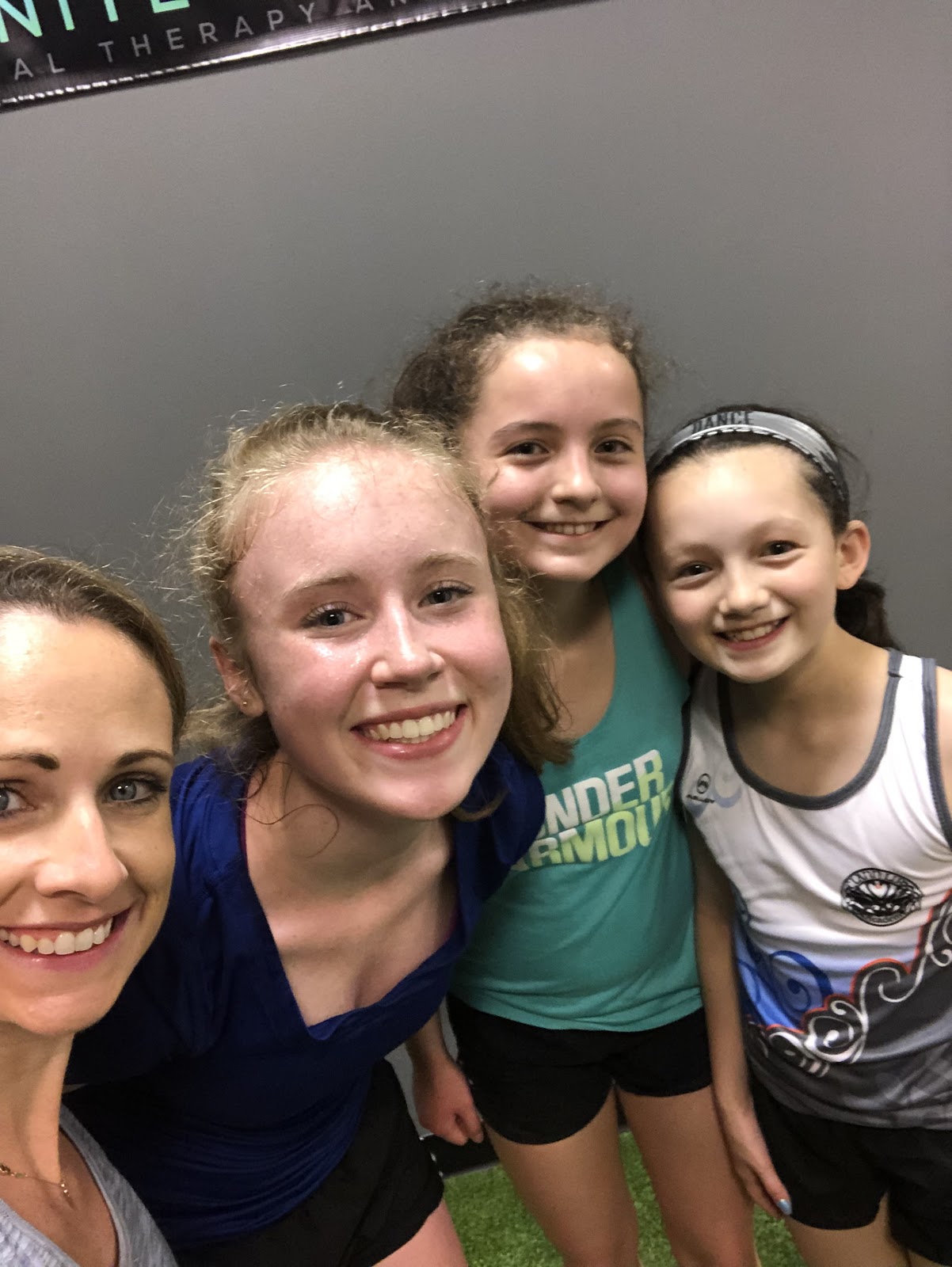
Starting in May 2019, Niamh, Isabel, Grace and Georgia have been working with me twice a week for personal training sessions.
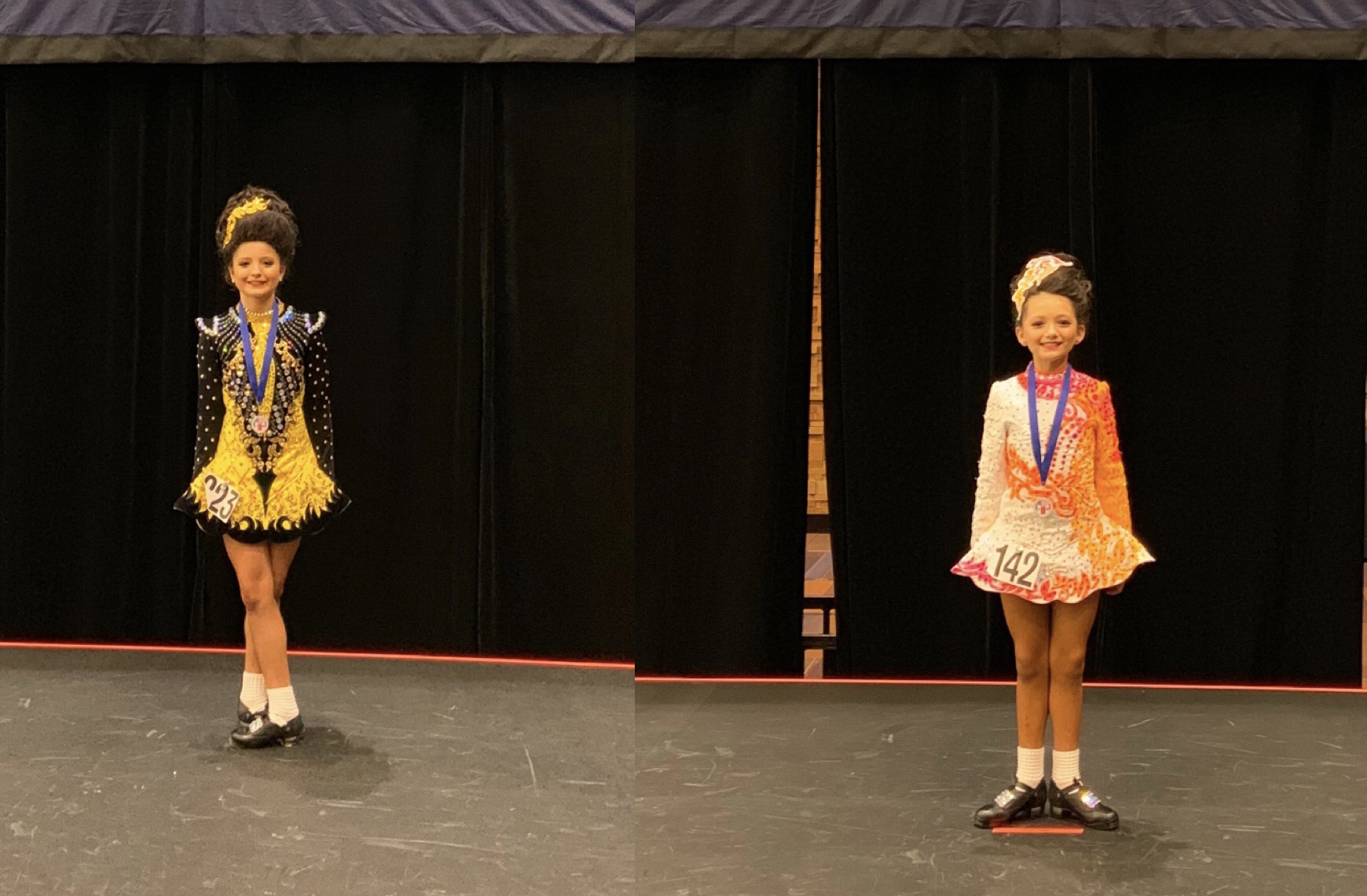
They are all competitive Irish dancers and their teacher wanted them to improve overall strength and power to perform jumps and upper body control to help them in their dancing performances.
From day 1 they showed amazing discipline and hard work. Even though they are young (11-14) they definitely know what they need to do and are motivated to be able to achieve their goals, trying anything I ask of them (without complaining !) and putting their full effort into it.
They even made it to their sessions twice a week during summer vacation!
We work mainly on building strength using dumbbells, kettlebells, barbells, resistance bands and body weight in a circuit style or CrossFit style workout.
I love working with different kids involved in different sports. It’s so fun watching them improve and to see results! It can be challenging at times to keep the workouts fun and varied but I look forward to my sessions with them.
Niamh and Isabel’s mom, Claire said ‘The girls love working with Pippa, they tell me that they have a lot of fun even though it’s hard work! Their power and strength have definitely improved. They have a lot more body awareness and control. I can actually see the physical changes in their legs! ‘
They all recently competed in the North American Irish Dance Championships and all four got recalls! Grace also qualified and is heading to Dublin to compete in the World Championships this April!
I am very proud of these girls and can’t wait to see what else they can achieve!
![Making It As A Marine: Fitness Is A Must]()
by Pippa Teague, Strength Coach | Aug 26, 2019 | Exercise advice, Marines, Military training, Personal training, Pushups, Running, squats, strength training, Uncategorized
By Kerry Moynihan
Our United States Marine Corps is consistently challenged with both physical fitness and combat fitness testing throughout their careers. It’s through this sustained physical effort that our Country’s Marines maintain peak combat ready shape.
What is the difference between the Combat Fitness Test (CFT) and Physical Fitness Test (PFT)? Great question and one that I posed to my son, PFC Pat O’Hearne, who recently graduated from USMC Recruit Training at Parris Island, SC. Here’s the 4-1-1.
PFT: attire is shorts, t shirt and sneakers (go-fasters in Marine parlance).

In order to be a Marine at all you must pass an initial strength test. This ensures that you are fit enough to even begin recruit training. The understanding is that you will improve greatly from here. Basic standards: 2 unassisted pull-ups, 44 crunches in 2 minutes and a mile and a half run in under 13:30.
Over the course of 13 weeks of boot camp, fitness sessions are designed to improve those initial numbers. Body weight training is predominant in a timed, circuit style format. Circuit: pull-ups, inverted crunches, knee tucks, inverted push-ups, pull-up burpees, box jumps, tricep dips, 40 lb. ammo can lifts (push press), back extensions, lunges and squats. All at max effort, 2 minutes per station.
Speed Training: 40 yard wind sprints 8 to 10 times.
Throughout the duration of basic training there are 5 total long distance hikes with weighted packs for endurance. Hikes range from 3 to 12 miles with a final 15 mile hike prior to graduation hoisting an 80lb pack.
The final PFT prior to graduation requires a MINIMUM of 3 unassisted pull ups, 50 crunches, and 3 mile run in 28 minutes.
CFT: Max effort in boots, camo pants and t-shirt.
There are 3 events for Combat Fitness which are all specific to warfare.
1) 880m Sprint: (2 laps around the track) with the goal of completing it as quickly as possible. Max time 3:48.
2) Ammo Can Lift: 30lb can lifted at a minimum 45 times in two minutes.
3) Maneuver Under Fire: A timed event. This is a 300 yard shuttle run with combat related exercises. Here’s the format: a ten yard low crawl, 10 yard high crawl, zigzag run to the end where your partner must be lifted and dragged 10 yards, drop him and fireman carry him back to the starting point. After unloading your partner you lift two 30lb each ammo cans, run straight for 20 yards, zigzag for 30 yards, drop the ammo cans, lift a grenade (lacrosse ball in training) throw it into the “square zone” 15 yards away, drop for 5 push-ups, raise the ammo cans again and zigzag sprint for 30 yards and then sprint in a straight line for the final 20 yards to the finish. All must be completed in a max time of 3:29. 2:04 is considered a perfect score.
Every Marine, regardless of age, is annually tested with the PFT and CFT. As one ages, the standard times and numbers required do adjust but are equally challenging. We can rest assured that our USMC is continuously physically and mentally prepared for work on our behalf. I, for one, am eternally grateful.
by Pippa Teague, Strength Coach | Aug 22, 2019 | Conditioning, Exercise advice, Personal training, Uncategorized
By Jenny Gusella
As we age, one of the best things we can do for our health and happiness is to ensure that we are able to continue to perform the daily activities we want and need to do, whether climbing the stairs, picking up children or grandchildren, gardening, or whatever else you may encounter along your daily travels. The benefits of strength training for adults has been well documented in recent years, with findings that resistance training programs can help combat loss of muscle mass and the frailty that loss can bring. As this research continues, studies are beginning to delve specifically into the benefits of power training for adults, and are finding even stronger correlations between power and functionality (the ability to be able to do every day tasks with ease) than strength and functionality.
Power training is easy to incorporate into your workouts and can be scaled for all levels of ability. When you think about power training, you may think of sprinting or jumping. That’s certainly one way to practice exerting power, but not the only way. Some other options for power training include:
Speed Ladder: Short bursts of quick feet improves both coordination and power output. You don’t need to look like the star on a high school football team to reap the benefits of the speed ladder. Start by walking through the steps slowly, and then aim to progressively get quicker.
Kettlebell Swings: KB swings help you generate power through your lower body with low impact on your joints. Work with a trainer or coach to ensure proper form when beginning KB swings.
Medicine Ball Passes: Chest passes with a medicine ball either to a partner or against a wall is another great way to generate power that involves your upper body.
There are several other great exercises to try if you are looking to incorporate power into your fitness routine. Talk to a trainer or coach about the best way to get started.

by Pippa Teague, Strength Coach | Aug 12, 2019 | Conditioning, Exercise advice, Injury Prevention, Personal training, Recovery, strength training, Uncategorized
Pippa Teague
NASM CPT
Infinite Potential Personal Trainer
What is recovery?
Basically the ability to shorten the time needed in between workouts so you can see more improvement faster!
Sore muscles are good! Something that doesn’t seem right? Not good. Sore muscles actually mean you have done your job during your workout and the muscles are growing / becoming stronger. If your muscles are painful to touch you probably overdid it a little and might want to wait until it’s more along the sore muscle range before working out again.
Here are a few things that will aid in recovery after your workout.
- Active recovery – get moving. Light weights or bodyweight, bike, minimal raised heart rate
- Stretching– if it makes you feel better and/or you have lost some range of movement
- Nutrition– this one is a very important part of recovery. Replacing carbs after a workout and making sure you are taking in enough protein is key
- Hydration – consuming enough water post workout to speed up muscle repair and prepare you for your next workout
- Sleep– also very important. Less than 7 hours hurts recovery, more than 7 is good but more than 9 hours sleep helps the most in recovery
- Massage and meditation – helps to decrease stress which delays recovery
The two biggest pieces to recovery I believe are nutrition, hydration and sleep.
Nutrition
–Protein
Protein is very important. It helps repair and rebuild muscle after activity. Consuming the right amount provides building blocks to get that underway. It is recommended that you should consume 0.15-0.25 g of protein /lb of body weight.
-Carbs
Consuming carbs post workout replenishes your glycogen stores. 0.5-0.7g/lb of body weight is recommended up to 30 minutes post workout.
–Fat
Fat should be limited right after your workout as it slows down the absorption of the other nutrients you may be taking in but consuming it won’t reduce the benefits.
Here is a list of some examples of some good post workout food
Protein
- Protein shake
- chicken
- egg whites
- Greek yogurt
- salmon
- tuna
Carbs
- potatoes
- green veggies
- Oatmeal
- pasta
- rice
- Chocolate milk
- fruits
Fats
Hydration
Hydration is also very important for recovery. Not just before the workout and during but after is almost more important!
Hydrating after working out provides the following benefits for ultimate recovery
- muscle repair
when we work out muscles actually get broken down and repaired (which is what builds the strength ). For this repair water is vital in speeding this process up as our muscles are made up of 75% water!
2. Digestion
water helps with digestion by breaking down the food and absorbing the nutrients that our muscles need right after a workout- salts electrolytes (to name a few).
Sleep
Getting at least 8 hours of sleep is vital in your recovery after a workout. When you sleep growth hormones are released helping repair muscles, build bones and burn fat. Make sleep a priority in your training, go to bed at the same time every night and wake up the same time in the morning, take naps in the day if you miss out on sleep. Try to increase sleep on the run up to an event or competition.
Try to add some of these recovery suggestions to your next week of workouts and see how you feel !
by Pippa Teague, Strength Coach | Jul 29, 2019 | Exercise advice, Personal training, strength training, Uncategorized
By Jenny Gusella
Certified Personal Trainer, @jennykgoose
At its essence, resistance training (training against external resistance like dumbbells, kettlebells, bands, or even your own body weight against gravity) is all about teaching your muscles to adapt to a certain amount of force. When you first come up with a gym routine, you select your exercises then you select certain weights to complete those exercises. For the first few weeks, those weights may feel challenging, but over time, your body will adapt and that weight will become easier. Then what?
This is where the idea of progressive overload comes in. If you stick with the same weight over and over, the muscle adaptations will stop. You will plateau. You need to give your muscles a new challenge. The most simple way to do this would be to add a little bit of weight, maybe starting with 5 pounds (or 10 pounds for barbell lifts). It should feel challenging to complete 10 reps at this new weight.
If you are limited in your weight options there are other ways to increase the strain or force on your muscles so that they continue to adapt. First, you could add more reps or sets. Keep in mind, for muscle growth, the 8-12 rep range is ideal, and you should do somewhere between 3-5 sets. Another option would be to decrease rest between your sets, pushing your muscles to do the work in a shorter amount of time. You could also increase the “time under tension” – in other words, do each rep slower.
In short, your goal every time you hit the gym should be to challenge your muscles to work a little bit harder or differently than they did last time.
