by Pippa Teague, Strength Coach | Sep 19, 2019 | Conditioning, Exercise advice, Injury Prevention, lifts, Personal training, Running, squats, strength training, Uncategorized
By Jenny Gusella
These days there are endless workout options, from spinning to barre to HIIT to personal training, bootcamps, home DVDs and more. There’s also tons of information and scientific research floating around about the benefits of one workout versus the next. With your head spinning from information overload, you finally decide to seek an expert opinion, so you ask a trainer like me, “OK. Tell me the truth. What is the best workout?”
The best workout is the one that you will actually do. Whether it’s because it’s the quickest, or you love the instructor, or your friends go to that gym, or your favorite coffee shop is next door, or because you genuinely love the workout, there is no reason too small if that reason is enough to get you to complete the workout.
The human body is much more simple than we think. Eat food, move around, sleep, repeat tomorrow. Of course, in between those things is an entire life – a career, familial responsibilities, not to mention social pressures, self-doubt, etc. All of those things complicate the basics, but you have the power to uncomplicate fitness. Are you stressed that you don’t have an hour to spare to workout? Simple solution: do a 45 minute workout. Are you dreading doing that 3 mile run you promised yourself you’d do? Simple solution: Don’t do the run. Do some squats, lunges and pushups, or go for a bike ride, or walk your dog.
Yes. I just said, “don’t do the run.” Running in particular is a topic that comes up so often in this line of work. So many of us dread running, and yet force ourselves to do it anyways, as if it’s some sort of requirement. I am here to tell you: YOU DO NOT NEED TO RUN IF YOU DON’T WANT TO. Ever. (Unless you’re being chased.) I am also here to tell you that you do not need to be “a runner” to go on some runs. If you like it, do it, if you don’t, do something else. It truly is that simple. Think about Forrest Gump. Why did he start? “I just felt like running.” Why did he stop? “I’m pretty tired. I think I’ll go home now.”
The next time you find yourself in a workout rut and are about to ditch the gym, ask yourself if there’s maybe another physical activity you’d rather do instead, and try to direct yourself down that route. Don’t worry if your workout doesn’t “scorch the most calories” or “target 90% of your muscles” – just move!

by Pippa Teague, Strength Coach | Sep 16, 2019 | Stretching, Uncategorized
By Anna Burns, PT, DPT
New moms spend a LOT of time feeding their newborns. Whether via breast or bottle, feeding can put the body in unusual sustained positions that often lead to shoulder, upper back, and neck pain or stiffness.
A few stretches I love to give my new moms include a doorway stretch, a chest opener on the floor or a foam roller, and a neck stretch. All stretches can be done multiple times a day as needed. Hold each for about 30 seconds.
For the doorway stretch, place elbows and wrists on one side of the door frame at about shoulder height. Place one foot in front and use your foot to guide you gently through the doorway. You should feel the stretch along the fronts of the shoulders and upper chest. You can play around with angles to see where you get the best stretch. If your fingers start going numb, back off the stretch and lower your hands in the doorway.
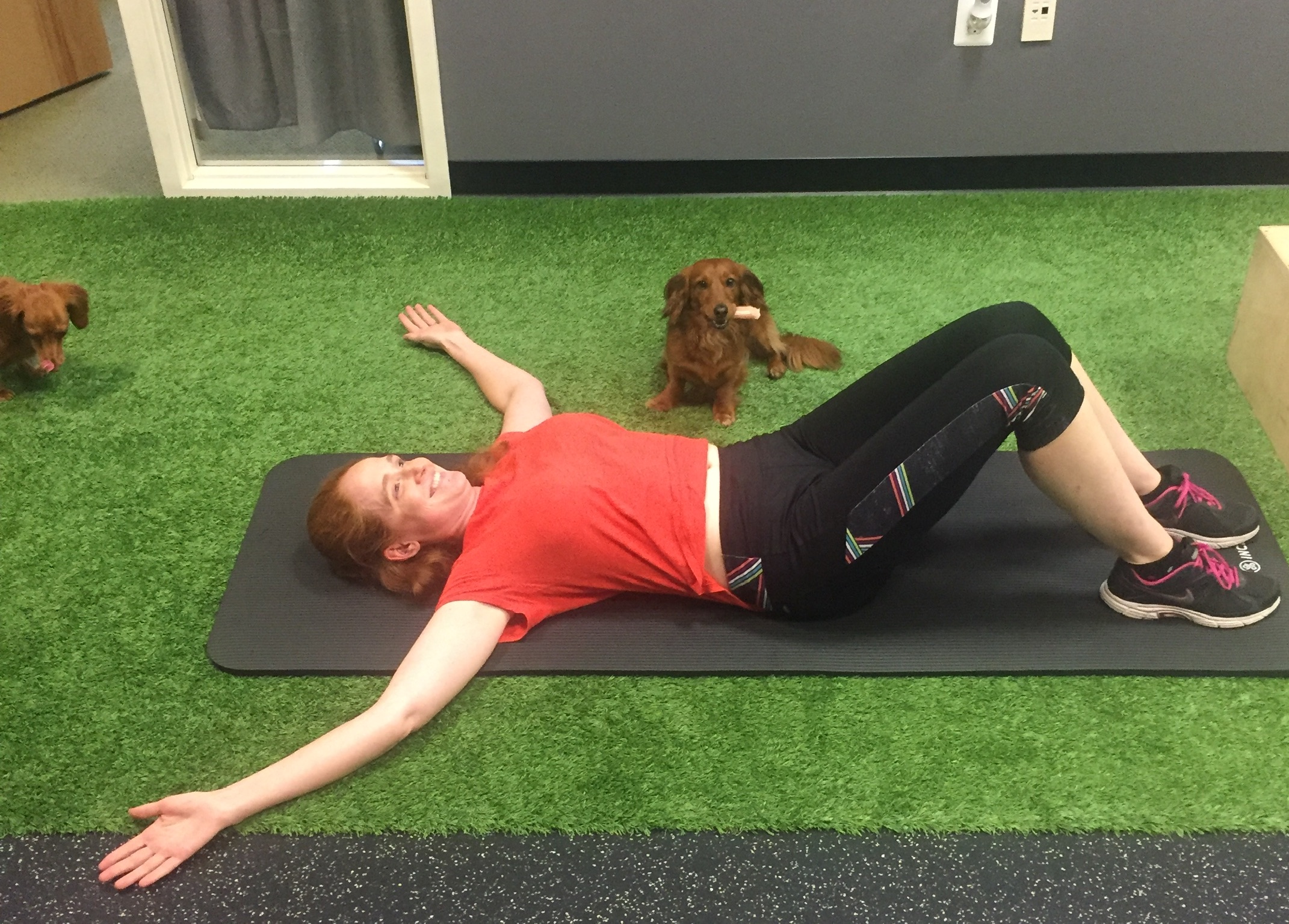
For the chest opener, lay flat on the floor and open your arms out wide and slightly up towards your head. Take a few deep breaths in this position. To make the stretch deeper, you can do this laying the long way on the foam roller or rolling up a blanket and laying it along your spine.
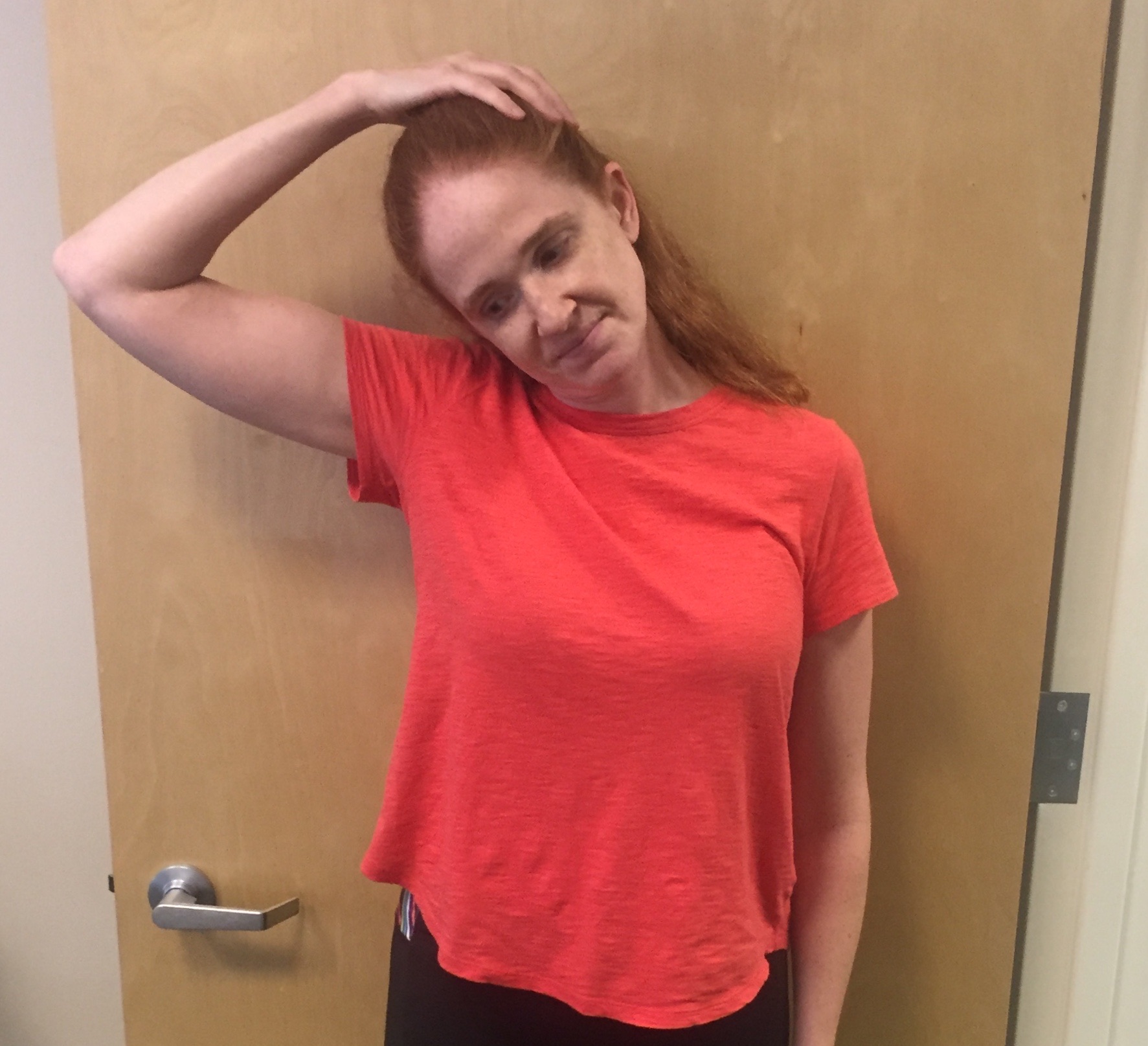
For the neck stretch, gently tilt your head to one side and place that arm on the opposite side of the head to gently stretch the side of your neck. After a few breaths here, tilt your head downward as if you were trying to look at (or smell!) your armpit. Repeat on the other side.
by Pippa Teague, Strength Coach | Sep 9, 2019 | Breathing, Conditioning, Injury, Injury Prevention, Recovery, Running, strength training, Stressrelief, Stretching, Uncategorized, working with injury
The definition of adversity via Webster’s Dictionary:
“Difficulties, misfortune, ill luck, back luck, trouble, difficulty, hardship, distress, disaster, misadvantage, suffering, affliction, sorrow, misery, heartbreak, heartache, wretchedness, tribulation, woe, pain, trauma, torment, torture.” The list goes on.
Adversity can be defined as any of the above. Everyone goes through some sort of adversity. It’s not about what type you deal with, but about how you respond to it.
Do you ever feel alone when you’re dealing with something like this? I am sure of it, we all do. But guess what, you aren’t alone. The feeling of being alone EASILY gets more believable in a world where social media is constantly in our faces. Old friends, co-workers, gym buddies, cousins, acquaintances, celebrities… they all look SO happy on the screen of your phone. But guess what, they probably have shit going on. Don’t forget that.
So… How do you overcome adversity? You can’t just make it go away, you can’t just run and hide and let someone else deal with it, you can’t just forget about it because it absolutely will resurface at some point.
Adversity can be overcome by the way you react to it.
This can be applied to matters BIG and SMALL.
Small example…
Someone is going 40 MPH in the passing lane and you are LATE for work?
Option A: Tailgate them like a MASShole, honk and give them the finger?
OR
Option B: Remain calm and let them realize they are being slow where they will eventually speed up or switch lanes.
Big example…
Someone does something extremely unjust, unreasonable and unfair?
Option A: scream and yell, accuse and verbally abuse?
OR
Option B: Remain calm with them. Do you best to not let your emotions drive your words. Take your feelings to a conversation with a friend where you can say what you want and get some advice.
Take home… We all deal with shit on any given day. The sun still rises in the morning no matter what was dealt the day before. Get up, shake the dust off and keep moving. Use adversity to learn, grow and become stronger. Get your reps in, practice makes perfect so keep working on overcoming those small hardships because when the big ones roll around, you will be ready.
by Pippa Teague, Strength Coach | Sep 6, 2019 | Client Achievements, Flexibility, Jumprope, Ladies, lifts, Personal training, Running, strength training, Uncategorized
-Pippa Teague
Infinite Potential Personal Trainer/Strength coach
NASM CPT
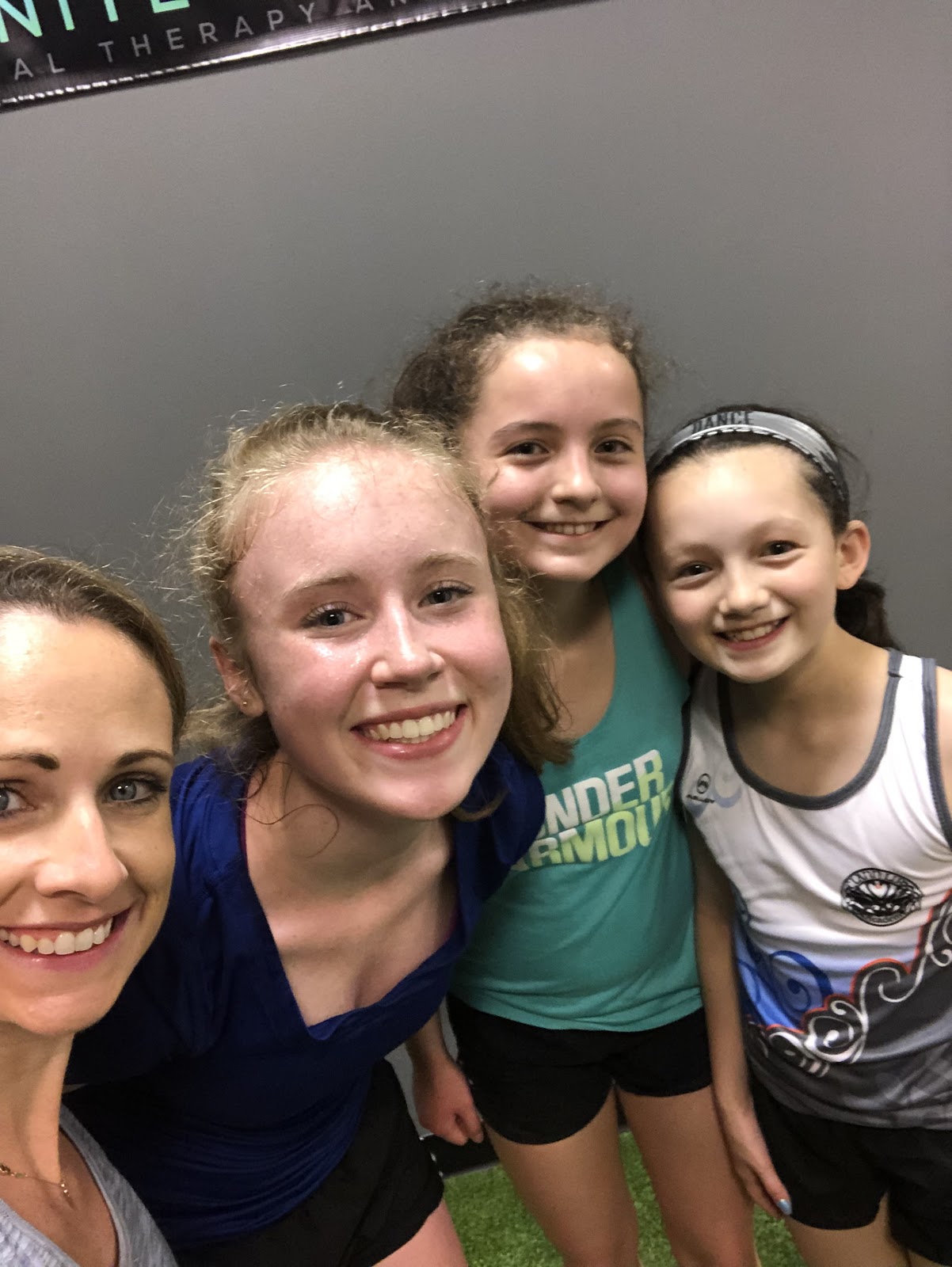
Starting in May 2019, Niamh, Isabel, Grace and Georgia have been working with me twice a week for personal training sessions.
They are all competitive Irish dancers and their teacher wanted them to improve overall strength and power to perform jumps and upper body control to help them in their dancing performances.
From day 1 they showed amazing discipline and hard work. Even though they are young (11-14) they definitely know what they need to do and are motivated to be able to achieve their goals, trying anything I ask of them (without complaining !) and putting their full effort into it.
They even made it to their sessions twice a week during summer vacation!
We work mainly on building strength using dumbbells, kettlebells, barbells, resistance bands and body weight in a circuit style or CrossFit style workout.
I love working with different kids involved in different sports. It’s so fun watching them improve and to see results! It can be challenging at times to keep the workouts fun and varied but I look forward to my sessions with them.
Niamh and Isabel’s mom, Claire said ‘The girls love working with Pippa, they tell me that they have a lot of fun even though it’s hard work! Their power and strength have definitely improved. They have a lot more body awareness and control. I can actually see the physical changes in their legs! ‘
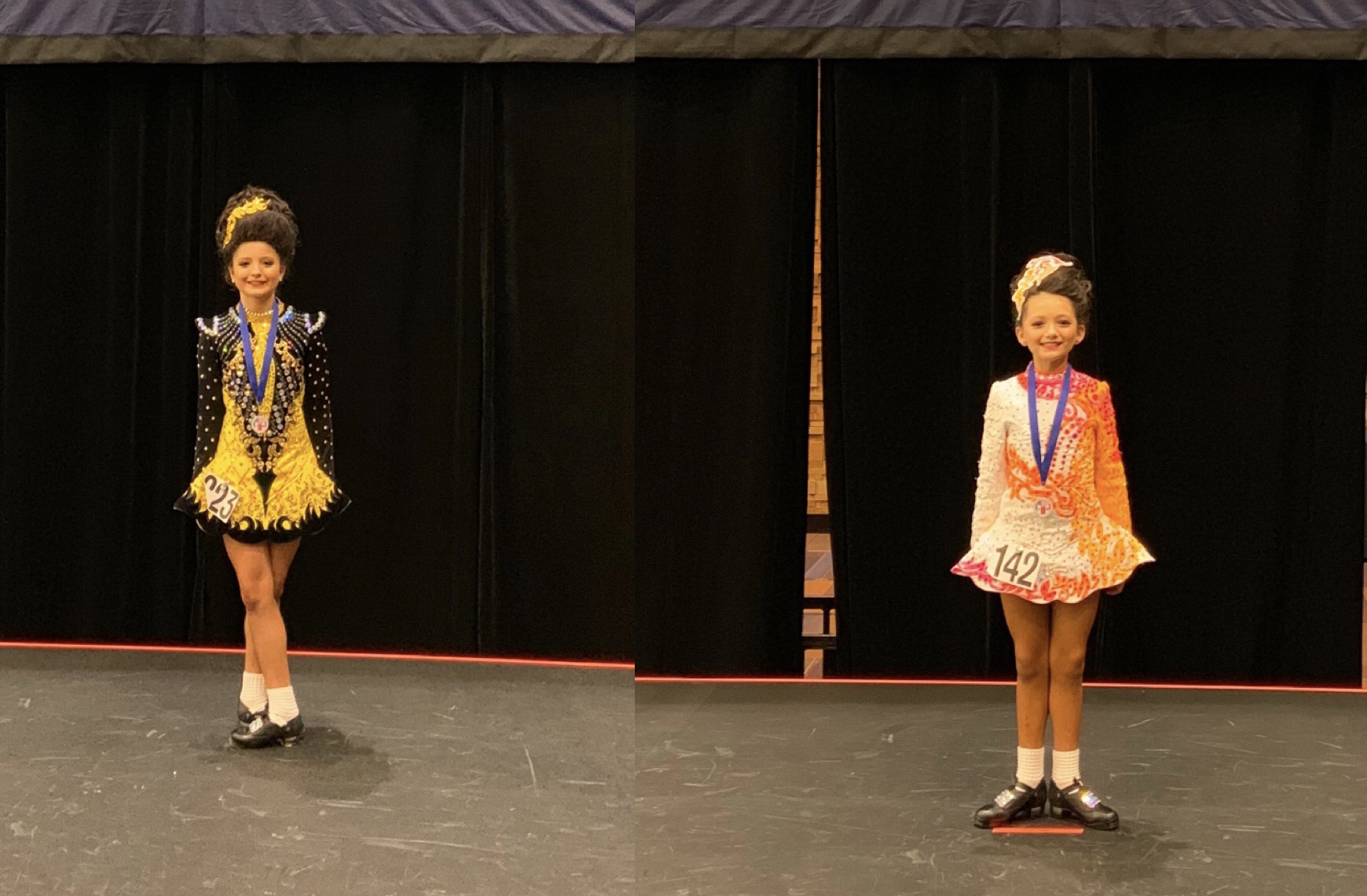
They all recently competed in the North American Irish Dance Championships and all four got recalls! Grace also qualified and is heading to Dublin to compete in the World Championships this April!
I am very proud of these girls and can’t wait to see what else they can achieve!

by Pippa Teague, Strength Coach | Sep 4, 2019 | Back Pain, Injury Prevention, Recovery, Uncategorized, working with injury
By Loni Rodriguez, PT
We know that many people do. It is actually one of the leading causes of disability world-wide. Did you know that at any given time, about 540 million people are experiencing low back pain? This is one of the most COMMON areas of pain! It also has dramatically increased healthcare costs and how many people use their healthcare dollars to treat it. Back pain is costing YOU more money than it needs to.
I want you to understand the fears that surround low back pain and help you understand it. It is important to talk about this stuff! Helping you understand these fears is vital to creating a positive outcome for both short term and long term pain.
I have put together the most common fears that surround this topic. It is important to understand that these fears are real, many people have similar beliefs, and the way that these fears are handled is very important. If you have some of these thoughts or beliefs, please be open to the explanations, ask questions, and make your own assumptions based on what you read.
There are also many other medical and fitness professionals out there who have different viewpoints. Please understand that this is my viewpoint backed by the most recent understanding of what science knows about low back pain. I learn the up-to-date stuff because I just want to be a bit less wrong, versus being right. The hope is that I can help you learn HOW to view low back pain and not WHAT to view about it.
Additionally, this is NOT supposed to be a guide to help your exact situation. Please seek the help of a trusted professional to deal with your individual case of low back pain. It can be used as a guide to help you understand back pain a bit more versus directing your treatment.
- Definition… What is low back pain? We can define low back pain as a symptom and not a condition. A symptom is well known to come and go, a condition feels like it is there to stay.
- Vulnerability… You may view your lower back as being vulnerable and needing protection. When back pain is experienced, you may view it as though your back has lost that protection. Many people experience lower back pain after trivial events and view the pain as damage, now needing protection. The feeling of vulnerability is real! You feel this way because first off, the back pain happened after something so simple as bending over to move a dog bowl. Second, you now think there is damage. Your back is not vulnerable and you do not need to worry that it will fail on you, even if you feel that has happened in the past. If you have been diagnosed with degeneration or arthritis, you do not have to feel fragile and that vulnerability will slowly fade as you become more and more confident. Your back is built to last, treat it with what it was born to take.
- Protection… You may feel that you have to protect your back if you have had a painful experience, leaving you feeling fragile. Back pain has been thought to be a result of lost protection. Now we know, however, that protection is not the key. Whether it means avoiding certain things because you do not want to have back pain, or keeping yourself out of certain activities because you fear your back pain will worsen. Both scenarios could actually be prolonging the issue. You get the permission to move! We want to add movement into your normal routine, little by little. It is like building up a retirement account, adding money in little by little builds to a solid chunk of change. Adding confidence to your low back over time creates long-lasting resiliency.
- Uniqueness… You may view back pain as being very special in nature, very different or unique from other forms of pain experiences in regards to how it impacts you. Back pain seems incredibly complex because it’s severe and you don’t know much about your back or its structures. Low back pain is viewed differently than other types of pain, but it shouldn’t be. It is commonly seen as special and its own entity, however it needs to be viewed under a different light. Back pain is just like pain in any other area of the body and it is not a warning sign for the spine. It does not mean you must stop doing the activity and it sure as hell does not mean that you are damaging anything.
- Damage… Pain means damage, damage needs healing, best to rest? Pain is commonly viewed as damage in the lower back, or anywhere in general. We now know that there can be a ton of pain and no damage, or a ton of damage and no pain. The correlation is just not there. Pain and damage do not go hand in hand and we do not need to be worried that increasing pain means further damage.
- MRI scans… MRI to the rescue? Many people seek to get MRI scans done to help direct treatment, identify worsening conditions, or rule out anything serious. We must rethink our views on medical testing (MRI’s, X-ray’s). Many of the findings are normal and just a part of the aging process and can be considered the grey hair of the spine. Most conditions such as arthritis, degeneration, or disc herniations do not cause pain. If MRI’s were the only ways to identify gray hair, would you want and MRI? So why would you want one? The most important reason to get an MRI would be to rule out the very serious conditions such as fractures, infections, cancer or tumors. Those conditions are extremely rare and found in about 3% of cases of low back pain. There are also very specific questions that could lead us to believe that one of those cases could be an issue. If those answers don’t fit, then the likelihood of you having any those conditions is extremely low. Not many doctors follow this protocol because they aren’t trusting in the new direction of medicine and reimbursement is pretty high for MRI’s and X-rays.
- You and your back need to be friends… You need a positive relationship with your lower back. It can feel like your back pain rules your life, and you have become a different person as it consumes you. Before you know it, you begin to notice that your back pain has made you a real bear. Your spouse, kids, and co-workers know when you are in a fight with your spine. Well, the reality is that it does not have to be like that and you have to trust that your back won’t fight back if you begin to make it do its job.
- Back pain, personified… A mind of its own. Your back pain does not have to rule you or your life. Personification of low back pain is common and understandable, but it does not truly have a mind of its own. You don’t have to walk on eggshells around it or tread lightly. Poke the bear with activities that slightly make it angry. Over time, you will notice that the amount of activity you can handle will sky rocket and you will once again be in control.
- Understand the uncertainty… It is hard to tell what someone’s outcome will be, but we know that it will get better. The outcome of low back pain is commonly unknown. The healing process is hard to see, especially because you aren’t really sure what is damaged or what needs to heal. The truth is that in most cases, nothing needs to heal and we always fall back on the fact that pain does not mean there is damage. Trying to search for the root cause will be a never ending battle and it is always multifactorial in nature. There is a ton of misinformation out there and you have to remember that. In general, you must understand that most cases of low back pain get better. If you are someone who has had back pain for years, there is TONS of hope. There are likely some underlying factors that have yet to be revealed.
Thank you for reading. This topic weighs heavily in my passion to pave the road of pain relief for many suffering from both short-term and long-term pain. I am determined to help you understand more about what is going on inside your body and empower you, versus scare you. You must remember that all cases of low back pain are different and treatment and education is extremely individualized. If you are suffering from low back pain and have yet to seek medical attention, please DO NOT use this editorial as a treatment guide. Please ask for help or find a trusted professional to guide you in the best direction.
That’s all folks…
![Making It As A Marine: Fitness Is A Must]()
by Pippa Teague, Strength Coach | Aug 26, 2019 | Exercise advice, Marines, Military training, Personal training, Pushups, Running, squats, strength training, Uncategorized
By Kerry Moynihan
Our United States Marine Corps is consistently challenged with both physical fitness and combat fitness testing throughout their careers. It’s through this sustained physical effort that our Country’s Marines maintain peak combat ready shape.
What is the difference between the Combat Fitness Test (CFT) and Physical Fitness Test (PFT)? Great question and one that I posed to my son, PFC Pat O’Hearne, who recently graduated from USMC Recruit Training at Parris Island, SC. Here’s the 4-1-1.
PFT: attire is shorts, t shirt and sneakers (go-fasters in Marine parlance).

In order to be a Marine at all you must pass an initial strength test. This ensures that you are fit enough to even begin recruit training. The understanding is that you will improve greatly from here. Basic standards: 2 unassisted pull-ups, 44 crunches in 2 minutes and a mile and a half run in under 13:30.
Over the course of 13 weeks of boot camp, fitness sessions are designed to improve those initial numbers. Body weight training is predominant in a timed, circuit style format. Circuit: pull-ups, inverted crunches, knee tucks, inverted push-ups, pull-up burpees, box jumps, tricep dips, 40 lb. ammo can lifts (push press), back extensions, lunges and squats. All at max effort, 2 minutes per station.
Speed Training: 40 yard wind sprints 8 to 10 times.
Throughout the duration of basic training there are 5 total long distance hikes with weighted packs for endurance. Hikes range from 3 to 12 miles with a final 15 mile hike prior to graduation hoisting an 80lb pack.
The final PFT prior to graduation requires a MINIMUM of 3 unassisted pull ups, 50 crunches, and 3 mile run in 28 minutes.
CFT: Max effort in boots, camo pants and t-shirt.
There are 3 events for Combat Fitness which are all specific to warfare.
1) 880m Sprint: (2 laps around the track) with the goal of completing it as quickly as possible. Max time 3:48.
2) Ammo Can Lift: 30lb can lifted at a minimum 45 times in two minutes.
3) Maneuver Under Fire: A timed event. This is a 300 yard shuttle run with combat related exercises. Here’s the format: a ten yard low crawl, 10 yard high crawl, zigzag run to the end where your partner must be lifted and dragged 10 yards, drop him and fireman carry him back to the starting point. After unloading your partner you lift two 30lb each ammo cans, run straight for 20 yards, zigzag for 30 yards, drop the ammo cans, lift a grenade (lacrosse ball in training) throw it into the “square zone” 15 yards away, drop for 5 push-ups, raise the ammo cans again and zigzag sprint for 30 yards and then sprint in a straight line for the final 20 yards to the finish. All must be completed in a max time of 3:29. 2:04 is considered a perfect score.
Every Marine, regardless of age, is annually tested with the PFT and CFT. As one ages, the standard times and numbers required do adjust but are equally challenging. We can rest assured that our USMC is continuously physically and mentally prepared for work on our behalf. I, for one, am eternally grateful.
by Pippa Teague, Strength Coach | Aug 22, 2019 | Conditioning, Exercise advice, Personal training, Uncategorized
By Jenny Gusella
As we age, one of the best things we can do for our health and happiness is to ensure that we are able to continue to perform the daily activities we want and need to do, whether climbing the stairs, picking up children or grandchildren, gardening, or whatever else you may encounter along your daily travels. The benefits of strength training for adults has been well documented in recent years, with findings that resistance training programs can help combat loss of muscle mass and the frailty that loss can bring. As this research continues, studies are beginning to delve specifically into the benefits of power training for adults, and are finding even stronger correlations between power and functionality (the ability to be able to do every day tasks with ease) than strength and functionality.
Power training is easy to incorporate into your workouts and can be scaled for all levels of ability. When you think about power training, you may think of sprinting or jumping. That’s certainly one way to practice exerting power, but not the only way. Some other options for power training include:
Speed Ladder: Short bursts of quick feet improves both coordination and power output. You don’t need to look like the star on a high school football team to reap the benefits of the speed ladder. Start by walking through the steps slowly, and then aim to progressively get quicker.
Kettlebell Swings: KB swings help you generate power through your lower body with low impact on your joints. Work with a trainer or coach to ensure proper form when beginning KB swings.
Medicine Ball Passes: Chest passes with a medicine ball either to a partner or against a wall is another great way to generate power that involves your upper body.
There are several other great exercises to try if you are looking to incorporate power into your fitness routine. Talk to a trainer or coach about the best way to get started.

by Dr. Loni Rodriguez | Aug 15, 2019 | Pain Relief
You don’t ALWAYS get pain relief… but you can feel better?
The thing with our treatment style is that are realistic. We MUST be true to you and not blow smoke in mirrors. Life happens, every single person responds differently, how can one guarantee that they will have maximum improvement after walking in their doors? Most people come to us because they are experiencing pain. Can we guarantee pain-free living? NO WAY. Many people DO continue to have pain after completing a course of physical therapy.
Quit searching for a fix and do not let anyone tell you that they will take your pain away, because it is just downright false.
Can your pain improve with the help of a pain-treatment professional? Absolutely.
Does everyone have different pain experiences? Yes.
The biggest question is… what defines “getting better”? The definition is extensive in our world and for the purposes of this email, I will be giving examples in the paragraphs to come.
Are we trying to say that some of you would not experience complete pain-relief but still improve? Yes. This getting better thought process is all about a mindset shift and understanding pain a little bit more.
Here are the top 5 things that you need to know:
#1 Pain is complex and not likely caused by one single factor…
It is extremely rare that pain is caused by one event. Nine times out of 10 people can not pinpoint what they did to initiate their symptoms. There are many factors that relate to pain including sleep, stress, nutrition, hydration, activity volume over time, a change in routine… All of these can collectively cause a pain experience.
#2 Recovery process is up and down…
You WILL continue to experience pain within the rehabilitation process. The fluctuation in symptom severity is completely normal and anticipated. If you can anticipate that you will actually have good and bad days throughout the program, you will not be surprised when the surface.
#3 It takes time…
In most cases, we likely estimate a good 12 weeks before we should be seeing signs of any significant changes. You will see improvements along the way, but not necessarily with substantial pain relief.
#4 Flare ups can be managed in the future…
I can not tell you how many people either ask, “will I have to do these exercises forever?”, OR, “I know this pain came on because I stopped doing my exercises.” OR, “I have kept up with my exercises, but this just came back again and worse than ever.” Teaching you how to manage your own symptoms is our bread and butter. We try and teach each and every client how to manage pain when it comes on day one vs waiting until day 21 to address it. Being able to grab your pain by the horns and steer it in the other direction when it resurfaces is remarkably empowering.
#5 Complete pain relief is unnatural…
The goal of complete pain relief is not realistic and we want you to understand that achieving success with PT is not always about complete relief. It is about knowing how to handle pain when it is happening, what is going on inside (or what is NOT going on inside), how to manage it, and feeling confident to continue to move. Do we want you to feel more comfortable and do we think that is realistic? Of course.
Do me a favor, if you learned something from this or if it reinforced how you feel about PT or pain let us know by shooting us an email.
Thank you for reading!

by Pippa Teague, Strength Coach | Aug 12, 2019 | Conditioning, Exercise advice, Injury Prevention, Personal training, Recovery, strength training, Uncategorized
Pippa Teague
NASM CPT
Infinite Potential Personal Trainer
What is recovery?
Basically the ability to shorten the time needed in between workouts so you can see more improvement faster!
Sore muscles are good! Something that doesn’t seem right? Not good. Sore muscles actually mean you have done your job during your workout and the muscles are growing / becoming stronger. If your muscles are painful to touch you probably overdid it a little and might want to wait until it’s more along the sore muscle range before working out again.
Here are a few things that will aid in recovery after your workout.
- Active recovery – get moving. Light weights or bodyweight, bike, minimal raised heart rate
- Stretching– if it makes you feel better and/or you have lost some range of movement
- Nutrition– this one is a very important part of recovery. Replacing carbs after a workout and making sure you are taking in enough protein is key
- Hydration – consuming enough water post workout to speed up muscle repair and prepare you for your next workout
- Sleep– also very important. Less than 7 hours hurts recovery, more than 7 is good but more than 9 hours sleep helps the most in recovery
- Massage and meditation – helps to decrease stress which delays recovery
The two biggest pieces to recovery I believe are nutrition, hydration and sleep.
Nutrition
–Protein
Protein is very important. It helps repair and rebuild muscle after activity. Consuming the right amount provides building blocks to get that underway. It is recommended that you should consume 0.15-0.25 g of protein /lb of body weight.
-Carbs
Consuming carbs post workout replenishes your glycogen stores. 0.5-0.7g/lb of body weight is recommended up to 30 minutes post workout.
–Fat
Fat should be limited right after your workout as it slows down the absorption of the other nutrients you may be taking in but consuming it won’t reduce the benefits.
Here is a list of some examples of some good post workout food
Protein
- Protein shake
- chicken
- egg whites
- Greek yogurt
- salmon
- tuna
Carbs
- potatoes
- green veggies
- Oatmeal
- pasta
- rice
- Chocolate milk
- fruits
Fats
Hydration
Hydration is also very important for recovery. Not just before the workout and during but after is almost more important!
Hydrating after working out provides the following benefits for ultimate recovery
- muscle repair
when we work out muscles actually get broken down and repaired (which is what builds the strength ). For this repair water is vital in speeding this process up as our muscles are made up of 75% water!
2. Digestion
water helps with digestion by breaking down the food and absorbing the nutrients that our muscles need right after a workout- salts electrolytes (to name a few).
Sleep
Getting at least 8 hours of sleep is vital in your recovery after a workout. When you sleep growth hormones are released helping repair muscles, build bones and burn fat. Make sleep a priority in your training, go to bed at the same time every night and wake up the same time in the morning, take naps in the day if you miss out on sleep. Try to increase sleep on the run up to an event or competition.
Try to add some of these recovery suggestions to your next week of workouts and see how you feel !
by Dr. Loni Rodriguez | Aug 5, 2019 | Business
By Loni Rodriguez, PT, DPT
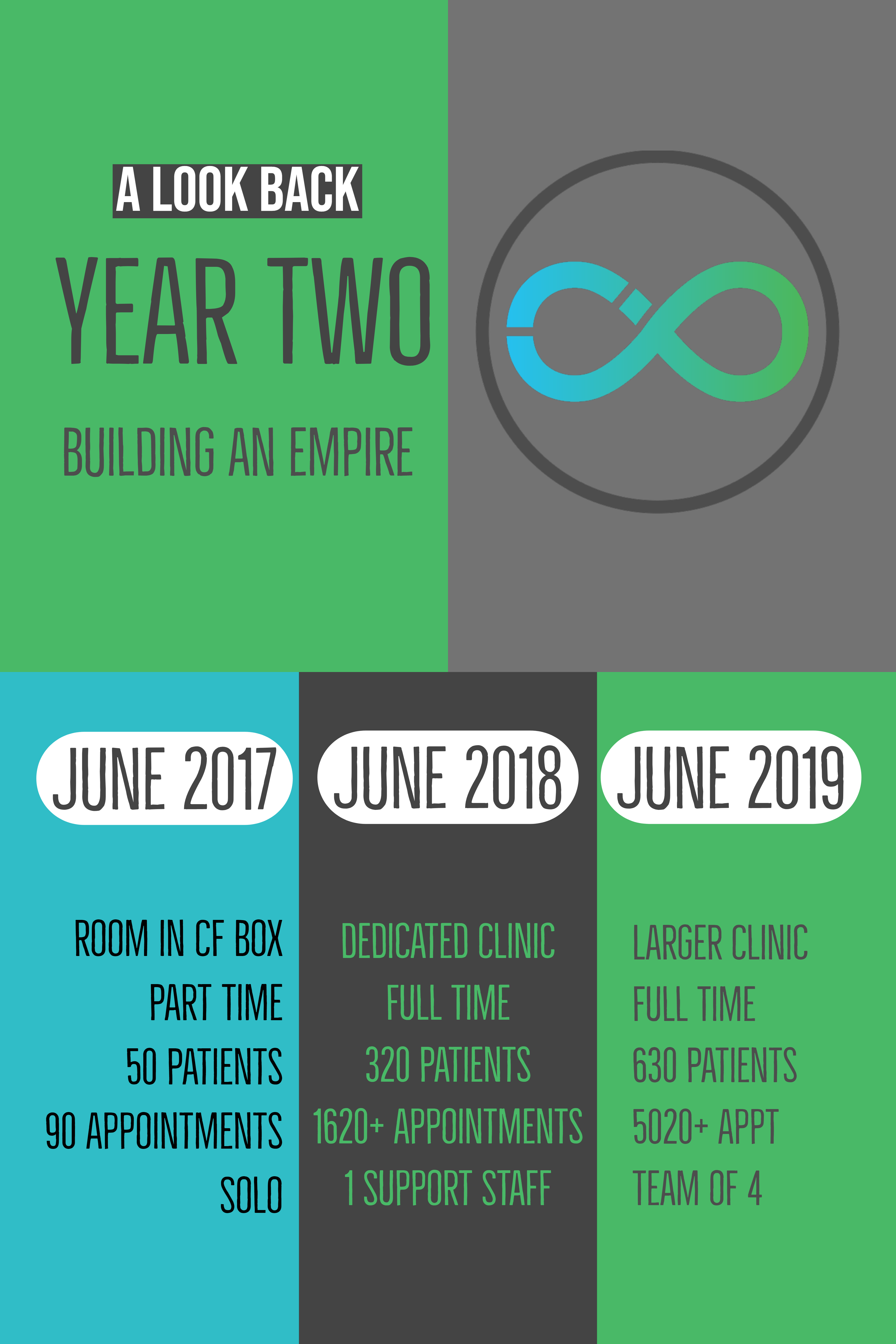
Two years in… It seems like just yesterday I was opening the doors at my first location within CrossFit781. It was a tiny room, just myself and the puppies.
Two years later I have a 6 person team (two dogs included) in a 1,500 square-foot office space. The growth has been substantial but the lessons have been even more significant. Here they are…
1. Find a balance
That email can wait, that text does not have to be answered NOW, that person can be seen in two days and not in your one slot of availability in your 12 hour day TODAY. When in business for yourself, you have to find a balance between work and life. I definitely miss the days of leaving the clinic after a shift and being able to LEAVE THE CLINIC. Those days were gone until I found a balance. Burnout is real… and I have, a few times. Finding a balance is not so easy especially if attention to detail is your specialty (my way of saying I am SUPER anal without admitting I’m SUPER anal). The way I found it was figuring out what exactly was burning me out and adjust it. For me, it was working too many hours straight and having to put in long hours on the weekends. Once I took a good look at my schedule, made some adjustments (with a little help), I was able to breathe a bit easier every day.
If you are dealing with finding a work-life balance, try looking at your day to day duties, prioritize them, delegate what you can, and schedule ample time for the things that take time to complete. You will find that time will magically free up. If you’re like me… you’ll fill it with more stuff that will stress you out, but hey… at least you’re being more productive, right?
2. Add value to everything you do
Being able to add value to other people’s lives has been the mainstay of our success.
What has really been amazing, however, is that I have learned how to add value to other things in life like friendships, family, relationships, even down to how I treat my dogs… if you can make almost everything you do valuable, things just become more fulfilling.
Try doing even mundane tasks to the best of your abilities, it will become more of a habit and less of a hindered effort.
3. Find the importance of customer service…
I have learned SO much about customer service since owning a business. It’s kind of like when you become obsessed with a new car, you see it everywhere? I now notice really GOOD customer service and really POOR customer service. Coffee shops, dentist offices, CVS cashiers, Lowe’s service people, and the folks at Trader Joe’s. I WILL go somewhere again based on my experience as a customer. I find that now knowing how important it is, I have really been able to eliminate a lot of negativity in my life but also know how to handle it when it comes my way.
4. Listen more, talk less
This was a big one. As I began to develop relationships with clients, I realized how important it was to just listen. Most of your questions will be answered without even asking them. By listening, you also begin to learn a lot more about the person you are talking to. Showing interest in a person is a great way to foster a solid relationship. This skill alone has dramatically strengthened my ability to help more people, create more friendships and strengthen the relationships I already possessed.
Try this… With friends and family, respond right away to that text or email, be sure to ask how their day was and what they’re doing over the weekend. Do not say a darn thing about yourself until asked.
5. There are no failures, only lessons.
Throughout the last two years, there were many things that I wished I had done differently. Hindsight is 20/20 and in reality, if I had done them differently, I would not have learned what I now know. I had a few crumbled partnerships, lost some clients, wasted some money, etc, etc… the list goes on. Yet, I see none of these are failures and only as lessons learned. Failure would mean that something ended. Nothing ended here, I just kept learning and moving on.
Look at the last time you considered something a, “failed attempt”. Find ONE thing about that time that could be considered a learning experience.
6. Find your team.
When you are building a business, it is incredibly important to surround yourself with good people. These people must be on the same page, yet be able to bring something to the table that is different than what you can bring. They need to know the value of teamwork as well as how to tell you when you’re being an idiot. Find them, treat them well, respect their needs and aspirations, give them support and great things will come.
Do you have a team? Even if you do not own your own business, look around you, who are your true friends? Does your immediate family serve as your team?
To anyone who thinks that building a small business is not possible, think again. If you have zero business experience and feel that you would not be able to fathom starting your own company, think again. I went to school for physical therapy, not business. I have been lucky enough to have support on the business side, but we learned together, as a team. We grew together and I would not change it for the world.
Are there days that I still wake up saying…
“What if patients stop calling…?”
“If the business fails, I can always get another job…”
…of course there are. But with the team we have, there is no losing sight of continued growth. On to year three…
